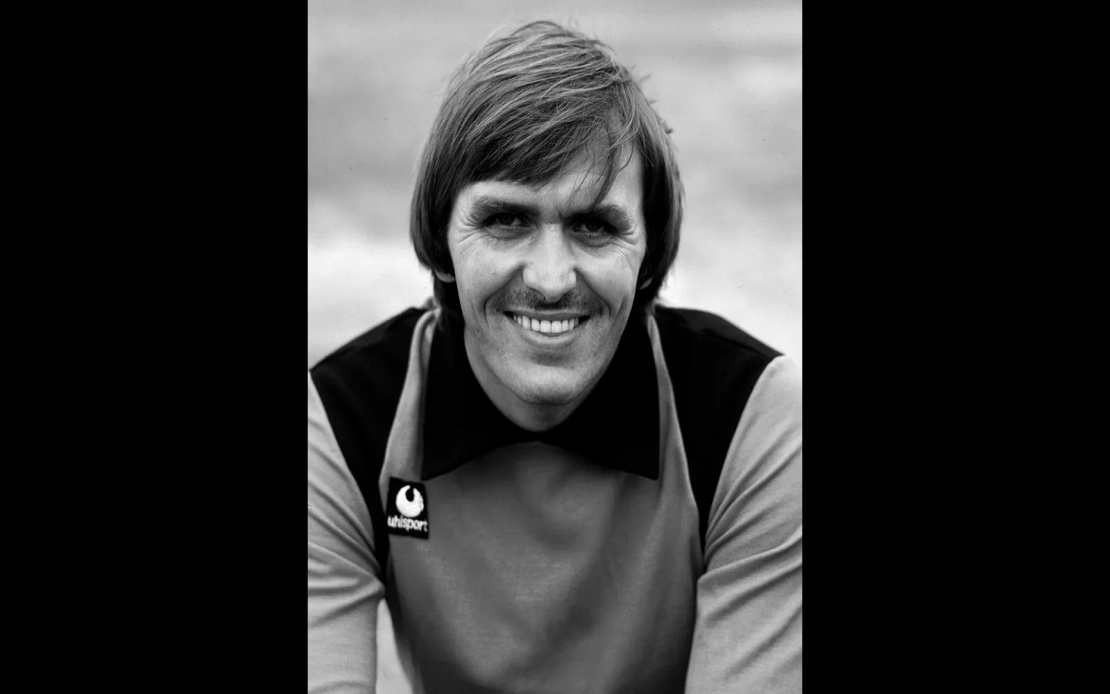
Jimmy Rimmer, the goalkeeper who steered Aston Villa to the 1981 First Division championship, has passed away at the age of 78. The English stopper, whose career was marked by extraordinary misfortune at the grandest stages of European football, remains a poignant figure in the club's history—a European Cup winner who never actually played in the final that earned him a medal.
Rimmer's most defining characteristic as a player was his presence during Villa's dominant 1980-81 campaign, when the Midlands club captured the English league title with the goalkeeper appearing in every fixture. His assured performances between the posts that season established him as a cornerstone of the side, yet his legacy would be forever complicated by what followed. When Villa progressed to the European Cup final the following year, Rimmer's journey took a cruel turn that would define his entire legacy.
During the 1982 European Cup final against Bayern Munich in Rotterdam, disaster struck within the opening nine minutes when Rimmer suffered a serious neck injury. He was forced from the pitch before the match had truly begun, leaving the field to his backup goalkeeper Nigel Spink, who would go on to deliver a performance of considerable character. With Spink commanding the defence, Peter Withe scored the decisive goal in the second half, securing a 1-0 victory and crowning Villa as European champions for the first and only time in the club's illustrious history.
Yet this achievement, while monumental for Aston Villa, marked a painful punctuation in Rimmer's career trajectory. The irony of collecting a European Cup winner's medal without setting foot on the pitch in the final serves as a unique form of sporting tragedy. Villa's official statement captured this poignancy, noting that Rimmer was "arguably one of the unluckiest when it came to big occasions." The club acknowledged that despite holding two European Cup winners' medals, he never actually participated in either final that earned those honours.
This pattern of heartbreak had precedent in Rimmer's career. Fourteen years earlier, during his time at Manchester United, he had occupied the substitute's bench when the club defeated Benfica at Wembley in a European Cup final. That earlier disappointment might have seemed like the defining misfortune of his professional life, yet history would orchestrate an even crueller repetition. The consecutive occasions on which he found himself watching teammates achieve European glory from the sidelines remain virtually unique in football's annals.
Following the Rotterdam final, Spink's imperious display established him as Villa's number one goalkeeper, effectively ending Rimmer's prospects of reclaiming the starting position. Rather than fade into the background, Rimmer was subsequently sold to Swansea City in 1983, departing Villa Park after accumulating more than 200 competitive appearances for the club. His departure marked the end of an era, though his statistical contribution to the club's achievements remained substantial.
Rimmer's journey to becoming a prominent English goalkeeper began at Old Trafford, where he initially developed his craft. However, he found opportunities limited at Manchester United, unable to displace the established Alex Stepney, who held a firm grip on the number one position. This early setback prompted a move to Arsenal in 1974, where he continued developing his abilities before eventually joining Aston Villa three years later in 1977.
His subsequent rise to prominence at Villa Park represented the pinnacle of his playing career, a period during which he demonstrated the calibre that merited a single cap for the England national team. That international recognition, while modest, reflected the esteem in which he was held by those who recognised his technical proficiency and commanding presence in the penalty area. Among his contemporaries, Rimmer was regarded as among the finest goalkeepers of his generation, yet the circumstances of his career meant that this quality would be remembered alongside persistent misfortune.
The tragedy of Rimmer's story resonates with football supporters across generations because it encapsulates a peculiar form of sporting injustice. Success in football often proves arbitrary, and moments that define careers can arrive or be taken away in the span of seconds. For Rimmer, two separate occasions when his club achieved the pinnacle of European football saw him sidelined by circumstances beyond his control, creating a symmetry of bad luck that few athletes have endured at such consequential moments.
Rimmer's passing closes a chapter in Aston Villa's history that encompasses both triumph and tragedy intertwined. While younger supporters may associate the club's European Cup success principally with the memory of Spink's clean sheet and Withe's winning goal, those who remember Rimmer's era understand that his contributions to Villa's achievements, though incomplete in their final execution, were nonetheless integral to the foundation upon which the club's greatest success was built.

