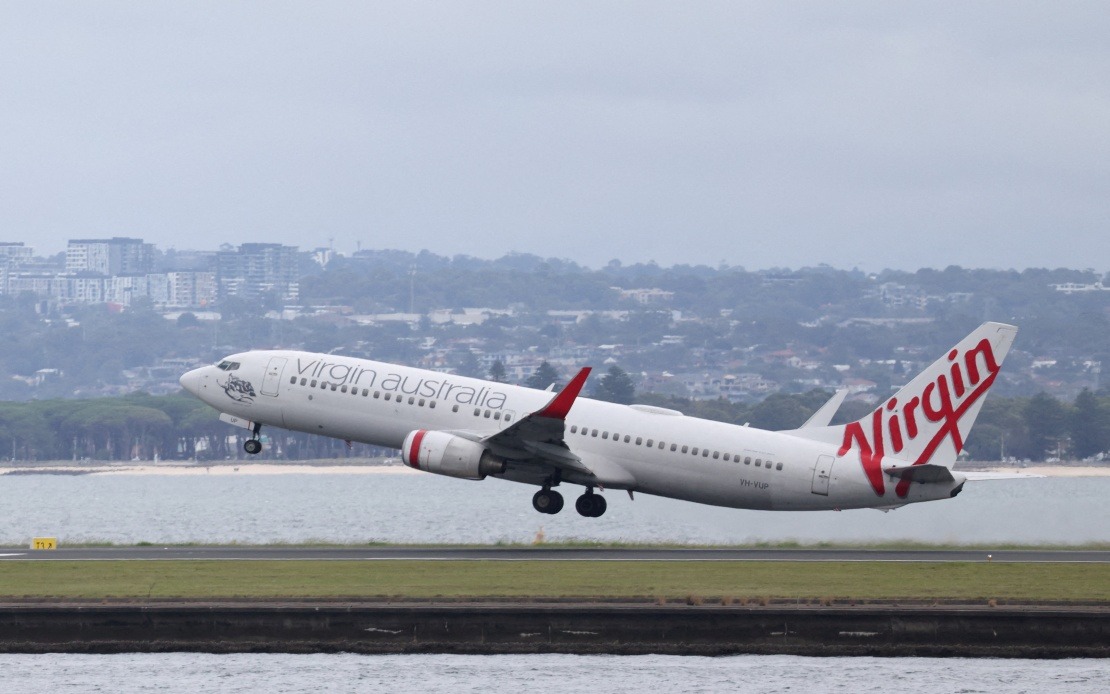
A Jetstar Airways flight crew member sustained injuries during a harrowing near-collision incident at Sydney Airport on Sunday morning when the aircraft narrowly avoided striking an unoccupied Qatar Airways Boeing 777 being repositioned on the tarmac. The incident underscores mounting safety concerns at one of the Asia-Pacific region's busiest aviation hubs and raises questions about ground operations management at a facility handling millions of passengers annually.
Jetstar flight JQ402, scheduled to depart for the Gold Coast at approximately 7 am Australian Eastern Standard Time, was taxiing on the runway in preparation for takeoff when pilots received instruction to execute an emergency braking manoeuvre. The sudden deceleration was necessitated after the empty Qatar Airways aircraft, which was being towed across the runway, entered dangerously close proximity to the Jetstar plane. The cabin crew member was injured during the abrupt stop and subsequently received medical treatment from ambulance paramedics dispatched to the scene.
The Jetstar spokesperson characterised the sequence of events as a controlled response to an unexpected operational development. According to the airline's account, the pilots were executing directions issued by Air Traffic Control when they made the split-second decision to brake firmly. The spokesman emphasised that Jetstar personnel followed approved procedures and that the incident occurred when another aircraft entered an unintended position relative to their flight path. No passengers aboard the Gold Coast-bound service sustained injuries, limiting the human toll of the incident to the single crew member.
Jetstar, which operates as a wholly-owned subsidiary of the larger Qantas Group, has initiated a formal investigation into the occurrence. Such inquiries typically examine communications between ground control and flight crews, the positioning protocols for towed aircraft, and whether standard separation distances were maintained between moving and stationary aircraft on the runway. The investigation will likely determine whether procedural lapses or communication failures contributed to the dangerous proximity between the two planes.
The incident arrives amid a broader operational crisis affecting Sydney Airport's capacity and safety infrastructure. Just days earlier, on Friday and Saturday, more than 250 flights departing from Sydney experienced significant delays or cancellations attributable to staffing shortages within Airservices Australia, the government agency responsible for air traffic control services across Australia's major airports, including Sydney. These cascading delays demonstrated the fragility of ground operations when key personnel are unavailable, raising systemic concerns about resource allocation and contingency planning.
For Malaysian and Southeast Asian aviation professionals and frequent business travellers, this incident illustrates the vulnerability inherent in any major airport system when operational personnel resources are stretched thin. Sydney Airport handles approximately 45 million passengers annually and serves as a crucial hub for regional airline networks, including carriers operating from Malaysia. Delays and safety incidents at such a pivotal facility ripple throughout the broader Asia-Pacific aviation ecosystem, affecting flight schedules, passenger connections, and cargo operations across the region.
The near-miss scenario—an active aircraft and a towed plane on the same runway—represents one of the most serious categories of aviation risk. Industry safety standards typically mandate strict separation protocols and require ground control to coordinate all movements with precision. When such incidents occur, they prompt regulatory review and frequently result in enhanced procedures. For airlines operating in the region, the Sydney incident serves as a reminder that ground operations demand the same level of vigilance and resource commitment as flight operations themselves.
The timing of this incident, occurring amid documented staffing shortages at Airservices Australia, invites scrutiny into whether adequate resources were allocated to critical ground control functions on the day in question. While the Jetstar spokesperson attributed the situation to instructions from Air Traffic Control, questions naturally arise about whether staffing constraints might have contributed to the communication or coordination breakdown that placed the two aircraft in proximity.
Australian aviation authorities will undoubtedly intensify oversight of ground operations procedures, particularly regarding the movement of large aircraft on active runways. International operators utilising Sydney Airport—including Malaysian carriers such as Malaysia Airlines and AirAsia—may anticipate notifications regarding any procedural changes implemented in response to this incident. Enhanced protocols could include stricter communication intervals, real-time tracking requirements for towed aircraft, or modified separation standards.
For Jetstar specifically, the incident presents both an operational and reputational challenge. As a budget carrier competing in the highly competitive Australian domestic market, maintaining public confidence in safety standards remains essential. The airline's relatively transparent communication regarding the incident and its commitment to investigation represent appropriate responses, though outcomes of the formal inquiry will ultimately determine whether systemic weaknesses required corrective action.
The broader context of Sydney Airport staffing difficulties suggests that Australian aviation infrastructure faces emerging capacity constraints. As Southeast Asian tourism to Australia continues expanding and regional trade relationships deepen, any degradation in Sydney's operational efficiency carries significance beyond Australia's borders. Enhanced resource allocation to Airservices Australia would address not only this incident but the broader pattern of delays that recently disrupted hundreds of flights.
For regional aviation safety oversight bodies, including Malaysia's Department of Civil Aviation, the incident demonstrates the interconnected nature of international aviation safety. Lessons learned from Sydney Airport incidents inform regulatory approaches throughout the region, contributing to the collective safety improvements that have made modern aviation increasingly secure despite rising global passenger volumes.

