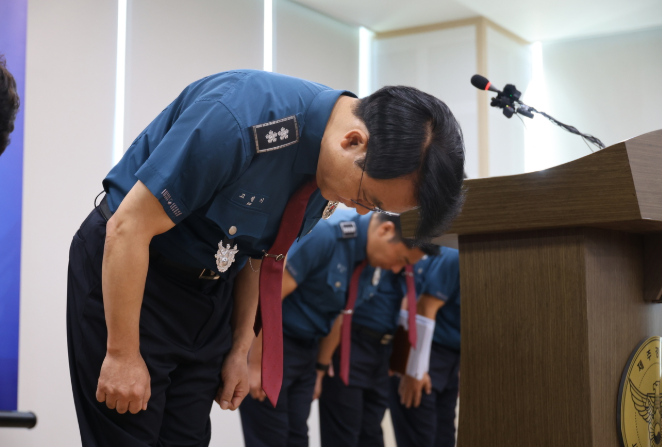
South Korea's Jeju Police Commissioner Ko Pyeong-gi delivered a formal public apology on Thursday following a significant institutional failure that resulted in the deaths of two missing persons whose cases were improperly terminated. The commissioner's statement, delivered at the Jeju Provincial Police Agency headquarters, acknowledged the profound loss experienced by the families and addressed the gravity of the misconduct that allowed such cases to slip through official oversight.
The scandal centres on a police officer identified only as Bu, who stands accused of deliberately falsifying evidence to prematurely close two separate missing person investigations. In the most prominent case, Jang Mi-ran, a 37-year-old woman who vanished in May, was discovered dead on Monday after authorities failed to pursue her case adequately. The officer allegedly claimed to have made direct contact with the missing woman, a statement later proven entirely fabricated, providing false grounds to suspend active search efforts.
The pattern of misconduct extends beyond the Jang case. The same officer employed identical deception tactics to close an investigation involving a man in his sixties, whose remains were subsequently located on Saturday. The parallel methodology suggests a systemic approach to case closure rather than isolated lapses in judgment, raising serious questions about the adequacy of internal verification procedures within the Jeju police force.
In his formal statement, Commissioner Ko expressed deep remorse to both the deceased individuals and their grieving families, describing the emotional devastation wrought by the police department's failures. His acknowledgment that the bereaved are suffering "grief beyond description" reflected the profound human cost of institutional negligence. Ko further extended his apology to the broader Jeju community, recognising that police misconduct of this magnitude undermines public trust in law enforcement across the entire region.
The commissioner emphasised the fundamental responsibility that police officers bear toward protecting public safety and preserving human life, characterising the accused officer's actions as a deliberate abdication of this sacred duty. Ko noted that the deliberate falsehoods extended beyond mere administrative errors, describing them as actions that have inflicted "permanent scars" on the affected families. This language underscored the commission's recognition that the impact transcends bureaucratic missteps, affecting the psychological and emotional wellbeing of individuals directly harmed by police negligence.
Commissioner Ko pledged that the Jeju police would conduct a thorough and transparent investigation into the circumstances surrounding both cases. This commitment suggests recognition that external and internal scrutiny will be essential to restoring institutional credibility. The promise of transparency indicates an attempt to move beyond defensive institutional posturing toward genuine accountability, though the depth of such investigations will ultimately determine whether this represents meaningful reform.
Perhaps most significantly, Ko announced that Jeju police will undertake a comprehensive audit of all missing person cases handled on the island. This systematic review reflects concern that the two discovered cases may represent only the tip of a larger problem. Officers throughout the agency may have adopted similar practices of premature case closure, and a thorough examination could potentially uncover additional failures that have allowed other families to remain in limbo regarding missing loved ones.
For Malaysian and Southeast Asian readers, this case serves as a cautionary reminder about the importance of institutional checks and oversight mechanisms within police departments. Missing person investigations are uniquely sensitive matters where institutional failure can result in the most tragic outcomes. The case illustrates how inadequate supervisory procedures and verification mechanisms can permit individual officers to circumvent proper investigative protocols with minimal accountability until bodies surface.
The incident also highlights vulnerabilities common across regional law enforcement agencies regarding the handling of vulnerable populations. Without robust case management systems and regular audits, missing person investigations can become deprioritised or improperly closed, particularly if they involve individuals without family members actively maintaining pressure on authorities. This pattern raises concerns about how missing persons cases are managed across Southeast Asia, where resource constraints and competing priorities sometimes cause such investigations to receive insufficient attention.
The Jeju case underscores the necessity for transparent performance metrics and regular external oversight of police investigations. Departments must maintain systematic records allowing supervisors and auditors to identify patterns of unusual case closures or officers with suspicious clearance rates. Without such mechanisms, the institutional incentives toward premature closure—reducing workload and improving statistical closure rates—can override obligations toward thorough investigation.
As South Korean authorities proceed with their investigation and institutional review, the broader lesson for regional law enforcement centres on balancing investigative efficiency with investigative quality. Police departments must resist pressure to close cases simply to improve performance indicators, instead maintaining steadfast commitment to following evidence wherever it leads. The families affected by Jeju's failures will find little comfort in retrospective apologies; only systemic reforms ensuring such tragedies cannot recur will meaningfully address the institutional failures that caused their loss.

