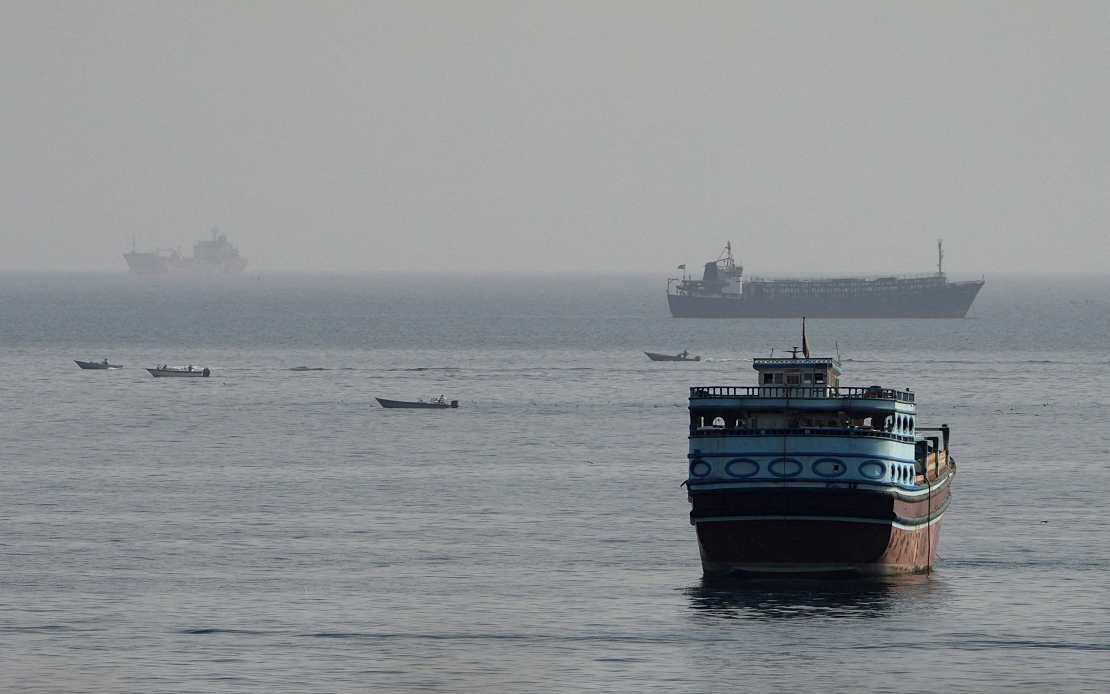
Japan's Prime Minister Sanae Takaichi has emphasized that passage through the Strait of Hormuz must remain free of any supplementary charges, according to a phone conversation she held with Iranian President Masoud Pezeshkian on Wednesday. Speaking from her Tokyo office, Takaichi underscored this position to reporters, stressing the significance of maintaining unobstructed access to one of the world's most vital maritime corridors at a time when regional instability has severely compromised shipping flows.
The conversation between the Japanese and Iranian leaders marks their first dialogue since June and comes as the broader Middle East crisis continues to reshape global energy markets and trade patterns. This exchange is particularly noteworthy given Japan's historical balancing act—maintaining its alliance with the United States while preserving diplomatic channels and economic ties with Iran, a relationship that predates the current geopolitical turbulence by decades.
In addition to the Hormuz passage issue, Takaichi conveyed serious apprehension regarding developments in the Bab el-Mandeb Strait, which lies on the opposite flank of the Arabian Peninsula. She specifically requested that Pezeshkian exert pressure on Houthi militants aligned with Tehran to demonstrate restraint in their operations across this increasingly perilous shipping lane. The Japanese leader's dual concerns reflect Tokyo's growing anxiety over maritime security in two critical chokepoints that fundamentally affect energy supplies flowing toward Asia.
Yemeni authorities reported on Tuesday that the Houthis executed a devastating assault on a commercial vessel transiting the Bab el-Mandeb Strait. The militant group, which announced a "maritime blockade" in July explicitly targeting Saudi Arabian ships, has escalated its campaign amid broader regional conflict. This attack underscores the mounting threat to international commerce in the region and explains why the Bab el-Mandeb has increasingly become a fallback shipping route as traders attempt to circumvent the effectively closed Strait of Hormuz.
The practical implications of these two strait closures are substantial for Japan and other energy-dependent Asian economies. Japan relies heavily on Middle Eastern crude oil imports, making these waterways essential to its economic stability. With the Hormuz Strait—through which approximately one-fifth of global petroleum flows—compromised by US-Iran tensions and now faced with potential fee schemes, Japanese policymakers are confronted with mounting pressure on energy security. The emergence of Bab el-Mandeb as an alternative corridor provides some diversification, but this route itself is now under assault from Houthi operations, leaving Tokyo in a precarious position regarding reliable energy access.
The timing of Takaichi's diplomatic outreach reflects Japan's pragmatic approach to Middle Eastern affairs. Despite being a stalwart Washington ally, Japan has long understood that constructive engagement with Iran serves its strategic interests, particularly in resource-dependent Asia where energy security remains paramount. Japanese leadership historically has refused to align completely with American policy toward Tehran, instead pursuing a more independent course that acknowledges Japan's specific vulnerabilities and geographic proximity to energy sources in the Persian Gulf.
Pezeshkian's willingness to take the call and discuss these matters suggests that Iran, despite tensions with the United States and Israel, maintains openness to dialogue with non-aligned powers and traditional trading partners. For Iran, Japan represents a significant market for petroleum exports and a potential source of technology and investment, making these communications strategically valuable regardless of current regional hostilities. The conversation therefore represents a sliver of diplomatic normalcy amid otherwise turbulent circumstances.
The reference to "the US-Israeli war on Iran" that commenced in late February establishes the broader context for current maritime disruptions. Regional conflict has fundamentally altered shipping patterns, emboldened non-state actors like the Houthis, and created uncertainty around previously reliable trade routes. Japan's concerns must be understood within this framework of compounding risks that threaten established commercial networks upon which Asian economies depend.
For Southeast Asian nations observing these developments, including Malaysia with its own significant maritime interests and energy needs, the implications are similarly concerning. Disruptions to the Strait of Hormuz and Bab el-Mandeb represent threats to regional prosperity, as supply chain disruptions and energy price volatility emanate from the Middle East and affect ASEAN economies. Malaysian policymakers, like their Japanese counterparts, have incentives to encourage de-escalation and the maintenance of open shipping lanes, regardless of their formal diplomatic alignments.
Takaichi's intervention demonstrates that even amid great power competition and regional conflict, practical economic interests compel dialogue and diplomatic pressure on regional actors. The Japanese government's emphasis on the importance of unrestricted passage and its appeal to Iran to constrain Houthi operations reflect a calculation that preserving maritime stability serves Japan's core interests better than adopting a more confrontational stance aligned with Western pressure campaigns.
Moving forward, the success or failure of such diplomatic initiatives will likely determine whether alternative shipping routes can sustain global trade or whether further escalation closes additional passages. Japan's position as a bridge between Western and non-Western powers, combined with its extraordinary vulnerability to maritime disruptions, positions Tokyo as a potential mediator in encouraging the restraint that Takaichi has advocated. Whether Iranian influence over the Houthis proves sufficient to reverse current trends, however, remains an open question.

