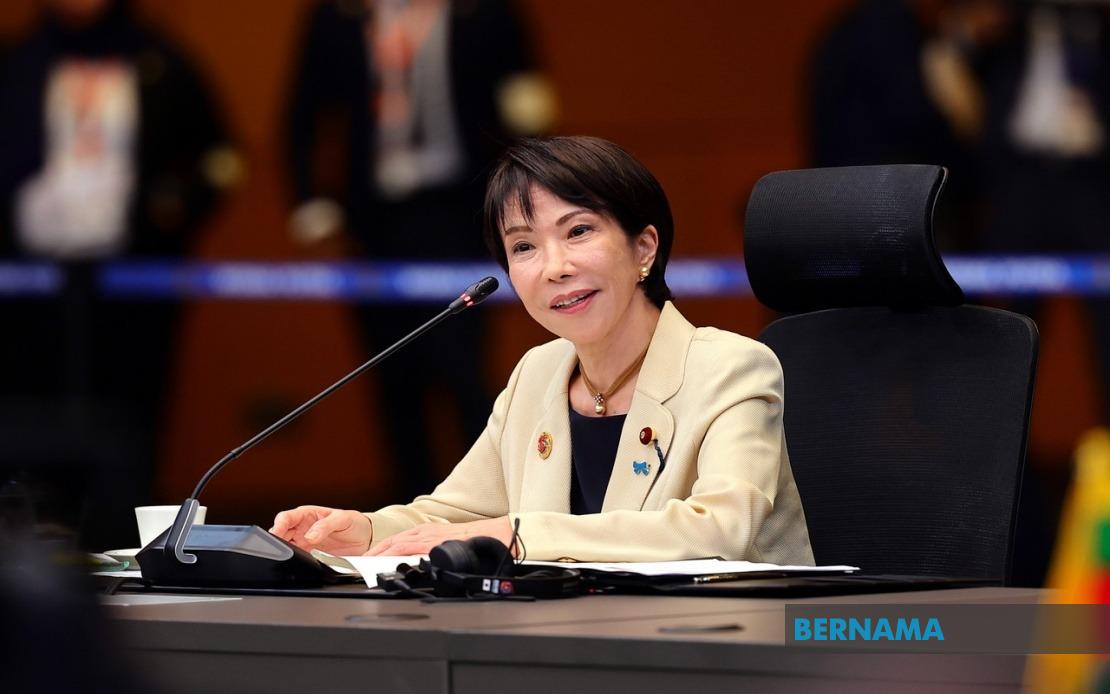
Japanese Prime Minister Sanae Takaichi has pressed for the restoration of secure and unrestricted maritime passage through the Strait of Hormuz during telephone discussions with Oman's Sultan Haitham bin Tariq al-Said on Monday, reflecting Tokyo's growing concern over stability in one of the world's most critical shipping corridors as tensions between the United States and Iran remain unresolved.
The timing of Takaichi's intervention underscores Japan's vulnerability to disruptions in the Hormuz waterway, which handles approximately one-third of global seaborne traded oil. For Japan, a nation heavily dependent on energy imports to sustain its economy, any prolonged instability threatens fuel supplies and economic growth. The Strait's strategic importance cannot be overstated—it represents the sole maritime gateway for roughly 21 million barrels of oil passing daily from the Persian Gulf to markets worldwide, making its security a matter of national interest for energy-importing nations across Asia, Europe, and beyond.
During the conversation, Takaichi emphasised the necessity for resumed freedom of navigation and secure passage through the critical waterway. The Japanese leader's direct engagement reflects Tokyo's diplomatic pragmatism in seeking dialogue through established channels, even as broader multilateral negotiations between major powers remain stalled. Rather than taking confrontational positions, Japan is working through regional contacts to advocate for practical solutions that protect commercial interests and prevent maritime incidents.
Oman, a sultanate positioned at the mouth of the Persian Gulf with coastlines on both the Gulf of Oman and the Arabian Sea, holds a unique diplomatic position in the region. The nation has historically maintained balanced relations with regional powers, including Iran, positioning itself as a potential intermediary in regional disputes. According to reporting by Kyodo News, Oman is currently engaged in substantive discussions with Iran, specifically addressing matters related to shipping routes and navigation through the strategic strait.
The Sultan's response to Takaichi conveyed Oman's measured approach to the situation. Haitham bin Tariq al-Said indicated that his government would engage in consultations with nations that depend on the waterway and would take their perspectives into account when formulating its own positions. This commitment to inclusive dialogue represents the type of pragmatic diplomacy that could potentially help bridge divides between competing interests in the region.
The broader context involves protracted negotiations between the United States and Iran that have effectively stalled, leaving the region in a state of uncertainty. These talks have historically centred on Iran's nuclear programme and the terms under which international sanctions might be lifted or reimposed. The inability to reach agreement has created a geopolitical vacuum where incidents at sea become more likely, and tensions can escalate unpredictably. Japan's intervention signals that countries without direct involvement in US-Iran disputes are nevertheless deeply affected by their failure to reach accommodation.
For Malaysia and other Southeast Asian nations, the implications are significant. The region's economies are integrated into global trade networks that depend fundamentally on uninterrupted flow through the Strait of Hormuz. Any prolonged disruption or military escalation would have cascading effects on supply chains, shipping costs, and energy prices throughout Southeast Asia. Malaysian ports, particularly in the Straits of Malacca, could see increased traffic if the Hormuz route becomes unreliable, potentially straining regional infrastructure and shifting logistics patterns.
Japan's diplomatic initiative also reflects Tokyo's broader strategy of engaging in quiet diplomacy to resolve regional tensions without amplifying confrontation. Rather than making public demands or joining coalitions that might alienate either the United States or Iran, Japan seeks to work with moderate regional actors like Oman to encourage pragmatic solutions. This approach acknowledges that military posturing or sanctions escalation have not resolved the underlying disputes, and that patient negotiation with key players remains essential.
The conversation between Takaichi and Sultan Haitham illustrates how energy-dependent nations are compelled to maintain active diplomatic engagement on maritime security issues, regardless of their geographic distance from the Persian Gulf. Japan's participation in these discussions, communicated through Takaichi's subsequent remarks to journalists at her Tokyo office, demonstrates that the consequences of instability in the Hormuz region ripple across continents and affect nations whose citizens may rarely think about the waterway's existence.
Oman's willingness to engage with multiple parties and its stated commitment to consulting with nations reliant on the corridor suggest that a diplomatic pathway remains open. The sultanate's positioning as a neutral intermediary offers a potential channel through which concerns from Asian nations, including Japan and others in Southeast Asia, might be effectively communicated to Iranian leadership. This multilateral approach contrasts with more confrontational methods and may prove more sustainable over time.
As negotiations remain at an impasse and regional tensions continue, the work being undertaken through diplomatic channels like Takaichi's call represents a quieter but potentially more effective form of conflict prevention. By emphasising the shared interest in maintaining free passage and secure shipping, nations like Japan seek to remind all parties that the costs of disruption extend far beyond regional actors. Whether such diplomatic pressure will prove sufficient to catalyse broader negotiations remains uncertain, but the effort demonstrates that even distant powers recognise their stake in Hormuz stability.

