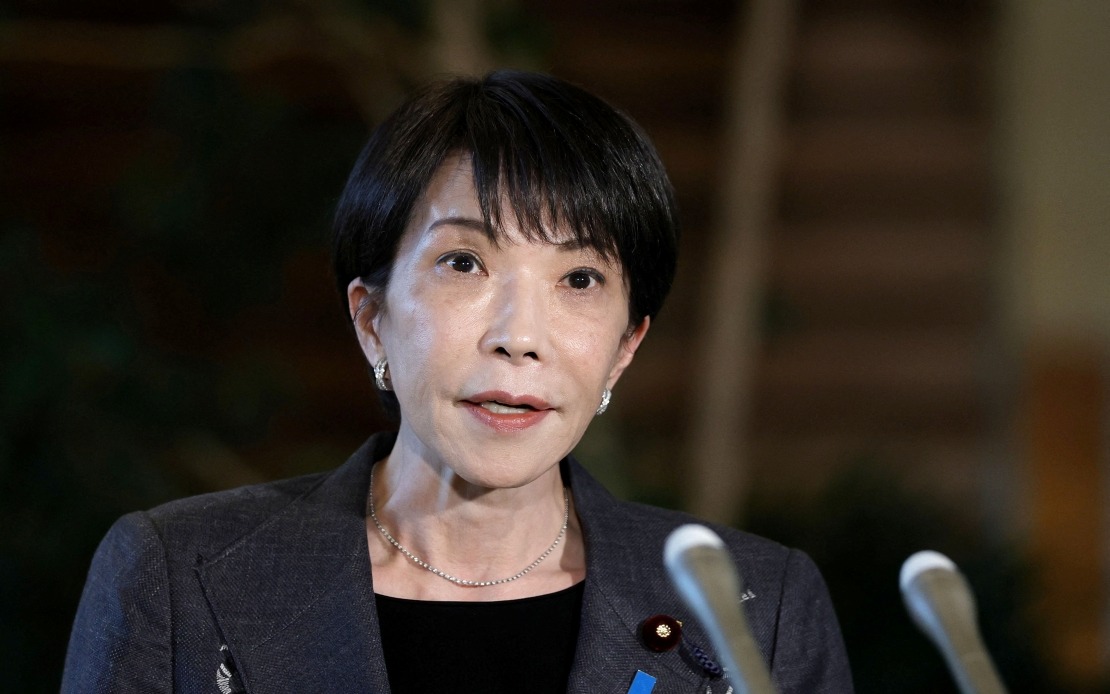
Japanese Prime Minister Sanae Takaichi made a carefully choreographed gesture toward Japan's wartime past on Saturday, sending a ritual offering to the Yasukuni shrine in Tokyo while conspicuously avoiding a physical visit to the controversial site herself. The move came as Japan observed the 81st anniversary of the end of World War II, a date laden with historical significance and political sensitivity across East Asia. Defence Minister Shinjiro Koizumi became the first sitting defence minister confirmed to visit the shrine on the anniversary since Minoru Kihara in 2024, signalling that while the prime minister maintains official distance, other high-ranking government figures continue to pay respects at the site.
Takaichi's decision to contribute an offering rather than visit reflects the delicate balancing act required of Japan's current leadership. As president of the ruling Liberal Democratic Party, she financed the religious offering from her personal funds, a distinction that allows her to honour Japan's war dead while maintaining the official restraint expected of a sitting prime minister. This approach differs markedly from her conduct before assuming office last October, when she regularly visited Yasukuni during seasonal festivals and on the August 15 war anniversary. The shift reveals how the prime ministerial position carries heightened diplomatic responsibilities that constrain actions permissible for other politicians and party officials.
The shrine itself remains one of Asia's most contentious historical flashpoints. Yasukuni enshrined 14 wartime leaders as deities in 1978, a decision that transformed the religious site into a lightning rod for regional tensions. Among those honoured are Gen. Hideki Tojo, executed in 1948 for crimes against peace, and other Class-A war criminals convicted by international tribunals. For China and South Korea, both nations that experienced Japan's wartime aggression directly, these commemorations represent a refusal to fully reckon with historical responsibility. China suffered through Japan's occupation of vast territories, while Korea endured colonisation from 1910 to 1945. Visits by Japanese leaders to the shrine have consistently drawn sharp diplomatic rebukes from Beijing and Seoul, complicating bilateral relations.
Beyond the prime minister's calculated absence, multiple cabinet members and party executives made their own visits to Yasukuni on the anniversary. Minoru Kihara, now serving as chief Cabinet secretary in Takaichi's administration, set a precedent by becoming the first sitting defence minister to visit the shrine on August 15 the previous year. Hitoshi Kikawada, a state minister handling issues related to the Northern Territories—disputed islands off Hokkaido that remain a source of tension with Russia—also visited the shrine. Conservative party heavyweights including Secretary General Shunichi Suzuki, General Council head Haruko Arimura, and Election Strategy Committee head Yasutoshi Nishimura similarly paid their respects, reflecting the shrine's deep roots within the LDP's ideological base.
The timing and composition of these visits underscore the ideological character of Japan's current political establishment. The Liberal Democratic Party, which has dominated Japanese politics for most of the postwar era, maintains a constituency that values traditional Japanese identity and imperial symbolism. For many LDP members, Yasukuni represents a legitimate space for honouring those who died in service to Japan, a perspective that sits uneasily with the nation's pacifist constitution and the international norms established after 1945. The contrast between Takaichi's personal visits before taking office and her restraint since becoming prime minister illustrates how individual conviction often yields to institutional constraint when wielding executive power affecting the entire nation's foreign relations.
Japan's postwar trajectory has been defined by two competing imperatives: genuine commitment to peace through its war-renouncing constitution, and an increasingly assertive approach to national security. For eight decades, the nation has consciously positioned itself as a force for stability in the region, channelling nationalist impulses into economic competition rather than military adventurism. Yet in recent years, Japan has substantially expanded its defence capabilities and military spending in response to what officials describe as a deteriorating security environment. China's military modernisation, North Korea's weapons programmes, and Russia's regional assertiveness have compelled Tokyo to reconsider its security posture. This context explains why defence and security figures increasingly make their own pilgrimages to Yasukuni—they operate within a political framework where strengthening Japan's martial capabilities is seen as compatible with, rather than contradictory to, honouring those who died in previous conflicts.
For Southeast Asian observers, Japan's relationship with its wartime history carries particular relevance. Many nations in the region remain acutely conscious of Japan's expansion during the 1930s and 1940s, even as they now regard Japan as a crucial strategic partner and economic anchor in a region threatened by Chinese assertiveness. Countries like Malaysia, Indonesia, and the Philippines maintain complex relationships with both Tokyo and Beijing, requiring diplomatic sophistication to balance historical grievances against contemporary strategic interests. Japanese political gestures around Yasukuni thus reverberate beyond Sino-Japanese relations, potentially unsettling ASEAN nations by raising questions about whether Japan's conservative political establishment truly embraces postwar regional values or merely accommodates them as expedient constraints.
The distinction between Takaichi's personal offering and a full prime ministerial visit may appear semantically thin but carries substantial diplomatic weight. Such carefully calibrated positions allow Japanese leaders to signal deference to both domestic constituencies demanding recognition of wartime sacrifice and international partners expecting restraint regarding controversial war crimes commemorations. However, this approach contains inherent contradictions. A prime minister who cannot visit a shrine central to her party's ideological identity without provoking international incident effectively concedes that Japan's wartime legacy remains unresolved in regional consciousness, even as the nation advances as a democratic and economically sophisticated power.
Looking forward, the pattern established by Takaichi and her cabinet suggests that Yasukuni's role in Japanese politics will likely intensify rather than diminish. As Japan's security challenges mount and defence-related personnel ascend within government hierarchies, more serving officials will presumably visit the shrine, gradually normalising what once seemed transgressive. Whether this reflects genuine historical reclamation or strategic drift toward a more nationalist posture remains contested. What is clear is that 81 years after World War II's conclusion, Japan continues grappling with how to memorialise its fallen while maintaining the international standing and regional relationships essential to its security and prosperity in an increasingly unstable Indo-Pacific.

