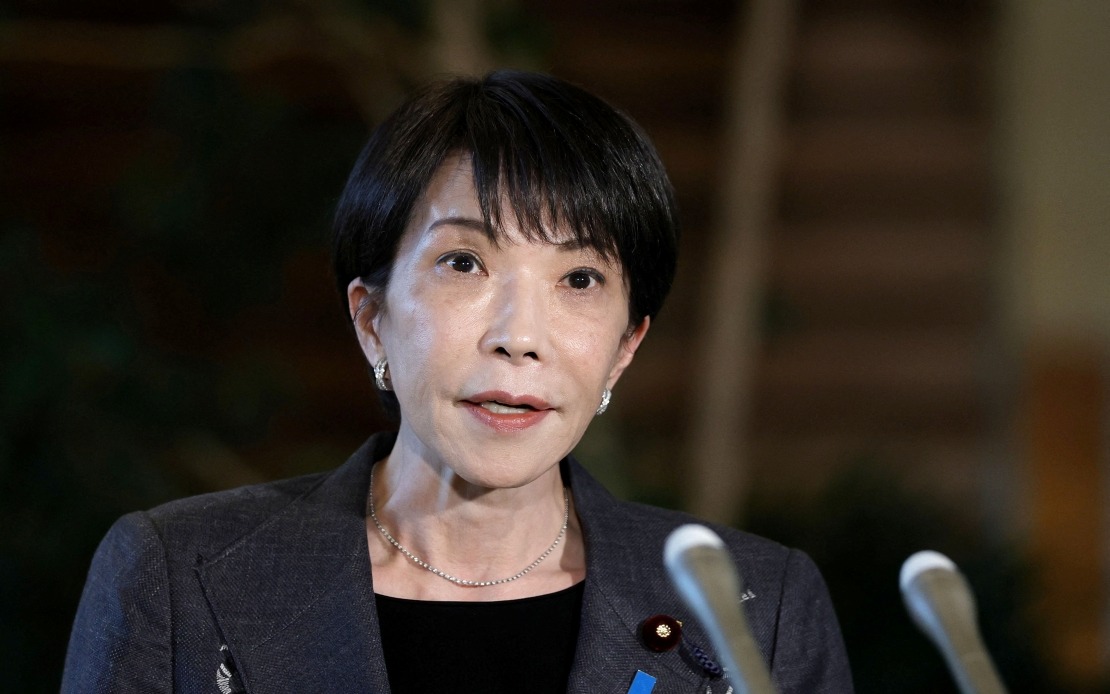
Japan's newly installed Prime Minister Sanae Takaichi has made an explicit commitment to restore the nation's consumption tax on food and beverages to its standard 8 per cent rate after a planned two-year reduction period beginning April 2027. Speaking during a House of Representatives committee session on Monday, Takaichi stated unambiguously that the temporary cut would end precisely when promised, signalling the government's intention to maintain fiscal discipline even as it delivers near-term relief to households grappling with persistent inflation.
The announcement follows last week's proposal from Takaichi's ruling Liberal Democratic Party, which opted for a more modest 1 per cent tax rate on food rather than the zero-rate cut that formed a central plank of the party's election campaign in February. This scaled-back approach emerged from discussions within a cross-party national council on taxation and social security, with officials acknowledging that reducing the rate to zero would create logistical complications for retailers upgrading point-of-sale systems nationwide. The interim report from this council, expected later this month, will formally consolidate Japan's tax and welfare policy direction for coming years.
Takaichi's reassurance about the tax's eventual restoration directly addressed concerns raised by Ken Tanaka, a lawmaker from the opposition Democratic Party for the People. Tanaka warned that once consumption taxes are reduced, political and public pressure makes restoring them extraordinarily difficult, as citizens perceive any increase as a genuine tax hike rather than a return to baseline policy. His scepticism reflects decades of Japanese political experience, where attempts to raise taxes have repeatedly triggered public backlash and electoral punishment. The prime minister's emphatic statement seeks to preempt such resistance by establishing the temporary nature of the measure from the outset.
Japan's fiscal position provides urgent context for this measured approach. The nation carries the worst debt-to-GDP ratio among Group of Seven economies, and recent turbulence in global financial markets has driven Japanese government bond yields to their highest levels in decades while simultaneously weakening the yen. These developments have sharpened concerns among policymakers that expansionary fiscal measures, including tax cuts, could destabilise markets further and undermine investor confidence in Japan's long-term economic management. The central bank and finance ministry have grown increasingly cautious about policies that could balloon deficits without corresponding revenue measures or spending reductions.
To soften the impact of the incomplete tax reduction, the LDP simultaneously proposed annual cash handouts totalling 600 billion yen, equivalent to approximately US$3.7 billion. This sum mirrors the estimated tax revenue forgone from implementing a 1 per cent rate on food products, allowing the government to claim it is effectively delivering zero-rate benefits to consumers while maintaining revenue neutrality on paper. The approach represents a pragmatic compromise between campaign promises and fiscal realities, though economists and opposition parties have questioned whether cash payments and price reductions deliver identical benefits, particularly for lower-income households more dependent on regular food spending.
The LDP's decision to moderate its campaign pledge reflects deeper divisions within Japan's political establishment over how to balance immediate cost-of-living relief against long-term economic stability. The party's coalition partner, the Japan Innovation Party, and numerous opposition parties similarly committed to food tax cuts during the election, viewing inflation relief as essential to maintaining public support. However, the financial realities facing Tokyo's government have forced pragmatism. Officials privately acknowledge that aggressive tax cuts without spending restraint or revenue offsetting would signal fiscal recklessness to international markets at a moment when Japan's demographic decline and aging population already strain public finances through healthcare and pension obligations.
For Southeast Asian observers, Japan's dilemma carries instructive parallels. Regional governments similarly face pressure to deliver relief from food and energy inflation while maintaining macroeconomic stability and international investor confidence. Malaysia, Thailand, and other ASEAN members have employed various mechanisms—temporary subsidies, targeted transfers, and modest tax adjustments—to navigate equivalent tensions. Japan's experience suggests that clearly communicating the temporary nature of relief measures, combining tax reductions with direct cash support, and maintaining credible fiscal frameworks all contribute to managing public expectations and market reactions.
Takaichi indicated her government intends to proceed with implementation "as soon as possible" once the national council completes its interim report later this month. This timeline suggests parliamentary action could occur within weeks, allowing sufficient notice for retailers to prepare systems before the April 2027 launch date. The two-year window through March 2029 provides ample time for assessment of economic conditions and public reception, though political pressure to extend the cut may intensify if inflation persists or recession takes hold during the reduction period.
The credibility of Takaichi's commitment to restoration will likely face significant testing. Japanese political history demonstrates that sunset clauses embedded in tax and spending measures frequently encounter extension when their expiration approaches, particularly if economic conditions appear weak. Opposition parties will scrutinise implementation and may attempt parliamentary manoeuvres to make the cut permanent, while public opinion may shift if inflation subsides and households adjust to lower food prices. The prime minister's early and explicit statement represents a preemptive effort to establish political and psychological anchors around the policy's temporary nature, though ultimately parliamentary majorities and electoral outcomes will determine whether the promise holds.