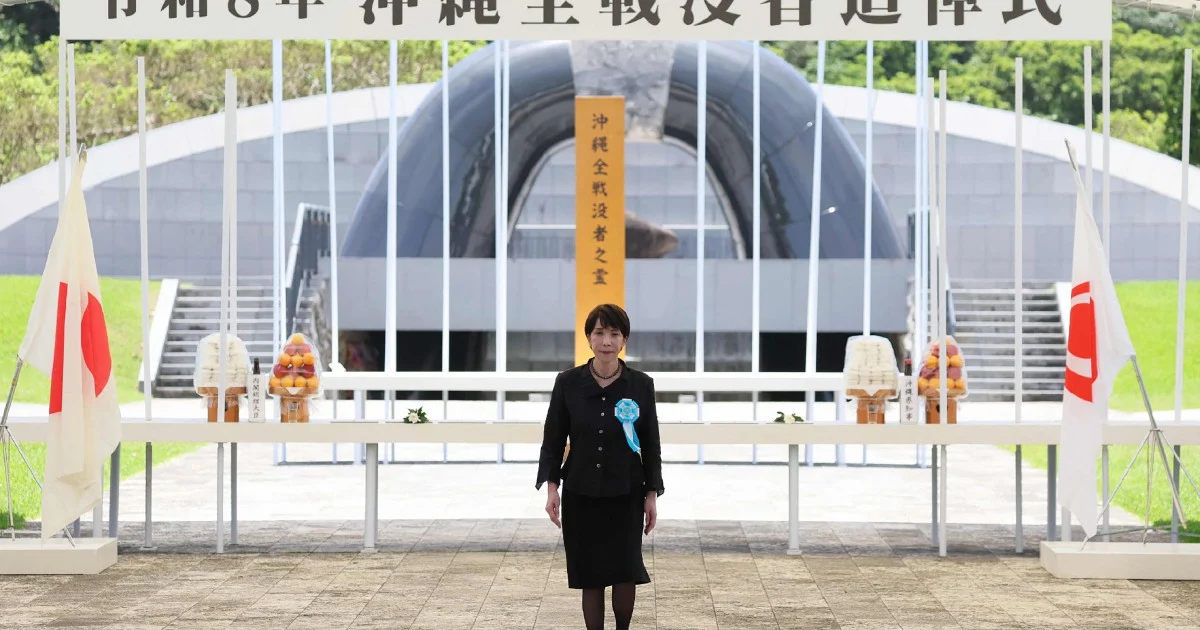
Japanese Prime Minister Sanae Takaichi encountered significant public resistance during a World War II memorial ceremony when protesters voiced their disapproval of the government's changing defence posture, according to television coverage of the event. The confrontation underscores deepening divisions within Japan over military policy, a topic that remains extraordinarily sensitive given the country's history and the constitutional constraints that have governed its armed forces since 1945.
The heckling incident reflects a broader generational and ideological divide in Japan regarding how the nation should position itself militarily in the region. For decades, Article 9 of Japan's post-war constitution effectively prohibited the development of offensive military capabilities, creating a self-imposed restraint that became central to Japanese identity and foreign policy. This pacifist framework stood in stark contrast to other major powers and shaped Tokyo's approach to security challenges throughout the Cold War and beyond.
Takaichi's administration has been advancing policies that represent a significant departure from this established consensus. These initiatives include larger defence budgets, more assertive military exercises, and evolving interpretations of constitutional limits on military action. Such moves reflect changing regional security calculations, particularly Japan's concerns about China's military modernisation and North Korea's nuclear and missile programmes. However, these developments have generated considerable domestic opposition from citizens who view them as dangerous departures from the principles that have defined post-war Japan.
The protesters' response at the memorial ceremony demonstrates that substantial segments of the Japanese public remain committed to pacifist principles and harbour concerns about the long-term implications of military expansion. This constituency, which includes various peace movements, civil society organisations, and citizens who lived through or whose families experienced wartime devastation, views the government's direction with alarm. Their willingness to demonstrate at official events suggests they are prepared to engage in sustained resistance to these policy shifts.
From a Southeast Asian perspective, Japan's military recalibration carries important implications for regional stability. Countries throughout the region have developed security relationships with Tokyo and rely on Japanese economic engagement as a stabilising force. Any perception that Japan is becoming more militarily assertive could trigger reactions from neighbouring states and complicate the regional balance that has underpinned decades of relative peace and prosperity. The tensions evident in domestic Japanese politics thus have ripple effects extending well beyond Tokyo.
The government's challenge lies in managing legitimate security concerns while respecting the historical consciousness and constitutional traditions that remain deeply rooted in Japanese society. Takaichi and her administration argue that enhanced defence capabilities are necessary responses to deteriorating security conditions in East Asia. Critics counter that such moves risk undermining the moral authority and diplomatic soft power that Japan has cultivated through its pacifist orientation. This debate is unlikely to be resolved quickly or easily.
The memorial event itself carries symbolic weight in this controversy. War remembrance ceremonies in Japan often become battlegrounds for competing narratives about the past and visions for the future. How Japan commemorates its wartime history, alongside what lessons it draws from that experience, directly influences contemporary policy debates. The presence of protesters at such ceremonies indicates they view the government's military expansion as incompatible with genuinely reckoning with the consequences of Japan's imperial past.
Takaichi's premiership has already been marked by efforts to reshape Japanese defence policy, but her administration has not yet fully addressed the public's underlying anxieties about these changes. More frequent incidents like the memorial ceremony heckling suggest that greater political engagement will be required if the government hopes to build broader societal consensus around its military strategy. Simply implementing policies without addressing public concerns risks deepening social division over security matters.
The international dimensions of this domestic dispute also merit consideration. Japan's allies, particularly the United States, have generally welcomed Tokyo's willingness to expand its defence role and military cooperation. However, Japan's pacifist tradition has also served as a source of regional reassurance, particularly for Southeast Asian nations concerned about a more heavily militarised great power competition in their neighbourhood. Japan's navigation of this tension between alliance obligations and regional reassurance will likely become increasingly important as geopolitical competition in Asia intensifies.
Looking forward, the frequency and scale of protests against military expansion policies may force Takaichi's government to undertake more serious domestic consultation and public education efforts. The challenge will be explaining security rationales while acknowledging the legitimate concerns of citizens who worry about abandoning decades of constitutional principle. How Japan resolves this internal debate will shape not only its own future but also the strategic environment that affects all of Southeast Asia.