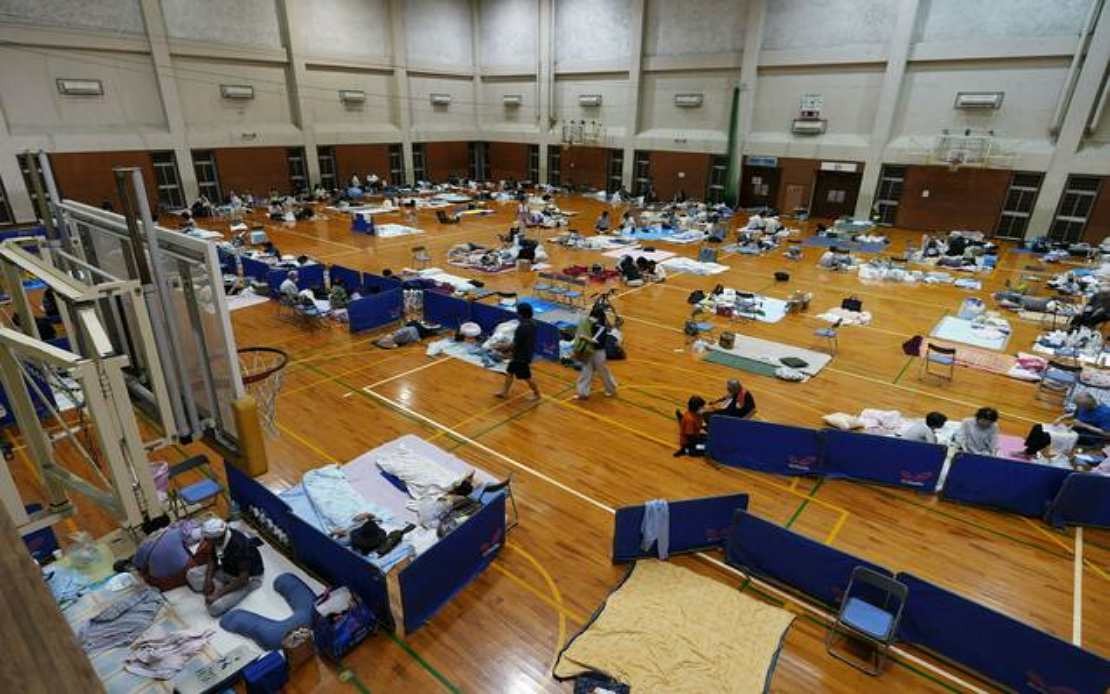
A week has passed since a powerful magnitude 7.1 earthquake struck Kumamoto Prefecture in southwestern Japan on July 28, yet the humanitarian crisis continues to intensify rather than ease. More than 8,000 residents are still sheltering in 150 evacuation centres across the prefecture, confronting a deadly combination of infrastructure breakdown and extreme weather conditions that officials now view as a critical public health emergency.
The earthquake has claimed 38 lives to date, with the tragedy extending far beyond the initial tremor itself. Among the deadliest incidents was an explosion at an Aeon shopping mall in Kashima that killed seven people, while a separate industrial catastrophe at Nippon Paper Industries Co.'s plant in Yatsushiro claimed nine lives when a chimney collapsed. The full scope of destruction encompasses approximately 12,000 damaged buildings across the prefecture, underscoring the scale of physical devastation that still confronts recovery efforts.
The compound crisis facing evacuees has become increasingly severe. Water supply disruptions affect roughly 45,000 households across five municipalities, forcing authorities to deploy water trucks from across the nation to sustain basic sanitation and drinking needs. Simultaneously, Kumamoto Prefecture is experiencing extreme heat, with temperatures soaring beyond 35 degrees Celsius across most areas and some municipalities recording their highest temperatures on record at 40 degrees Celsius. This dangerous convergence has already claimed one confirmed life from heatstroke among people sleeping in vehicles, with authorities warning that the true toll among car-dwellers may be significantly higher than currently documented.
Government response has begun to shift into high gear following Prime Minister Sanae Takaichi's visit to an evacuation shelter on Monday. The government has announced its intention to formally designate the disaster as one of "extreme severity," a classification that unlocks enhanced reconstruction subsidies and specialised assistance programmes for affected local governments and residents. This designation signals recognition that conventional relief mechanisms will prove insufficient for the scale of recovery required.
Concrete mitigation measures are now underway across multiple fronts. Authorities have initiated a secondary evacuation programme allowing residents to transfer from shelters to hotels, while construction of temporary housing has commenced in the hardest-hit municipalities of Uki and Hikawa. Government agencies at both national and prefectural levels are intensifying efforts to prevent heatstroke deaths by expanding water truck operations, increasing portable toilet provision, and deploying spot cooling equipment throughout evacuation facilities.
The disaster has also prompted regional humanitarian response. Taiwan's southern city of Kaohsiung has sent essential care supplies to Miyabien, a nursing home in Yatsushiro, after learning of the facility's urgent needs. Midori Tagata, the facility's director, expressed profound gratitude for this assistance, noting that widespread water outages throughout Yatsushiro have severely compromised the ability to maintain adequate hygiene standards for elderly residents—a particularly vulnerable population during such crises.
Critical infrastructure remains severely disrupted. The Kyushu Shinkansen Line bullet train service remains suspended between Kumamoto and Kagoshima-chuo stations, isolating the region from rapid transit connections. Similarly, the Kyushu Expressway highway remains closed to general traffic between the Matsubase and Ebino exits, constraining vehicle-based supply chains and limiting the movement of relief personnel. These transportation restrictions have compounded difficulties in distributing aid and enabling evacuation.
For Malaysian observers, the Kumamoto earthquake serves as a sobering reminder of the cascading challenges that accompany major natural disasters in developed nations. Even with Japan's sophisticated disaster management infrastructure, early warning systems, and abundant resources, the intersection of physical destruction, resource depletion, and environmental stressors creates conditions where loss of life continues days after the initial event. The persistence of 8,000 displaced people one week onward demonstrates that earthquake aftermath extends far beyond the dramatic initial moments captured in news coverage.
The regional dimension is particularly relevant for Southeast Asia. Taiwan's provision of aid to Kumamoto illustrates how neighbouring countries increasingly recognise mutual vulnerability to seismic activity and the imperative for cross-border humanitarian cooperation. As Malaysia and other ASEAN nations operate in an earthquake-prone region, the logistical and humanitarian lessons emerging from Kumamoto—particularly regarding shelter management during extreme heat, water supply prioritisation, and vulnerable population protection—carry direct applicability to regional disaster planning.
The challenge facing Kumamoto authorities extends beyond immediate emergency response into the complex realm of sustained recovery. The phased approach involving shelter consolidation, hotel evacuation, and temporary housing construction reflects lessons learned from previous major Japanese disasters. However, the ongoing heat wave introduces an urgent temporal dimension that constrains the timeline for transitioning evacuees out of emergency shelter conditions. This race against both climate and infrastructure repair schedules will define whether the death toll from disaster-related causes continues climbing in the coming weeks.

