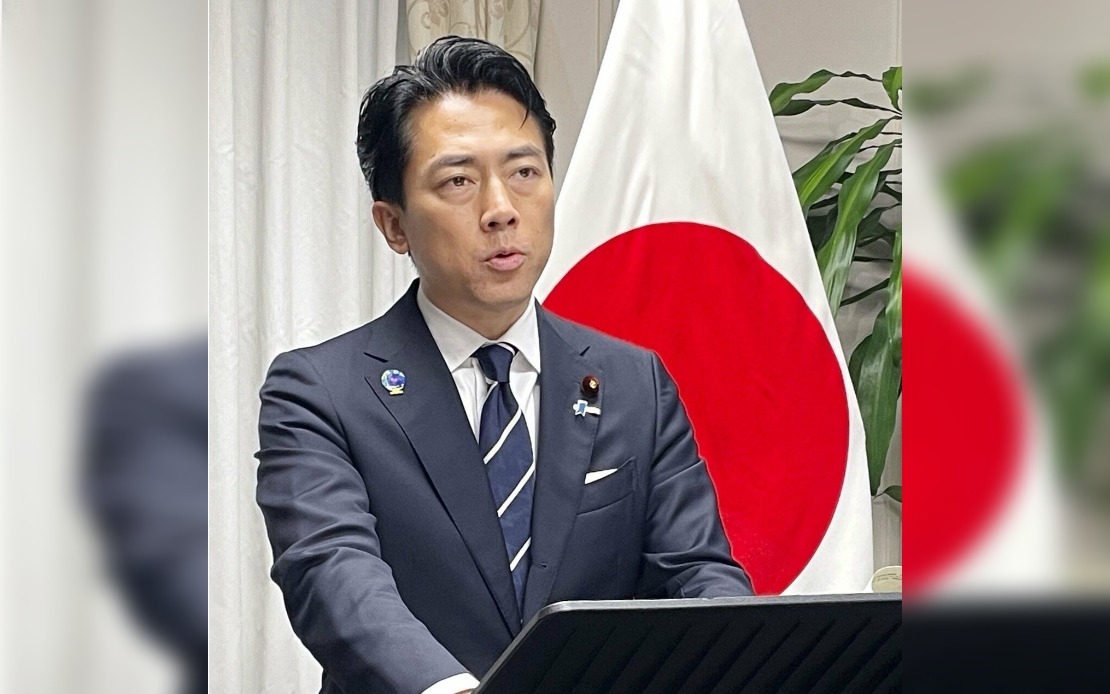
Japan's Defence Minister Shinjiro Koizumi has broken considerable diplomatic ground by advocating that his nation engage in serious discussion about nuclear weapons, marking a notable shift in how Tokyo approaches one of its most sensitive defence questions. Speaking through an online programme released on Friday, Koizumi suggested that Japan cannot sidestep the issue, particularly as the government prepares a comprehensive overhaul of three cornerstone national security documents scheduled for completion by year's end. His intervention signals an emerging willingness within Japan's security establishment to revisit long-standing taboos around nuclear policy, even as the country maintains its constitutional pacifist heritage.
The Defence Minister's remarks gain particular significance when considered against the backdrop of rapidly evolving European security postures. Koizumi specifically referenced France and Finland as models of nations openly pursuing enhanced nuclear deterrence strategies. Finland's parliament demonstrated this commitment in June when it passed legislation permitting the introduction of nuclear weapons into Finnish territory—a dramatic reversal for a country that previously maintained strict non-nuclear policies. Similarly, French President Emmanuel Macron announced in March that France intends to expand its nuclear warhead arsenal, underscoring how traditional security frameworks are shifting across the developed world.
Japan's current position stands in stark contrast to these European developments. Despite having access to the protective umbrella of American nuclear capabilities, Japan remains bound by three non-nuclear principles that have defined its security doctrine since the post-war period: the country neither produces nuclear weapons, possesses them, nor permits their presence within its territory. This framework reflects Japan's unique historical experience as the sole nation to endure nuclear bombardment, when atomic weapons devastated Hiroshima and Nagasaki in 1945. The principles have achieved near-constitutional status within Japanese political discourse, making any suggestion to reconsider them traditionally explosive territory.
Yet Koizumi's intervention reflects a growing conviction among Japan's security planners that the international environment has deteriorated substantially, necessitating a recalibration of defence assumptions. The Defence Minister argued explicitly that Japan's security circumstances have become progressively more challenging, implying that established taboos against discussing nuclear weapons may no longer serve national interests. This reasoning suggests that Japanese officials increasingly view the international security architecture as fundamentally unstable, with traditional alliances and deterrence frameworks proving inadequate against emerging threats. The implication is that some aspects of Japan's defence philosophy require urgent reassessment.
The timing of Koizumi's statement connects directly to broader policy shifts occurring within Prime Minister Sanae Takaichi's administration. The government's planned comprehensive revision of three major national security documents represents an opportunity to reshape Japan's strategic orientation. These documents—which collectively define Japan's security priorities and defence capabilities—have become focal points for modernising the country's approach to regional challenges. By raising the nuclear question now, Koizumi appears to be laying groundwork for more expansive policy discussions as the government undertakes its strategic review.
Previous statements from senior Japanese officials indicate this conversation has been building momentum behind the scenes. In December of the previous year, a government official involved in developing security policy under the then-administration explicitly suggested that Japan should acquire nuclear weapons—a proposal that generated immediate condemnation from opposition parties and prompted formal protests from neighbouring countries and international observers. Former Defence Minister Itsunori Onodera similarly articulated the need for Japan to engage in substantive debate regarding its foundational non-nuclear commitments, suggesting that challenges to orthodoxy are emanating from multiple quarters within the security establishment.
For Malaysia and the broader Southeast Asian region, Japan's pivot toward discussing nuclear weapons carries considerable implications. Japan's security decisions have historically influenced regional dynamics, and any fundamental recalibration of its defence posture would reshape strategic calculations across Asia. Regional nations have long valued Japan's restraint regarding nuclear weapons development, viewing it as stabilising. Any transition toward Japanese nuclear capability—even theoretically—would alter assumptions about regional military balances and potentially prompt security recalculations among neighbouring states. The discussion itself, therefore, warrants close attention from Southeast Asian observers.
Koizumi's framing emphasises the necessity of breaking what he characterizes as artificial constraints on policy discussion. His argument that certain topics have become off-limits for productive debate strikes at the heart of Japan's political culture, where certain sacred cows remain largely untouchable in mainstream conversation. By suggesting that this self-imposed silence actually weakens Japan's ability to respond effectively to security challenges, Koizumi positions opening the nuclear debate as pragmatic rather than ideologically transgressive. This rhetorical approach attempts to normalise what remains an extraordinary proposition within Japanese politics.
The Defence Minister's intervention also reflects Japan's complicated relationship with its American alliance. While Japan remains deeply dependent on US nuclear protection through extended deterrence arrangements, Tokyo increasingly questions whether American security guarantees remain credible under all circumstances. Recent shifts in American strategic attention toward the Indo-Pacific have created concerns in Japanese circles about whether the United States would genuinely risk nuclear escalation to defend its allies. These doubts, though rarely expressed publicly, may be motivating Japanese officials to explore whether Japan should develop independent nuclear capabilities as insurance against American retrenchment.
The prospect of official Japanese discussion of nuclear weapons development carries profound implications for non-proliferation frameworks that have governed East Asian security since the post-war era. Japan's continued adherence to non-nuclear principles has been crucial to maintaining regional stability and preventing a cascade of nuclear weapons programmes across the region. If Japan were to seriously pursue nuclear capability, it could trigger comparable calculations in South Korea, Taiwan, and potentially other nations, fundamentally destabilising Asia's security architecture. Koizumi's call for debate, therefore, represents not merely domestic Japanese political discussion but a potential inflection point with far-reaching regional consequences.
Looking forward, the government's security document revision offers the next clear juncture where Japan's nuclear policy may receive more formal reconsideration. Whether this translates into actual policy change or remains confined to elite discussion among security specialists remains uncertain. Nevertheless, Koizumi's statement signals that Japan's traditionally immobile stance on nuclear weapons has entered a new phase of contestation, with the country's security establishment openly questioning whether principles established during Japan's post-war reconstruction remain appropriate for contemporary strategic circumstances.

