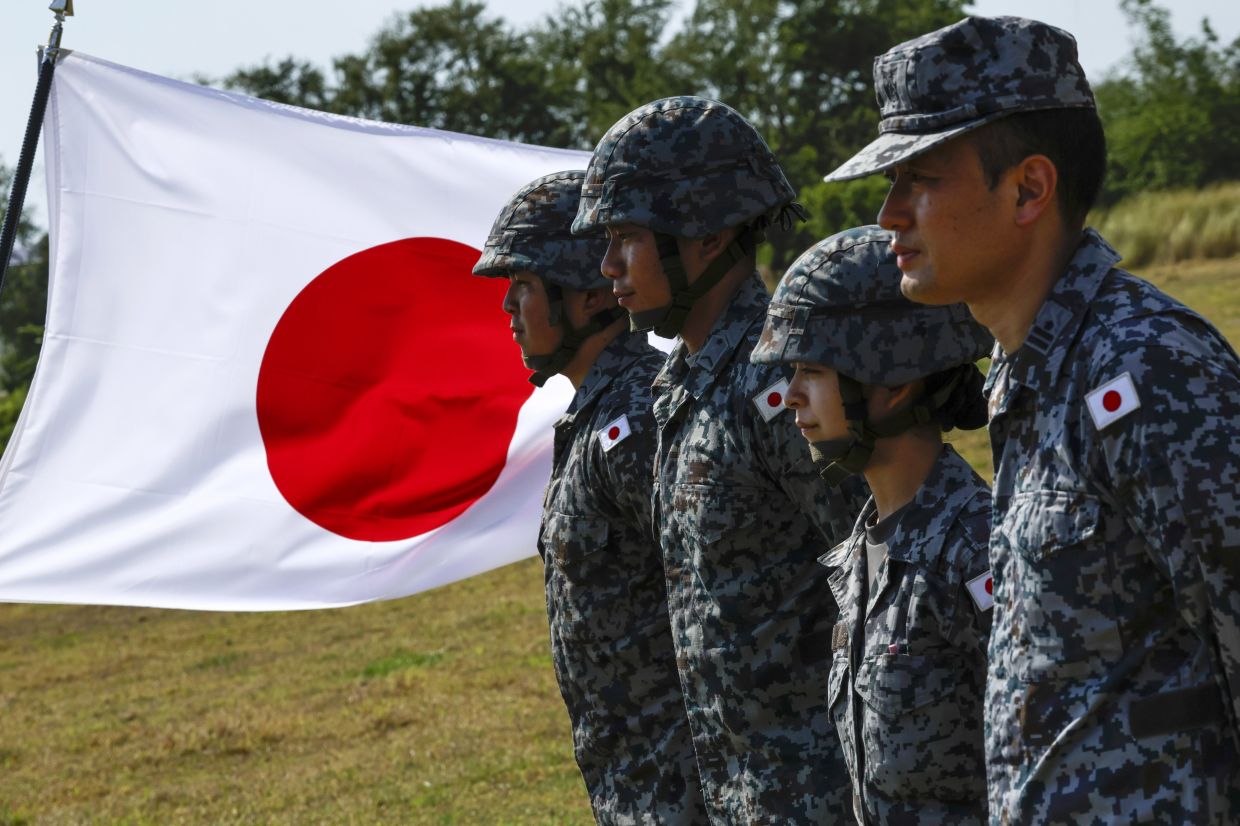
Japan's defence establishment is executing an ambitious yet carefully calibrated strategy to reshape regional security dynamics in Asia, moving beyond traditional reliance on Washington to forge a multi-layered architecture of bilateral and minilateral partnerships. This approach became evident during Singapore's major security forum in May, where Defence Minister Koizumi's high-profile engagement with US Defence Secretary Pete Hegseth served a dual purpose—reassuring Tokyo's anxious security establishment about American staying power while simultaneously signalling Japan's determination to build independent capacity. The cancellation of a scheduled session showcasing China's regional cooperative partnerships revealed the geopolitical calculation beneath Tokyo's diplomatic choreography, effectively denying Beijing a platform while highlighting the intense competition for influence across Asia.
Japan's pivot away from absolute dependence on Washington reflects deeper anxieties about US reliability that have intensified under the current American administration. Washington's recent demands that treaty allies substantially increase defence spending, coupled with the imposition of tariffs on strategic partners like India, have forced Tokyo's policymakers to confront an uncomfortable reality: American security guarantees cannot be taken for granted. Stephen Nagy, a political analyst at the International Christian University in Tokyo, frames this recalibration as a rational response to regional instability and the possibility of reduced American engagement, particularly concerning the maintenance of critical sea lanes and preventing smaller states from succumbing to Beijing's coercive pressure.
The emerging Japanese framework distinguishes itself from crude anti-China positioning by bundling security assistance with economic development initiatives and infrastructure investment. Rather than presenting itself as a military counterweight to Beijing, Tokyo emphasises partnerships built on shared interests in economic resilience and sustainable development. Pratnashree Basu of the Observer Research Foundation notes that Japan increasingly recognises how Southeast Asian and Pacific island nations prioritise economic growth and institutional capacity over traditional security concerns. This insight has fundamentally reshaped Tokyo's engagement model, integrating military support with infrastructure financing and energy transition assistance—a holistic approach designed to attract regional partners without triggering the perception of being forced into a zero-sum competition between Beijing and Washington.
Tokyo's Free and Open Indo-Pacific (FOIP) strategy, substantially updated under Prime Minister Sanae Takaichi in May, exemplifies this evolution from principle-based frameworks toward concrete economic and security tools. The original 2016 iteration, championed by former Prime Minister Shinzo Abe, emphasised abstract concepts such as the rule of law and good governance. The recalibrated strategy pivots toward tangible infrastructure: undersea cable networks, diversified energy supply chains, and enhanced maritime security capabilities. This transformation reflects sophisticated strategic thinking—Tokyo recognises that infrastructure investment creates dependencies and influence networks as effectively as military alliances, while remaining politically acceptable to recipient nations wary of appearing to take sides in great-power competition.
A crucial innovation supporting this framework is Japan's Official Security Assistance (OSA) programme, which circumvents constitutional constraints on military aid by providing financial support directly to partner militaries. Jumpei Ishimaru of the International Institute for Strategic Studies explains that while Japan's overseas development assistance (ODA) policy traditionally prohibited military applications, the OSA programme was specifically designed to fill this gap. Previously, Tokyo had stretched its conventional development aid budget attempting to support maritime domain awareness capabilities, creating inefficiencies and limiting reach. The OSA framework directly addresses this constraint, enabling Japan to provide equipment and training to smaller nations lacking capital for acquiring standard weapons systems, thereby preventing what Ryosuke Hanada of Macquarie University describes as a power vacuum that China would likely fill.
The growth trajectory of Japan's security assistance programme demonstrates accelerating momentum behind this strategy. Launched with participation from only four countries and funding of 2 billion yen in its initial phase, the programme has expanded within three years to reach 12 countries with a budget of 18.1 billion yen, now providing sophisticated equipment including advanced radar systems and unmanned aircraft. This expansion creates a complex interdependency network across the Indo-Pacific, with recipient nations becoming accustomed to Japanese technical standards and equipment, thereby increasing switching costs and deepening alignment with Tokyo's security architecture.
Beyond immediate geopolitical objectives, Japan's defence assistance strategy serves an additional function that analysts often overlook: providing crucial proving grounds for Japan's defence industrial base. Kei Koga of Nanyang Technological University observes that supplying advanced equipment to regional partners creates valuable opportunities to demonstrate Japanese military capabilities and establish market presence in the international defence market. This industrial dimension remains largely implicit in official rhetoric but represents a significant driver of Tokyo's expansion plans. The ability to sell and support defence equipment internationally generates revenue, sustains technological development, and positions Japanese firms for future commercial opportunities as regional nations upgrade their capabilities.
Japan's decision in April to lift its longstanding ban on lethal weapons exports dramatically expanded these commercial possibilities, permitting defence equipment sales to 17 countries including six Southeast Asian nations: the Philippines, Malaysia, Indonesia, Vietnam, Thailand and Singapore. This milestone enabled Tokyo to advance concrete discussions with Indonesia regarding potential exports of Asagiri-class destroyers, demonstrating how policy shifts translate rapidly into commercial engagement. For Indonesia and other Southeast Asian nations, Japanese defence equipment offers an alternative to previous choices between American systems and Chinese offerings, providing a third option that comes with less geopolitical baggage than either Washington or Beijing.
Japan's economic toolkit extends beyond military hardware into energy security, recognising that control over power supplies represents another dimension of geopolitical influence. The Power Asia initiative, launched in April with a 10 billion dollar commitment, specifically targets emergency energy supply mechanisms and long-term resilience building in response to vulnerability around the Strait of Hormuz. This programme demonstrates how Tokyo conceptualises security broadly, understanding that military capability means little if regional partners face energy shortages or infrastructure collapse. By positioning itself as a guarantor of energy security alongside defence cooperation, Japan offers a more comprehensive value proposition than traditional security partnerships.
However, this expanding Japanese strategy confronts significant obstacles that may ultimately constrain its effectiveness. Despite impressive growth, Japan's financial resources remain modest compared to China's state-directed development spending, and some regional nations question whether Tokyo possesses the sustained commitment necessary for long-term partnerships. Additionally, experts emphasise that Japan's strategy succeeds only insofar as it avoids explicit anti-China rhetoric that would alienate fence-sitting nations or provoke Beijing into more aggressive countermeasures. The delicate balance between offering genuine alternatives and appearing to orchestrate an anti-China coalition remains precarious.
Japan's refined approach to regional security also reflects recognition that military power alone cannot sustain regional order in an interconnected Indo-Pacific. The integration of security assistance, infrastructure financing, energy support, and development aid creates a more resilient partnership model than traditional bilateral defence alliances. By offering multiple dimensions of engagement, Tokyo provides regional partners with legitimate reasons for deepening relationships that transcend security calculations alone. This comprehensive strategy may ultimately prove more durable than either American-dominated security arrangements or China's transactional economic engagement, positioning Japan as a more natural partner for nations seeking balanced development without geopolitical subordination.

