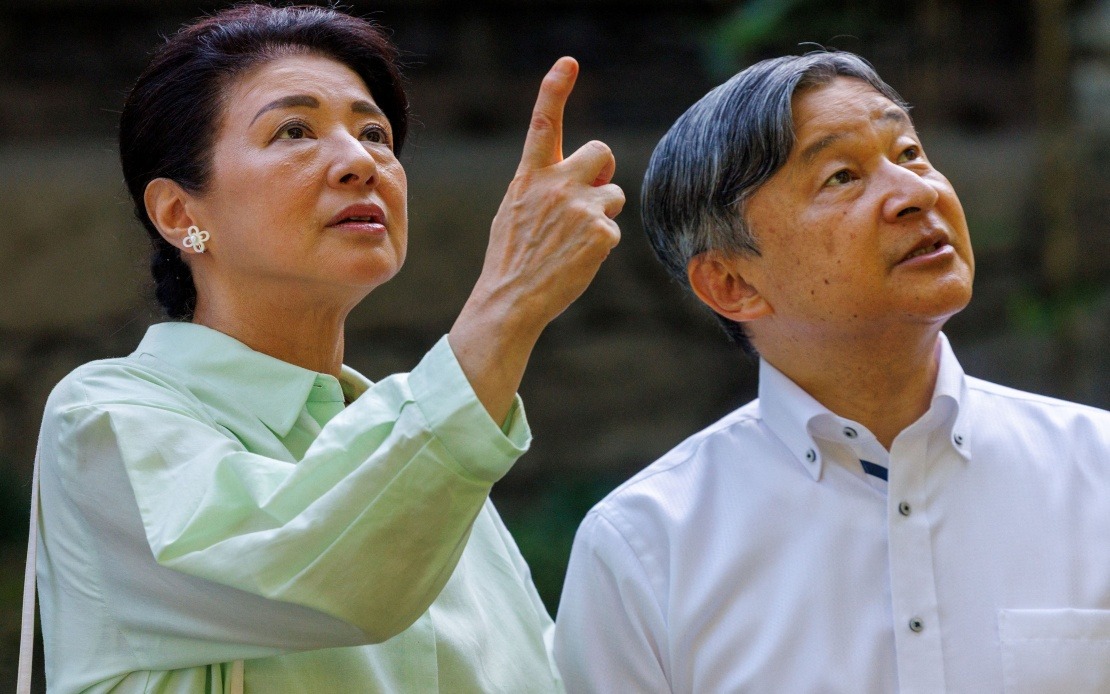
Japan's government has taken a significant step towards stabilising the imperial institution by approving a legislative package designed to address an acute succession crisis threatening the world's longest-reigning monarchy. The Cabinet's decision on Tuesday came as Prime Minister Sanae Takaichi and her coalition partners, the ruling Liberal Democratic Party and the Japan Innovation Party, race to pass the measures before Parliament's current session concludes on July 17.
The legislative framework centres on two primary mechanisms aimed at bolstering the imperial family's demographic sustainability. First, the revised Imperial House Law would permit the adoption of males aged 15 or older who descend through the paternal line from emperors belonging to 11 former branch families that were stripped of their imperial status in 1947 following World War II. Second, the bill would grant female members of the imperial household the right to maintain their imperial standing even after marrying commoners—a significant departure from current practice that automatically severs women's imperial ties upon matrimony.
This legislative approach represents a carefully calibrated compromise reflecting the conservative institutional philosophy of the LDP and its approach to tradition. Notably, the draft sidesteps the more transformative question of whether women or those descended from emperors through the maternal line should be permitted to ascend the Chrysanthemum Throne itself. While adopted males would remain ineligible to become emperor under the proposal, their male descendants would gain eligibility—a mechanism designed to refresh the succession pool without fundamentally altering the patrilineal principle that has governed imperial succession for centuries.
The emperor succession challenge has reached critical proportions. Emperor Naruhito, 66, has only three heirs: his brother Crown Prince Fumihito, 60; his 19-year-old nephew Prince Hisahito; and his 90-year-old uncle Prince Hitachi. This dramatic contraction in eligible successors has prompted decades of debate about institutional survival. The pool of branch family members potentially available for adoption connects to a common ancestor from approximately 600 years ago, offering a substantial reservoir of candidates who would maintain unbroken patrilineal descent from the imperial line.
Historical context proves essential for understanding the current predicament. In 1947, following the American occupation and Japan's post-war reconstruction, the imperial family underwent radical restructuring. Fifty-one members of the 11 branch families lost their imperial status, while only the three families descended from Emperor Hirohito's brothers retained their standing. This contraction dramatically narrowed the succession landscape and created the demographic vulnerability that policymakers now confront. The 1947 Imperial House Law, drafted during occupation, reflected Allied priorities rather than Japan's institutional traditions.
The proposal has already drawn fire from opposition parties and civil society voices who argue it represents an insufficiently progressive response to a fundamentally changing society. The legislation emerged from a cross-party consultation process where speakers and vice speakers of both parliamentary chambers compiled a consensus position based on submissions from thirteen political parties and groupings. However, this consensus conspicuously omitted meaningful deliberation on female succession, a notable absence given public sentiment.
Polling data reveals a substantial gap between public opinion and the government's cautious approach. A Kyodo News survey conducted in May found that 83.0 per cent of respondents support the concept of a female emperor. This indicates significant popular appetite for institutional modernisation that extends beyond the bill's current parameters. The disconnect between public support for more transformative reforms and the government's incremental approach may create political vulnerabilities during parliamentary debate, particularly as opposition forces prepare to challenge the conservative framing.
For regional observers, Japan's succession deliberations carry broader implications extending beyond ceremonial concerns. As East Asia's largest advanced economy confronts demographic decline and generational transitions, institutional questions about continuity and adaptation take on heightened significance. The manner in which Japan resolves these questions about tradition and modernisation may resonate throughout the region, particularly for monarchies and institutional systems wrestling with comparable legitimacy and succession challenges.
The timing of the legislative push reflects mounting pressure to resolve the issue decisively. The government panel that initially proposed these revisions did so in 2021, explicitly noting that female succession remained premature for examination. However, intervening years have not substantially altered the underlying demographic reality—if anything, they have intensified it. The decision to move forward with partial reforms rather than comprehensive restructuring suggests confidence that adoption mechanisms can sufficiently address immediate succession concerns while preserving the patrilineal principle that conservative stakeholders consider essential to imperial legitimacy.
Southeast Asian observers monitoring Japanese institutional developments should note that this legislation, if enacted, would represent Japan's most significant constitutional adjustment to imperial governance since the post-war period. The outcome will indicate whether Japan's political establishment views the imperial system as necessarily rigid or adaptable to contemporary circumstances. Neighbouring constitutional monarchies and successor societies throughout Asia may draw lessons from Japan's approach to balancing institutional continuity with pragmatic accommodation to demographic and social realities that transcend governmental ideology.

