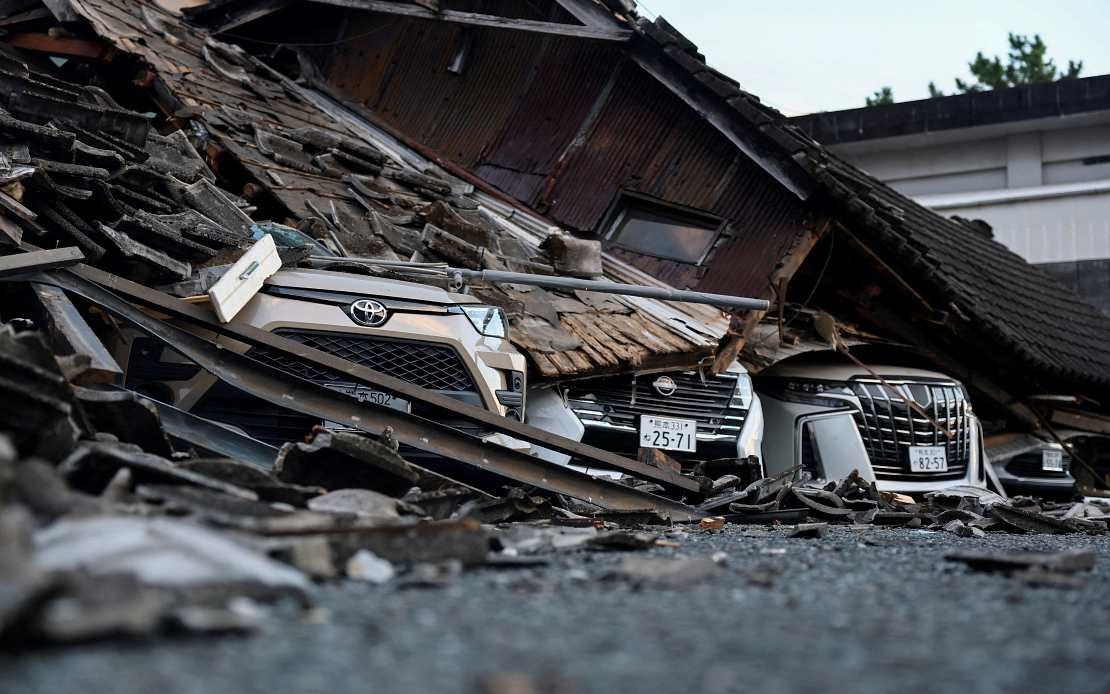
The operator of a Japanese variety store chain has formally acknowledged directing two employees back into an Aeon shopping mall moments after they had safely fled a powerful earthquake, a decision that proved catastrophic when a massive explosion killed both workers along with five others. Habita, the Kumamoto-based company running the retail outlet, made the admission on Monday as authorities continued investigating the incident at Aeon Mall Kumamoto in Kashima Town, southwestern Japan, which has sent shockwaves through Japan's workplace safety discourse.
The tragedy unfolded on Tuesday when a magnitude 7.1 earthquake—registering at the highest level of Japan's seismic intensity scale—struck the region with devastating force. In the immediate aftermath, two female employees of the Habita store, including a 22-year-old woman, prudently exited the building along with other occupants seeking safety. However, what should have been the end of their danger instead marked a critical turning point when management made a fateful decision that would ultimately cost them their lives.
Koji Yuse, a 64-year-old sales manager at the company, revealed on Monday afternoon that he had personally instructed the store manager to have the two employees re-enter the building. The objective was straightforward in business terms but catastrophic in execution: to transfer the day's cash proceeds from their retail counter on the second floor to a secure safe located on the first floor. Yuse acknowledged the gravity of his decision, telling reporters, "I think the order was inappropriate. I deeply regret it."
The company has since moved to address the tragedy by formally apologizing to the bereaved families and providing them with a comprehensive written account of the events leading to the deaths. This documentation is likely to become central to any subsequent investigation into potential negligence or workplace safety violations. Japanese corporate culture, while often emphasizing loyalty and responsibility to company assets, faces increasing scrutiny over whether financial considerations should ever supersede human safety, particularly in the aftermath of natural disasters when danger remains unpredictable.
The explosion that claimed seven lives in total struck the mall moments after the two employees had been sent back inside, demonstrating how rapidly conditions can deteriorate following seismic events. Japan's building infrastructure and emergency response systems are among the world's most advanced, yet the incident highlights how human decision-making in crisis situations can override established safety protocols. The timing suggested that structural damage from the initial earthquake may have triggered gas leaks or other hazardous conditions that led to the explosion.
Beyond the immediate tragedy at the shopping mall, the broader earthquake impact across Kumamoto Prefecture has proven severe. The prefectural government confirmed that as of Tuesday morning, 36 people had died as a direct result of the seismic event, with two additional deaths still under official investigation. These figures reflect the earthquake's considerable destructive power and the challenges facing rescue and recovery operations across the affected region.
For Malaysian observers and business leaders, this incident carries significant implications regarding workplace safety culture and crisis management protocols. Many Southeast Asian countries are adopting Japanese business practices and operational standards, yet this tragedy serves as a cautionary tale about when rigid adherence to asset protection must yield to life-preservation principles. The distinction between normal business operations and emergency response procedures cannot be blurred, regardless of financial considerations.
The incident raises important questions about corporate responsibility and decision-making authority during natural disasters. While individual store managers and supervisors must follow directives from upper management, there exists an implicit duty of care that should supersede financial concerns in emergency situations. The fact that Yuse acknowledged his order was inappropriate suggests growing awareness within Japan's business community that such decisions reflect poor judgment, even if made with legitimate business intent.
For Malaysian companies with operations in Japan or those operating in earthquake-prone Southeast Asian regions, the Kumamoto incident provides a valuable lesson about establishing clear emergency protocols that prioritize employee safety absolutely. Insurance and financial recovery mechanisms exist to protect company assets, but human lives cannot be recovered. Developing robust crisis management frameworks, ensuring all staff understand evacuation procedures, and crucially, empowering employees to prioritize safety over asset protection are essential components of modern corporate responsibility.
The legal and reputational consequences for Habita will likely extend beyond financial compensation to families. Japanese corporations face increasing pressure from consumers, investors, and regulators to demonstrate genuine commitment to employee welfare. The transparency shown by Habita in admitting fault may mitigate some reputational damage, but the incident will undoubtedly inform future safety audits and corporate governance discussions throughout Japan's retail sector. For multinational companies operating across Asia-Pacific, this serves as a reminder that crisis management failures can have irreversible human costs.

