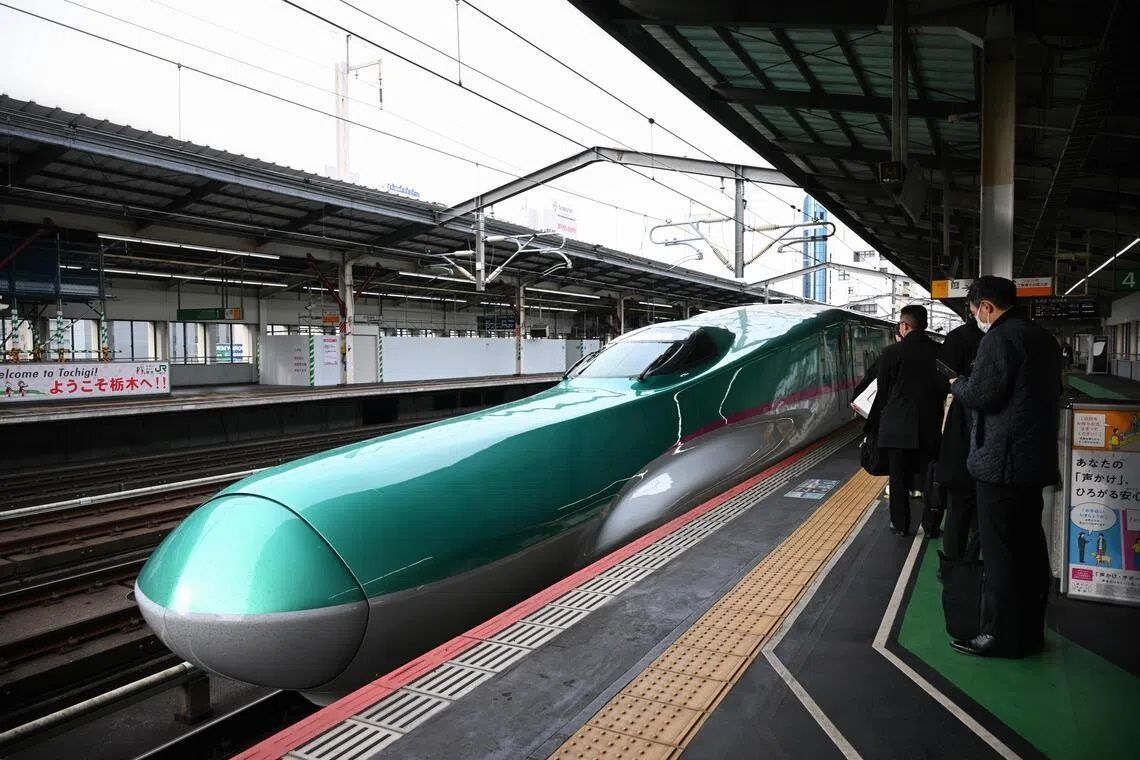
A shinkansen bullet train collided with a bear on Japan's Ou Line in Akita prefecture early Tuesday morning, halting one of the world's most advanced rail networks in an unusual encounter between high-speed transport and wildlife. The incident occurred between Wada and Ugo-Sakai stations at approximately 7:30am local time on June 30, prompting the Akita-bound service from Akita to Tokyo to execute an immediate emergency stop.
The unexpected impact forced the high-speed train to remain stationary at the collision site for roughly five minutes while railway staff assessed the situation and the animal's remains were cleared from the tracks. During this period, passengers aboard remained on the train awaiting further instructions from the crew. East Japan Railway's Akita branch, which oversees all rail operations throughout the prefecture including both the shinkansen network and conventional local services, coordinated the response and approved the train's continuation.
Following the five-minute pause, the affected shinkansen resumed movement but at a noticeably reduced speed to the next station at Ugo-Sakai, where it completed its emergency procedures. The cautious approach reflected standard safety protocols that require thorough inspections whenever such incidents occur, even when the collision involves an animal rather than a fixed obstacle. The branch office's decision to allow continued operation at lower velocity rather than diverting the entire service proved expedient given the circumstances.
Service normalcy returned shortly after 8am, once railway engineers completed comprehensive checks of the train's mechanical and electrical systems to confirm no damage had compromised safety or functionality. These inspections are particularly crucial for shinkansen operations given the trains' high speeds and the critical importance of technical reliability in Japan's transport infrastructure. The technical assessment confirmed that all systems remained within normal operating parameters despite the impact.
The train accommodated an estimated 200 passengers and crew members at the moment of collision, a typical passenger load for a morning shinkansen service during the busy travel season. The relatively confined space of a bullet train means that sudden emergency stops can cause physical discomfort and alarm among passengers, though the crew's swift response and communication helped manage the situation professionally. Remarkably, no injuries to any person aboard were reported, testament both to the shinkansen's robust safety design and the absence of secondary incidents during the emergency procedure.
While wildlife strikes on railways occur occasionally in many countries, their frequency on Japan's flagship shinkansen system remains exceptionally low due to fencing, monitoring systems, and strict animal control measures along heavily trafficked routes. The Akita incident represents an unusual occurrence on the Ou Line, which connects major population centres and typically maintains rigorous safety standards. Bears in the Akita region, particularly during early summer months, sometimes venture closer to human settlements and infrastructure as they forage, creating occasional hazards for transport operators.
The East Japan Railway Company, which operates the shinkansen service, maintains one of the world's safest high-speed rail networks with decades of operational experience managing technical challenges and environmental factors. Bear encounters, while dramatic, remain statistically insignificant disruptions compared to other potential safety concerns. The rapid recovery from this incident underscores the robustness of both the train's design and the railway's operational response capabilities.
For Malaysian and Southeast Asian observers, the incident offers perspective on Japan's transport infrastructure management. The region's continued expansion of rail networks and the prospect of high-speed rail projects in various countries mean that wildlife management along modern railway corridors will become an increasingly relevant issue across Asia. Japan's experience navigating such challenges while maintaining service reliability provides valuable lessons for transport planners elsewhere.
The shinkansen system's recovery demonstrated the importance of having well-trained staff, clear emergency protocols, and advanced mechanical systems capable of functioning safely after unexpected impacts. These factors have contributed to the shinkansen's renowned safety record spanning more than half a century of operation. As rail networks expand across Southeast Asia, particularly with initiatives like high-speed connections in Thailand, Vietnam, and Indonesia, understanding how to manage such incidents without compromising passenger safety becomes crucial for regional development.
The incident also highlights the tension between expanding transport infrastructure and wildlife conservation in Asia. As rail networks intensify, particularly in regions with significant animal populations, railway operators must balance efficiency with environmental responsibility. Japan's approach of containment and rapid response, combined with minimal service disruption, represents a model worth considering for developing rail infrastructure elsewhere in Asia that passes through or near wildlife habitats.

