Japan's new administration under Prime Minister Sanae Takaichi has unveiled an unprecedented fiscal intervention aimed at cushioning households from accelerating price pressures. Beginning in April 2025, the consumption tax on food and beverages will plummet from the current eight percent to a mere one percent, representing the most dramatic reduction in the tax since its establishment in 1989. The temporary measure will remain in effect for two years before the rate reverts to eight percent in 2027, at which point the government plans to introduce more sophisticated income-targeted subsidies to support lower-income workers grappling with mounting social insurance contributions.
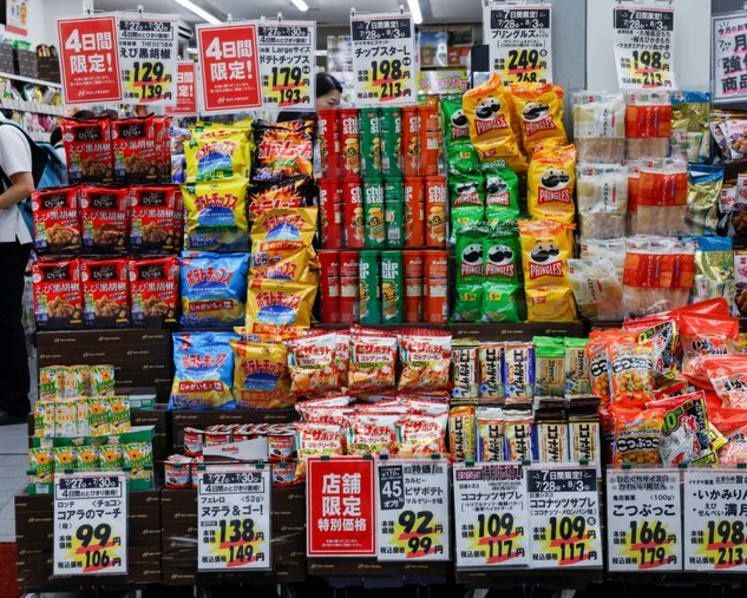
The decision reflects growing public anxiety over living costs in the world's fourth-largest economy, where inflationary pressures have intensified due to multiple external shocks. The prolonged instability in the Middle East has disrupted energy markets and supply chains, while Japan's persistently weak yen has amplified the cost of imported goods—a particularly acute concern for an island nation heavily dependent on foreign commodities. Food prices, which constitute a substantial portion of household budgets, have climbed noticeably, prompting calls for government action to prevent further erosion of consumer purchasing power and potential demand destruction across the broader economy.
Takaichi's pledge to address the sales tax on food was central to her electoral platform during the lower house elections held in February, where she secured a commanding mandate from voters. That electoral victory provided her with political capital to pursue what she characterized as decisive economic policy. The announcement on Thursday confirms her administration's intention to translate campaign promises into concrete policy, demonstrating responsiveness to voter concerns about household finances—a calculation that may yield political dividends even as economists debate the macroeconomic implications.
The fiscal cost of this initiative is substantial. According to media reports circulating in Japan, the two-year tax reduction is projected to forfeit approximately 10 trillion yen, equivalent to roughly $61 billion in lost government revenues. For a state already burdened by historically high debt levels, this represents a significant commitment of resources. Japan's public debt currently exceeds twice the size of its gross domestic product, the worst ratio among advanced industrial economies, creating an uncomfortable fiscal backdrop for expansionary policies that reduce revenue without corresponding expenditure cuts.
To navigate this fiscal tension, Takaichi's government has signaled its intention to offset the revenue loss through multiple channels rather than expanding public borrowing. The administration intends to reassess existing tax relief mechanisms and subsidy programmes, potentially consolidating or eliminating redundant measures to free up budgetary space. Notably, Takaichi emphasized the government's commitment to avoiding special government bonds—borrowing instruments often viewed with suspicion by financial markets—and instead pursuing funding mechanisms designed to maintain market confidence and stable borrowing costs for the state.
The strategic timing of the broader tax increase reversal in 2027 reveals sophisticated policy design. Rather than allowing the temporary food tax reduction to simply expire, the government plans a coordinated transition toward more sophisticated redistribution mechanisms. The phased introduction of finely-tuned subsidies targeting lower-income households burdened by rising social insurance premiums represents an attempt to address poverty and inequality through direct transfers rather than broad-based tax cuts. This approach acknowledges that blunt instruments like consumption tax reductions benefit high-income households disproportionately, since wealthier consumers spend more on food in absolute terms and face less acute purchasing pressure.
For Southeast Asian observers, Japan's fiscal gambit offers instructive lessons about inflation management in developed economies. While regional central banks have prioritized interest rate hikes to contain price pressures, Japan's approach emphasizes demand-side fiscal support and targeted relief measures. This divergence reflects Japan's structural constraints—persistently low inflation despite decades of accommodative monetary policy, aging demographics that depress aggregate demand, and an entrenched deflationary mindset among consumers and businesses that makes demand destruction a particularly acute policy concern.
The food tax cut also carries implications for regional trade patterns and supply chains. Lowering the effective cost of imported food in Japan's market could influence purchasing decisions, potentially affecting agricultural exporters across Southeast Asia. Malaysia's food processing and agricultural sectors, which maintain significant commercial relationships with Japanese importers and distributors, may experience shifts in demand patterns as Japanese consumer purchasing power improves and price signals shift.
Politically, the measure demonstrates how electoral accountability shapes economic policy in mature democracies. Takaichi's emphasis on implementing a campaign promise despite fiscal constraints reflects voter influence on government priorities. This contrasts with structural challenges many developing economies face in maintaining fiscal discipline while responding to popular demands for cost-of-living relief—a perpetual tension in democratic politics that Indonesia, Philippines, and other regional economies confront regularly.
The success of Japan's anti-inflation strategy will depend on implementation mechanics and broader macroeconomic conditions. If energy prices stabilize and the yen strengthens, imported inflation may naturally moderate, reducing pressure on food prices and potentially rendering the tax cut less consequential. Conversely, if geopolitical disruptions persist and currency weakness continues, the temporary relief may prove insufficient, potentially necessitating additional government support and further straining the public finances.
Looking forward, the government faces a critical challenge in executing the planned transition from broad tax relief to targeted subsidies without creating economic disruption. Reversion to the standard eight percent rate in 2027 could trigger another round of inflation anxiety unless the new subsidy system is perceived as adequate and efficiently implemented. The credibility of this two-stage approach depends on demonstrating that the government can deliver on promises made during the transition period, a calculation that will influence both consumer confidence and market assessments of Japan's fiscal trajectory.

