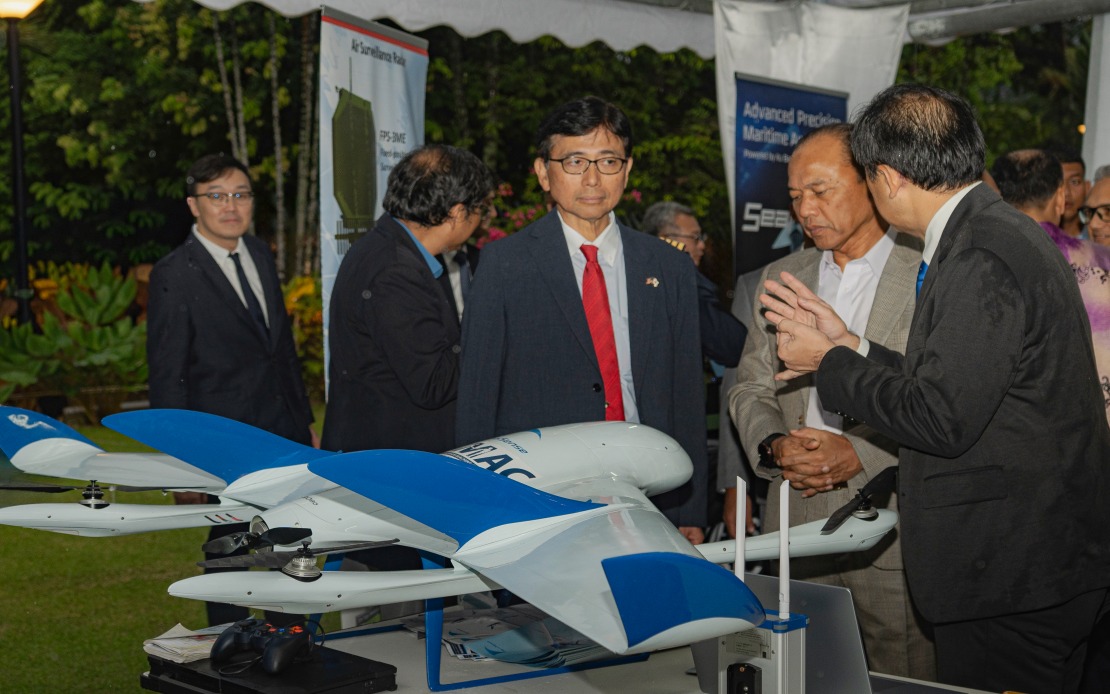
Japan's diplomatic presence in Kuala Lumpur has signalled a significant willingness to expand defence and security cooperation with Malaysia, recognising the nation's strategic importance in a region experiencing mounting geopolitical pressures. Ambassador Noriyuki Shikata made the commitment at the 72nd Japan Self-Defence Forces Day Reception, emphasising that Tokyo regards Malaysia as a crucial partner for maintaining stability across one of the world's most commercially vital maritime corridors.
The timing of this security outreach reflects broader strategic calculations within Japan's regional policy. Prime Minister Sanae Takaichi and Malaysian Prime Minister Datuk Seri Anwar Ibrahim recently reaffirmed their governments' commitment to deepening bilateral ties during the latter's visit to Japan earlier this month, with defence and security positioned as core pillars rather than peripheral concerns. This elevation underscores how both capitals view their relationship as extending far beyond traditional diplomatic courtesy into substantive security architecture.
Central to Tokyo's engagement strategy is the alignment between Japan's Free and Open Indo-Pacific vision and ASEAN's own Outlook on the Indo-Pacific, two frameworks that, while developed independently, share common objectives regarding maritime freedom and regional rules-based governance. By linking these visions, Japan positions itself as a supporter of ASEAN-led regional mechanisms rather than attempting to bypass or marginalise them—a nuanced diplomatic approach that differentiates Tokyo's strategy from more assertive external powers operating in the region.
The bilateral relationship reached a significant milestone in 2023 when Japan and Malaysia formalised their Comprehensive Strategic Partnership, a designation that typically encompasses security, economic, and cultural dimensions simultaneously. With diplomatic relations set to mark their 70th anniversary next year, both governments appear intent on demonstrating tangible progress in key areas, particularly defence, to justify the elevated partnership status to domestic constituencies and regional observers.
Practical maritime cooperation forms the backbone of Japan's security engagement with Malaysia. The MALPAN bilateral exercise, conducted regularly in the South China Sea and Strait of Malacca, has evolved from purely naval operations to incorporate the Royal Malaysian Air Force as of April, creating a more comprehensive interoperability framework across maritime and air domains. These exercises serve multiple purposes: they build trust between military personnel, sharpen operational coordination, and signal to other regional actors that Japan and Malaysia maintain robust mechanisms for coordinating responses to shared security challenges.
Japan's Official Security Assistance programme, launched in 2023, demonstrates how Tokyo is translating strategic declarations into concrete hardware and capabilities. Malaysia ranks among the earliest recipients of equipment ranging from unmanned aerial vehicles to rescue boats. The 2025 iteration extends this support through ceasefire monitoring equipment provided to the ASEAN Observer Team and a diving support vessel destined for the Royal Malaysian Navy—contributions that address Malaysia's specific operational requirements while simultaneously advancing Japan's broader regional stability objectives.
The defence industry dimension of this partnership reflects Japan's understanding that sustainable security cooperation requires commercial underpinnings and technology transfer. Ten Japanese companies exhibited advanced technologies at Defence Services Asia 2026 in Kuala Lumpur, while Japan and Malaysia simultaneously formalised a bilateral defence industry dialogue through a Terms of Reference agreement. Such industrial partnerships create stakeholder constituencies within both nations invested in maintaining good relations, while providing Malaysian defence planners with access to cutting-edge Japanese technologies in areas from maritime surveillance to unmanned systems.
From Malaysia's perspective, this deepening Japanese security engagement offers several strategic advantages amid regional uncertainty. Japan's technological sophistication, particularly in maritime and undersea capabilities, addresses specific gaps in Malaysia's defence infrastructure. Furthermore, Japan's own security constraints—rooted in its pacifist constitution and limited military footprint—mean that Japanese support arrives without the historical baggage or hegemonic ambitions that some Malaysian constituencies associate with greater powers. Tokyo can thus position itself as a trusted technological and strategic partner rather than a patron seeking influence or strategic dominance.
The maritime focus of Japan-Malaysia cooperation reflects shared vulnerabilities and interests. The Strait of Malacca remains one of the world's most strategically critical chokepoints, through which roughly a third of global maritime trade transits. Both nations have compelling interests in ensuring freedom of navigation, combating piracy and maritime terrorism, and preventing the seaways from becoming domains of contestation between larger powers. Japan's commitment to supporting Malaysia's maritime capabilities directly serves both nations' economic interests and security stability.
However, the strategic partnership must be viewed within the context of broader regional dynamics. Malaysia maintains complex relationships with multiple external powers including China, the United States, and ASEAN neighbours, requiring Kuala Lumpur to balance multiple partnerships without appearing to align exclusively with any single power. Japan's emphasis on working through ASEAN mechanisms and respecting the region's centrality in regional architecture helps address this concern, positioning Tokyo as a supporter of Malaysia's agency rather than a suitor seeking exclusive alignment.
The security cooperation framework also intersects with economic dimensions of Japan-Malaysia relations. Japanese companies invested in Malaysian defence industries create commercial relationships that extend beyond military procurement into technology development and industrial cooperation. These linkages strengthen overall bilateral ties while ensuring that security cooperation generates economic benefits that broaden political support within Malaysia for the strategic partnership.
Looking forward, the 70th anniversary of diplomatic relations next year presents an opportunity for both governments to announce further initiatives, whether in cyber security, space-based monitoring capabilities, or humanitarian assistance and disaster relief coordination. Japan's track record of sustained, non-coercive engagement suggests that security cooperation will deepen gradually through expanding practical cooperation rather than dramatic announcements or binding treaties that might provoke domestic sensitivities.
Ultimately, Japan's readiness to intensify security partnership with Malaysia reflects Tokyo's broader strategy of building network relationships across Southeast Asia based on shared interests in stability, rule-based order, and economic prosperity. Malaysia, as a significant ASEAN economy and critical maritime state, occupies a natural position within this framework. The current trajectory of Japan-Malaysia security ties demonstrates how security partnerships in the contemporary Indo-Pacific can develop through patient, mutually beneficial engagement that respects each nation's distinct interests and constraints.

