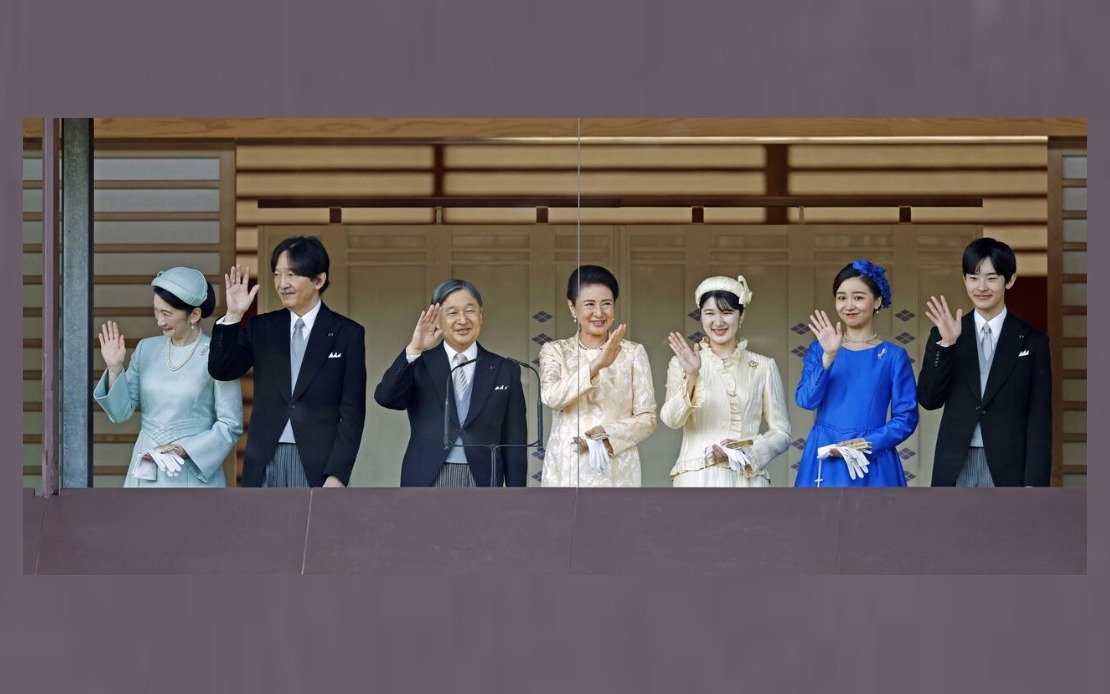
Japan has taken a measured but ultimately conservative step to address the critical shortage of imperial heirs by approving amendments to its 1947 Imperial House Law, the world's oldest continuous hereditary monarchy framework. The parliamentary approval marks the first substantive overhaul in decades, yet maintains the male-line succession principle that has defined the throne's line of succession since the imperial system's founding centuries ago. Prime Minister Sanae Takaichi, who became Japan's first female premier, championed the legislative changes despite their failure to embrace female succession—a position supported by nearly five-sixths of the Japanese public according to recent polling.
The revised law introduces two significant procedural modifications designed to enlarge the dwindling pool of eligible successors. The changes permit the imperial family to adopt unmarried males aged fifteen or older from eleven former branch families that were stripped of their royal status following Japan's defeat in the Second World War. Additionally, female imperial family members may now retain their royal status after marrying non-royal individuals, a provision that reverses the automatic loss of imperial rank previously incurred through such marriages. These modifications respond to an acute demographic crisis: the current 16-member imperial family includes only three males capable of inheriting the Chrysanthemum Throne, raising fundamental questions about institutional continuity.
The 1947 law itself emerged from Japan's post-war reconstruction, implemented during the American occupation when authorities fundamentally restructured Japanese governance. At that time, fifty-one members from eleven imperial branch families were removed from the succession framework, dramatically narrowing the potential heir pool. The original legislation explicitly stipulated that the throne "shall be succeeded to by a male offspring in the male line belonging to the Imperial Lineage"—language that persists unchanged in the current revision. This continuity reflects the governing coalition's determination to preserve what it regards as an essential constitutional principle, even as demographic realities threaten the system's viability.
Opposition lawmakers have argued that the legislative process lacked sufficient depth and transparency, criticising the ruling coalition for rushing implementation without exhaustive parliamentary deliberation. Critics contend that the Liberal Democratic Party and its junior partner, the Japan Innovation Party, prioritised preserving traditional male succession over addressing the succession question through more comprehensive reform. The government's position holds that male descendants of adopted imperial family members would automatically qualify for throne succession, offering a pathway forward without formally broadening eligibility beyond the male line.
Months of cross-party negotiations produced a parliamentary consensus drawing input from thirteen political parties and groups, yet this consensus deliberately sidestepped the succession question entirely. Takaichi's administration has resisted pressure to clarify whether female or maternal-line emperors might eventually ascend the throne, maintaining strict adherence to the male-line principle enshrined in the 1947 framework. This deliberate ambiguity leaves unresolved the fundamental question of whether adoption provisions represent a permanent solution or merely a temporary measure while succession rules remain unchanged.
The demographic pressure underlying these reforms cannot be overstated for regional observers. Emperor Naruhito has only one son, Crown Prince Fumihito, whose two children include only one male heir, Prince Hisahito. Beyond this narrow succession line, the imperial family faces an unprecedented succession squeeze that adoption of distant male cousins can only partially address. Japan's broader demographic challenges—including low birth rates and an ageing population—make this institutional crisis particularly acute, as the nation confronts questions about dynastic continuity that previous generations never seriously entertained.
Public sentiment has shifted dramatically away from the government's cautious approach. A Kyodo News poll conducted in May revealed that eighty-three percent of respondents favoured permitting female emperors to ascend the throne, whilst only thirteen percent opposed such expansion. This overwhelming support reflects evolving attitudes toward gender roles, meritocratic principles, and institutional adaptation among younger Japanese citizens who view constitutional flexibility as consistent with modernity. The statistical gap between public opinion and official policy illustrates the conservative nature of Japan's political establishment when addressing questions touching upon ancient tradition.
The international dimension of this debate carries weight throughout East Asia, where Japan's imperial institution remains a source of cultural and political significance. Neighbouring countries including South Korea, with its own complex relationship to historical monarchical systems, and Malaysia, where constitutional monarchy remains constitutively important, observe Japan's handling of succession and gender with considerable interest. How Japan resolves the tension between democratic values supporting female leadership and venerable institutional traditions will likely influence broader regional conversations about balancing modernisation with cultural continuity.
For Malaysia particularly, Japan's experience offers instructive parallels regarding the intersection of constitutional monarchy, religious law, and succession frameworks. Malaysia's own system of rotating monarchy among nine sultans, combined with federal constitutional protections for Malay-Muslim interests, faces different but conceptually related questions about institutional adaptation within traditional frameworks. Japan's preference for incremental modification over comprehensive reform reflects a governance philosophy that prioritises consensus and gradual adjustment, an approach familiar to Malaysian constitutional culture.
The pragmatic adoption mechanism represents a compromise between competing values that characterises much of contemporary Japanese governance. Rather than fundamentally redefining the throne through constitutional amendment or explicitly permitting female succession, lawmakers engineered a technical solution that potentially expands the eligible pool while preserving formal adherence to male-line principles. Whether this approach sustainably addresses Japan's succession crisis or merely postpones more fundamental institutional reckoning remains uncertain, depending largely on whether adoptable male descendants emerge willing to join the imperial household and have sons to continue the dynasty. The coming years will test whether the reformed law genuinely solves the succession problem or represents merely a temporary respite before more dramatic changes become unavoidable.

