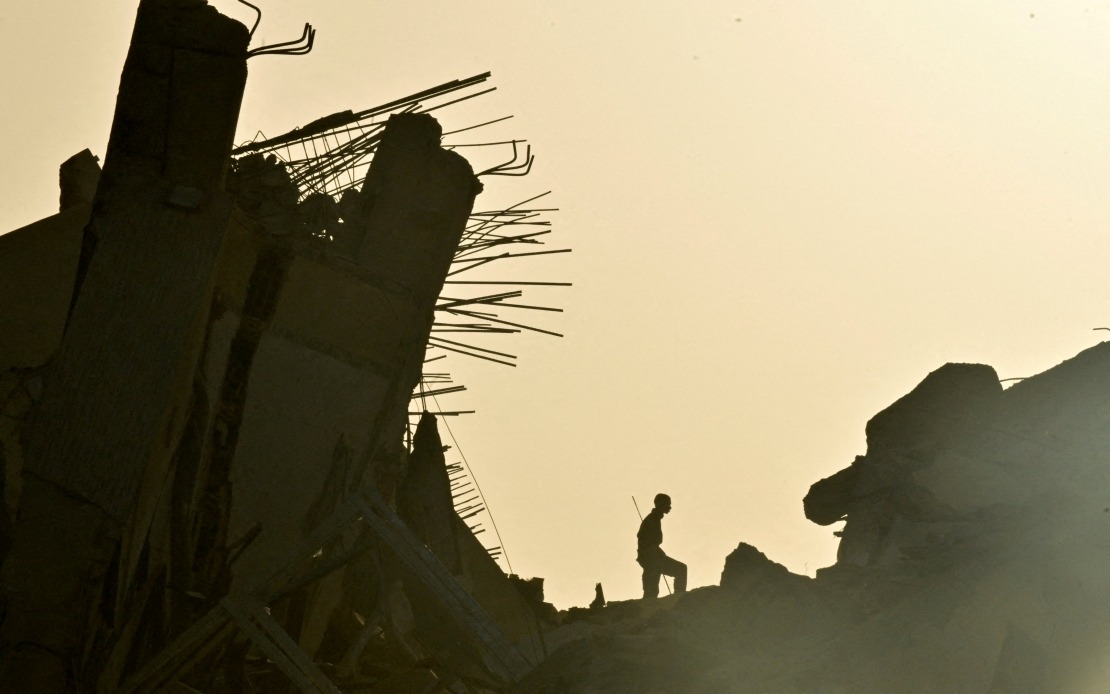
Japan has stepped up its humanitarian response to Venezuela's earthquake disaster by pledging US$3.5 million in emergency grant aid and mobilising a second medical relief team, Foreign Minister Toshimitsu Motegi announced on Friday in Tokyo. The announcement represents an escalation of Japan's engagement with the crisis, which has already claimed more than 3,000 lives since the twin earthquakes struck on June 24.
The US$3.5 million commitment will be distributed through established international organisations operating in Venezuela, enabling rapid delivery of critical supplies to affected populations. According to Motegi's statement, the funds will support a comprehensive relief strategy encompassing food provisions, health care services, emergency shelter construction, and other essential supplies required by communities devastated by the seismic events. This multi-faceted approach reflects Japan's understanding that earthquake recovery demands sustained support across multiple humanitarian dimensions.
The deployment of a second disaster relief medical team marks an important deepening of Japan's operational presence in Venezuela. While the precise composition and size of this team remain unspecified in official announcements, its dispatch indicates recognition that immediate medical needs persist in affected areas. Medical support has become critical given the scale of casualties and the inevitable surge in disease and malnutrition that typically follows major natural disasters in developing regions.
For Malaysian observers and policymakers, Japan's response offers instructive lessons in rapid humanitarian coordination. Japan's phased approach—commencing with emergency supplies on June 30, deploying an initial medical team on July 1, and now announcing expanded financial and personnel commitments—demonstrates the importance of sequential responses calibrated to evolving disaster conditions. This systematic escalation contrasts with either under-resourced initial responses or overwhelming early commitments that cannot be sustained.
Japan's decision to channel assistance through international organisations rather than direct bilateral arrangements reflects pragmatic recognition that established humanitarian networks often possess superior logistical capabilities and local knowledge in crisis zones. This partnership model has proven effective in Southeast Asian disaster contexts, where organisations like the International Federation of Red Cross and Red Crescent Societies maintain pre-positioned resources and trained personnel. For regional nations managing their own disaster response frameworks, Japan's emphasis on institutional coordination provides a template for maximising aid effectiveness.
The Venezuelan earthquake response also situates Japan within broader patterns of middle-power humanitarian engagement. As a wealthy, technologically advanced nation without regional interests in South America, Japan's interventions rest upon universal humanitarian principles rather than strategic calculations. This positioning enables Tokyo to contribute meaningfully to distant crises while maintaining diplomatic neutrality—a posture particularly valuable in Venezuela's politically fractured environment.
Motegi's commitment that "Japan will continue to provide the assistance needed by those affected by the earthquakes" suggests this initial package represents an opening position rather than a final allocation. Venezuela's reconstruction will extend across years, and Japan's willingness to maintain extended engagement signals understanding that earthquake recovery transcends immediate emergency phases. This temporal dimension matters substantially for affected populations, as post-disaster fatigue often diminishes international support precisely when long-term recovery efforts require sustained resources.
The coordination emphasis articulated by Motegi—pledging to "work closely with international organisations and humanitarian partners"—underscores that effective disaster response depends upon aligned rather than fragmented efforts. In Venezuela's case, coordination challenges are compounded by political divisions that complicate humanitarian access and resource distribution. Japan's determination to engage through established multilateral channels helps circumvent these obstacles by working within frameworks that maintain operational independence from contested political authority.
For Southeast Asian nations, Venezuela's experience carries sobering implications regarding earthquake preparedness and recovery capacity. While the region's seismic exposure is substantial, many countries lack the institutional frameworks and financial reserves enabling rapid, comprehensive responses comparable to Japan's mobilisation. The Japanese model—combining immediate material assistance, technical expertise through medical teams, and sustained financial commitment—provides a benchmark against which regional disaster management systems can be assessed.
Japan's humanitarian engagement with Venezuela also reflects Tokyo's broader positioning as a responsible international actor within the post-Cold War system. Japanese aid allocations, while selective, consistently demonstrate responsiveness to humanitarian emergencies across diverse regions. This establishes Japan as a reliable partner for crisis response, enhancing Tokyo's soft power and diplomatic standing independently of traditional alliance relationships.
The cumulative Japanese assistance—combining initial emergency supplies announced June 30, the first medical deployment on July 1, and this latest US$3.5 million commitment—demonstrates escalating engagement calibrated to unfolding circumstances. This incremental approach permits course corrections as conditions clarify while avoiding either under-commitment or wasteful over-allocation based on incomplete information. For Malaysian humanitarian planning, such responsiveness to emerging data represents best practice in resource-constrained environments.
Venezuela's recovery will extend well beyond the immediate crisis period, requiring sustained international engagement that transcends initial media attention. Japan's explicit commitment to continuing support, coupled with its deployment of successive relief teams and expanding financial assistance, positions Tokyo as a partner likely to maintain involvement through difficult reconstruction phases. For affected Venezuelans and international observers assessing humanitarian responses, Japan's phased, institution-based approach offers a model emphasising sustained commitment over headline-grabbing gestures.

