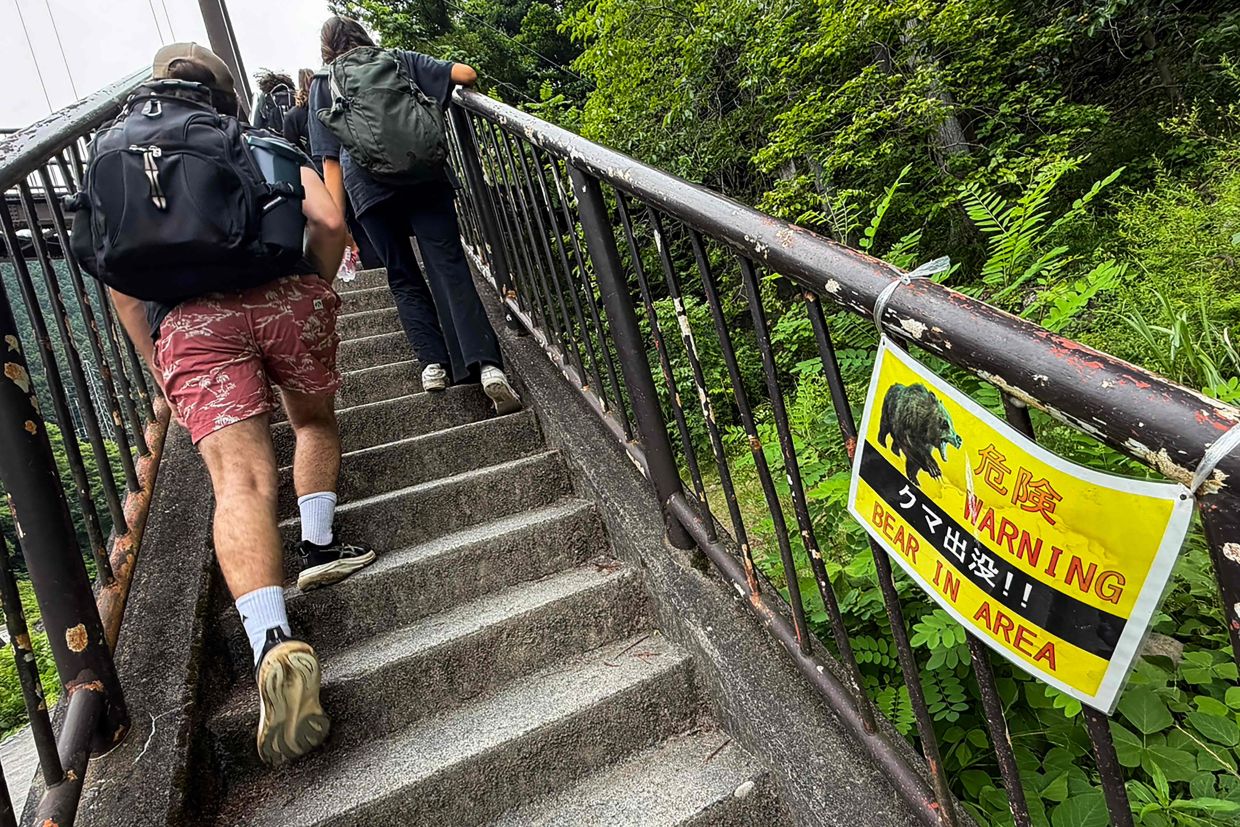
Japan's environment ministry has launched an ambitious wildlife monitoring initiative in response to an alarming escalation in bear-related fatalities across the country. The deployment of more than 800 cameras throughout the nation's mountainous regions represents a significant shift towards data-driven conservation and public safety management, with authorities hoping to gain unprecedented insight into bear movements and population dynamics that have eluded previous localised efforts.
The timing of this technological intervention is urgent. Since the start of April, at least five people have been killed in bear attacks, all within the Tohoku region in northern Honshu, representing a concentrated cluster of fatalities in one of Japan's most densely populated regions. These recent deaths follow a deeply troubling trend: Japan recorded 13 fatal bear attacks across the entire country during the previous fiscal year, marking a new record that has alarmed both residents and policymakers alike. Environment ministry official Yu Takahashi explained that the coordinated survey represents a departure from fragmented local approaches, which had previously relied on inconsistent methodologies and separate administrative jurisdictions.
The underlying cause of this escalating human-wildlife conflict lies in demographic and ecological shifts that have fundamentally altered Japan's countryside. Bear populations have grown substantially in recent decades, a phenomenon that scientists attribute largely to the progressive depopulation of rural mountain communities. As farming villages have emptied and forests have expanded into abandoned agricultural land, bears have found increasingly abundant habitat and fewer human deterrents. Simultaneously, these same mountains—which comprise approximately 80 percent of Japan's total land area—have become zones of intersection where wildlife and humans inevitably collide, particularly as urban residents venture into remote areas for recreation and leisure activities.
In Tohoku specifically, the psychological impact of this wildlife crisis extends far beyond the tragic statistics. Local residents live under persistent anxiety about bear encounters, with national media providing almost daily coverage of incidents in shopping districts, public parks, and school premises. This constant reporting, while informing the public, has also amplified fear and created a sense that bears are increasingly penetrating the heart of civilisation. School closures have become routine responses to nearby sightings, disrupting education and magnifying community concern about the adequacy of existing safety measures.
The camera-based survey represents an innovative response to these challenges. The system employs honey mixed with wine as bait, placed at approximately human-head height, designed to attract bears and prompt them to stand upright on their hind legs. As the animals investigate the sweet liquid, cameras capture their distinctive white chest markings—essentially creating a photographic database for population tracking and individual identification. This non-invasive methodology provides researchers with crucial information about bear distribution, movement patterns, and population structure without requiring direct capture or tranquilisation.
The initial phase targets the six major bear populations concentrated in Tohoku, where the crisis is most acute. Yu Takahashi outlined plans to expand this surveillance network progressively across the country over the next four years, building a comprehensive national dataset that will inform policy decisions at multiple government levels. This represents a significant investment in understanding Japan's bear ecology and could serve as a model for other nations grappling with wildlife management challenges in densely populated regions.
Beyond the scientific dimensions, the crisis has created unexpected secondary incidents highlighting the tension surrounding bear safety measures themselves. On Wednesday, a 22-year-old Vietnamese national identified as Huynh Nhat Duy accidentally discharged anti-bear aerosol spray inside a post office in Nagoya, requiring hospital treatment for five people exposed to the capsaicin-based repellant. Duy was arrested on charges of obstruction of business after admitting the discharge was unintentional. The incident underscores how widespread the distribution of bear deterrents has become and the risks associated with emergency safety equipment in confined public spaces.
The bear assault aerosols themselves contain capsaicin, the compound responsible for the pungent heat in chili peppers, and produce intense burning sensations when deployed. Authorities have recommended these sprays as essential equipment for anyone venturing into mountainous areas, alongside other precautions such as carrying bells attached to bags and avoiding solitary travel. Yet this week's accidental dispersal in an urban post office demonstrates the complications of promoting defensive measures on a widespread basis without adequate training or safeguards.
Recent incidents illustrate the unpredictability and intelligence some bears display when entering human-dominated spaces. In June, authorities deployed dozens of police officers, professional hunters, and municipal officials across four days to apprehend a bear roaming through Utsunomiya, located north of Tokyo. The operation forced mass school closures throughout the city, illustrating how single animals can paralyse urban infrastructure. Prior to this, a bear in Fukushima prefecture gained notoriety for behaviours suggesting sophisticated problem-solving: the animal reportedly opened windows and manipulated water taps at factory locations before attacking four people and evading capture for an extended period.
These anecdotal reports of bear intelligence and adaptability suggest that management strategies relying solely on physical barriers or simple deterrents may prove insufficient. The species appears capable of learning and modifying behaviour in response to human presence, potentially explaining why traditional methods have become less effective. The camera survey data may reveal patterns in how bears navigate urban peripheries and which environmental factors draw them into populated areas, information that could reshape how Japanese municipalities design urban planning and land management policies.
For Southeast Asian observers, Japan's wildlife crisis offers instructive lessons about the broader consequences of rapid urbanisation and rural depopulation. Many countries across the region are experiencing similar demographic transitions, with young people migrating to cities and rural economies contracting. As equivalent ecological pressures emerge in Malaysia, Indonesia, and Thailand, these nations may face comparable conflicts between wildlife and human populations. Japan's technological response and growing investment in wildlife monitoring research could provide a blueprint for regional approaches to human-wildlife coexistence, particularly as climate change and habitat fragmentation intensify pressures on large mammals across Asia.
The escalation of bear-related incidents in Japan represents a complex environmental challenge that transcends simple conservation or pest management frameworks. It reflects profound shifts in land use, demographic patterns, and human-animal interaction that define contemporary Asia. Japan's response—combining technological innovation with systematic data collection—suggests recognition that sustainable coexistence requires understanding wildlife populations and their behaviour with unprecedented precision. Whether this camera-based monitoring system ultimately succeeds in reducing fatalities will depend not only on the accuracy of population surveys but on whether insights gained translate into practical policy changes that reshape how humans and bears navigate increasingly overlapping territories.

