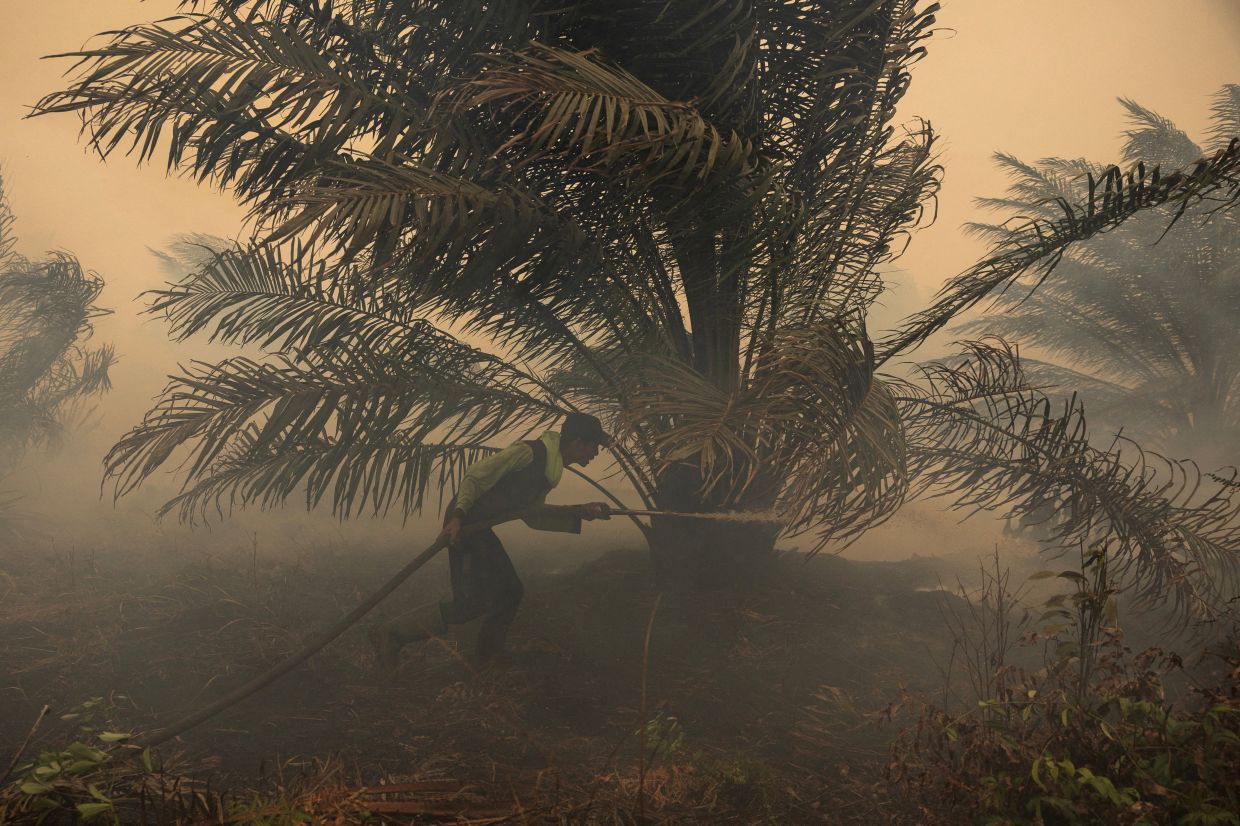
Japan has stepped in with concrete military and technical support to help Indonesia combat the worsening forest and land fire crisis gripping Kalimantan, offering three specialized helicopters for water-bombing operations as air quality deteriorates to dangerous levels. The assistance marks a significant bilateral response to an environmental emergency that threatens to destabilize air quality across Southeast Asia and poses serious public health risks to millions of people across the Indonesian archipelago and neighbouring countries.
The National Disaster Mitigation Agency (BNPB) confirmed that the Japanese contribution includes a Chinook helicopter alongside two additional aircraft, with operations set to commence on September 10 following preparatory activities. According to Berton Panjaitan, Acting Head of the BNPB's Data, Information and Disaster Communication Centre, the deployment involves intensive coordination between the two nations, including comprehensive site surveys and detailed planning sessions centred on the operational mechanics and logistics of conducting effective water-bombing campaigns across Kalimantan's vast terrain. The logistical complexity of such operations in Indonesia's geographically challenging landscape—with dense jungle, difficult terrain, and scattered fire locations—necessitates careful preparation to maximize effectiveness.
The scale of the current crisis is reflected in alarming pollution measurements recorded across the region. The Environment Ministry documented an Air Pollutant Standard Index (ISPU) reading of 1,108 at Jekan Raya in Palangka Raya, Central Kalimantan, while South-East Pontianak in West Kalimantan registered 1,075 as of late Saturday afternoon. Both measurements fall into the hazardous category, indicating air quality so poor that it poses immediate health risks to the general population, not merely vulnerable groups. These readings underscore the urgency of international cooperation and the need for rapid escalation of firefighting efforts across multiple provinces simultaneously.
The underlying problem is substantially worse than these snapshot readings suggest. The BNPB identified 9,242 separate hotspots distributed across West, Central, and South Kalimantan, with all three provinces showing troubling upward trends in fire activity. West Kalimantan experienced the most dramatic increase, with hotspot numbers climbing by 1,629 to reach 3,371—a concentration that suggests either rapid fire spread, late-season burning by agricultural interests, or both. Beyond these thermal signatures, ground teams documented 171 confirmed fire locations across the three provinces, indicating that many hotspots detected by satellite monitoring are genuine active fires requiring immediate suppression.
Indonesia's existing firefighting infrastructure, while substantial, remains insufficient to contain the crisis without external assistance. The BNPB currently operates 52 aircraft dedicated to fire suppression operations, comprising 38 water-bombing helicopters and aircraft plus 14 vehicles deployed for aerial reconnaissance and cloud-seeding weather modification missions. Despite this considerable mobilization, these resources have managed to drop approximately 3.5 million litres of water across six priority provinces, a volume that appears inadequate given the scale and distribution of active fires and the speed at which new hotspots are emerging.
Weather modification operations have provided some relief in certain areas, particularly on Sumatra where cloud-seeding missions successfully generated rainfall across portions of Riau, South Sumatra, Jambi, and Lampung provinces. These weather engineering efforts represent an alternative firefighting tool, particularly valuable when traditional water-bombing proves operationally difficult. However, this approach has significant limitations that became apparent in Kalimantan, where meteorological conditions unsuitable for cloud-seeding persist in Central and South Kalimantan. The absence of sufficient cloud cover in these regions—a factor that seasonal atmospheric patterns may have exacerbated—eliminates this firefighting option precisely where it is most needed, forcing greater reliance on conventional aerial water-bombing and ground-based suppression efforts.
The deepening crisis in Kalimantan carries implications far beyond Indonesia's borders. Transboundary haze has historically affected Malaysia, Singapore, and other Southeast Asian nations when Kalimantan fires reach peak intensity, disrupting air quality, affecting public health, disrupting transportation and commerce, and straining regional relations. Malaysian decision-makers and the general public monitor Kalimantan fire conditions closely, recognizing that inadequate Indonesian firefighting capabilities inevitably result in degraded air quality affecting the peninsula and Sabah and Sarawak. This regional dimension makes Japan's assistance strategically significant beyond the immediate humanitarian calculus.
The timing of Japan's intervention underscores the unpredictable and escalating nature of Indonesia's fire season. The deployment scheduled for mid-September coincides with a period when fire conditions typically intensify further rather than abate, suggesting that preparations are underway based on forecasts anticipating continued or worsening fire activity rather than imminent natural relief. This forward-looking posture indicates that both Japanese and Indonesian authorities anticipate a prolonged and severe fire season requiring sustained international firefighting support through the coming weeks.
The broader context reveals systemic vulnerabilities in Indonesia's capacity to manage landscape-scale fire emergencies. Despite considerable investment in firefighting capabilities, hotspot numbers continue rising, suggesting that fire prevention, early detection, rapid response, and community engagement mechanisms remain inadequate. The concentration of hotspots in West Kalimantan points to particular challenges in governance, land-use planning, or community-level fire suppression in that province, issues that cannot be solved through helicopter deployments alone but require sustained institutional reform and investment.
Japan's assistance, while materially significant, functions as emergency stabilization rather than a long-term solution. The additional helicopter capacity will demonstrably increase water-bombing capabilities and potentially suppress some fires faster than would otherwise be possible. However, this intervention occurs within a constrained temporal window and geographic scope. Without simultaneous progress on the underlying drivers of landscape fires—whether agricultural expansion, delayed land clearing, insufficient border patrols in fire-prone areas, or inadequate community-level prevention infrastructure—the fundamental vulnerability persists into future fire seasons.
For Malaysian stakeholders and observers, the unfolding Kalimantan crisis and the international assistance mobilization to address it highlight both the interdependent nature of regional environmental challenges and the importance of maintaining functional diplomatic channels that enable rapid cooperation during crises. The Japanese deployment demonstrates that neighbouring countries recognize shared interests in containing fires at source rather than managing transboundary haze after the fact, though this recognition typically emerges only after crises have already caused damage and disruption.

