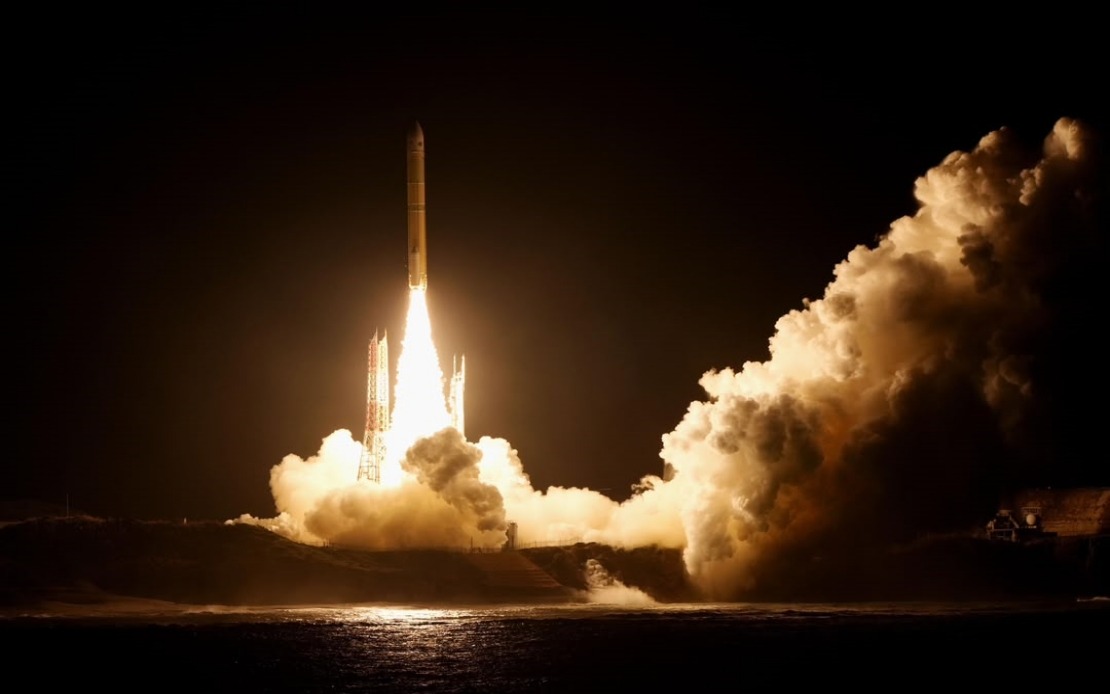
Japan's space programme has moved past recent setbacks with the successful launch of an H3 rocket carrying a crucial positioning satellite from the Tanegashima Space Centre early on Tuesday. The Japan Aerospace Exploration Agency deployed the Michibiki No. 7 satellite into orbit, demonstrating renewed confidence in its flagship rocket system after a challenging period that threatened to derail the nation's ambitious space infrastructure plans.
The launch represented more than just a technical accomplishment. Coming just eight months after a high-profile failure, the success signals that Japan has effectively diagnosed and resolved critical issues that plagued the H3 programme. The timing matters considerably for Japan's broader strategic objectives in space exploration and regional positioning capabilities, particularly as competition intensifies among nations seeking independent satellite navigation systems.
The journey to Tuesday's triumph proved anything but straightforward. Originally scheduled for Friday, the launch faced postponement as Typhoon conditions approached the Tanegashima facility. Organisers pushed the operation forward to Monday, only to encounter additional weather complications that forced another delay. Such setbacks are routine in space operations, yet they underscore the precision and patience required when managing complex launch infrastructure vulnerable to natural elements.
The Michibiki No. 7 satellite joins a growing constellation designed to provide comprehensive positioning services without external dependence. Currently, five Michibiki satellites operate in orbit, delivering location data to smartphones, navigation systems, and critical infrastructure across Japan. The government's strategic goal remains a full seven-satellite network that would eliminate reliance on foreign positioning systems for national operations. This architectural vision reflects broader concerns about technological sovereignty and the risks inherent in depending on other nations' space infrastructure.
Understanding the context of Japan's positioning ambitions requires recognising regional dynamics in Asia-Pacific. While the United States operates the Global Positioning System and Russia maintains GLONASS, Japan's Quasi-Zenith Satellite System represents an alternative built on indigenous technology and operated according to Japanese priorities. The European Union's Galileo system offers another model, yet Japan's approach emphasises both autonomy and regional responsibility. For Southeast Asian nations, Japan's success in developing independent positioning capabilities carries implications beyond Tokyo, as the system could potentially benefit neighbouring countries seeking alternatives to dominant Western systems.
The H3 rocket itself emerged from Japan's transition away from the highly successful H2A launch vehicle, which operated as the nation's workhorse for more than twenty years. The H2A established an impressive reliability record, making the H3 a high-stakes endeavour burdened by elevated expectations. Engineers designed the H3 with enhanced capability and greater cost efficiency, yet this transition inevitably brought developmental challenges that required resolution through real-world testing.
December's failure involving H3 rocket number eight rattled confidence in the programme. The satellite mission—Michibiki No. 5—failed to reach its intended orbit, necessitating investigation into root causes and remedial engineering. Such setbacks are not uncommon in space development, yet they trigger intense scrutiny of management, technical decisions, and funding priorities. JAXA's response demonstrated institutional resilience; rather than extensive redesign, engineers identified and corrected specific issues, then conducted a successful follow-up launch in June carrying multiple miniature satellites.
Tuesday's launch of H3 rocket number nine represents the programme's second consecutive success following that June achievement. This trajectory—failure, diagnosis, correction, repeated success—reflects normal development patterns for advanced space systems. However, for public perception and political support, consecutive successes matter significantly. They rebuild institutional credibility and justify continued investment in capabilities that require sustained commitment and substantial resources.
The Michibiki satellite network holds particular significance for Southeast Asian observers. Japan has explicitly opened its positioning system to regional partners, offering potential benefits for maritime operations, infrastructure coordination, and disaster response across the broader region. As nations in Southeast Asia develop their own space capabilities and seek positioning alternatives, Japan's progress toward a fully operational seven-satellite system carries strategic weight. The achievement of reliable H3 launches directly enables this regional contribution.
Looking forward, JAXA must maintain this momentum while completing the Michibiki constellation. Two additional satellites remain required to achieve full coverage, with further launches planned in coming years. The H3's development trajectory will continue refining the system toward optimal performance and cost-effectiveness. Success in these upcoming missions would solidify Japan's position as a reliable provider of independent space infrastructure and launch services within Asia-Pacific.
The broader implications extend to Japan's technological positioning globally. Space capability represents not merely scientific achievement but strategic national capacity. Japan's space programme contributes to defence technology, disaster management, climate monitoring, and economic competitiveness in increasingly important sectors. For Malaysian and Southeast Asian readers, Japan's progress in space infrastructure development represents a demonstration of technical excellence and strategic independence that shapes regional technological relationships and capabilities.

