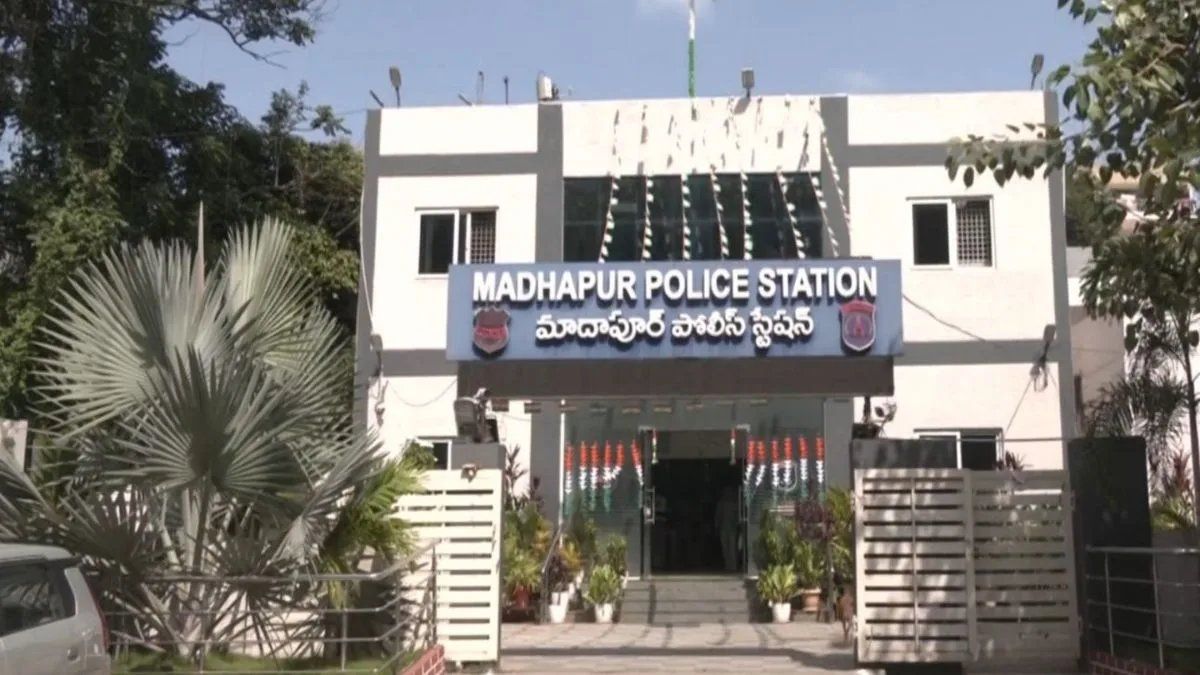
A fatal traffic incident outside a major Hyderabad shopping complex has thrust the son of ruling Jana Sena Party MP Lingamaneni Ramesh into the spotlight after he was granted station bail in connection with the death of a young retail worker. The collision, which occurred on August 16 near Inorbit Mall in Madhapur, claimed the life of Bharati Mukhi, a 26-year-old employee at the mall's Lifestyle store. Lingamaneni Sanjush, identified as the driver of the high-powered Aston Martin involved in the crash, has been released following preliminary investigation procedures, though police authorities confirmed he remains subject to ongoing inquiries into the circumstances surrounding the tragic incident.
The sequence of events on that August afternoon unfolded with tragic consequences for the young victim. Bharati had stepped out from her workplace alongside colleague Pooja Ashok to collect meals from a nearby restaurant, the ITC Kohenur establishment. As the pair made their way back towards the mall to resume their shifts, Bharati attempted to cross the road in the Madhapur locality when she was struck by the vehicle. According to police documentation, the Aston Martin was being operated at considerable speed and in a manner consistent with rash and negligent driving, resulting in the catastrophic impact that left her with severe head trauma. Emergency responders transported the critically injured woman to Apollo Hospital in Jubilee Hills, where attending medical personnel pronounced her dead shortly after admission.
The police response to the incident followed established protocols for fatal traffic collisions. A formal case was registered at Madhapur Police Station under Section 106(1) of the Bharatiya Nyaya Sanhita, which addresses acts causing death by negligence. Investigators swiftly identified Sanjush as the individual allegedly operating the vehicle at the time of impact, and he was apprehended on the same day as the incident. As part of the investigative procedure, law enforcement conducted standard toxicology assessments, subjecting the accused to both breathalyser testing and narcotics screening. Blood samples were extracted and forwarded to the Forensic Science Laboratory for comprehensive analysis to determine whether impairment of any kind played a role in the collision. The vehicle itself was impounded as evidence while police continued their examination of the case circumstances.
Notably, Sanjush was served a formal notice under Section 35(3) of the Bharatiya Nagarik Suraksha Sanhita, a procedural mechanism within India's new criminal code framework that allows police to issue notices requiring individuals to appear for questioning or produce evidence as part of ongoing investigations. This administrative action, combined with the grant of station bail, indicates that authorities were proceeding with the investigation while releasing the accused pending further developments. A Madhapur police official confirmed that the notice had been issued and station bail granted as investigative work continued, including the collection of what police termed the PME report, suggesting autopsy and medical examination documentation.
The incident might have remained a tragic but relatively contained criminal matter had it not rapidly escalated into a broader political controversy. The opposition YSR Congress Party, which governs Telangana under Chief Minister A. Revanth Reddy but faces the Jana Sena in the state's fractious political landscape, seized upon the case to launch accusations of political favoritism and official misconduct. Karthik Yellapragada, the national spokesperson for YSRCP, publicly alleged that the case had been deliberately suppressed and obscured from public discourse. He pointed out that despite the fatal incident occurring on August 16 and the filing of an FIR on the same day, there had been minimal media coverage, official statements, or public discussion for five days following the collision.
Yellapragada framed his allegations within the context of broader state-level political dynamics, suggesting that an understanding existed between Chief Minister Revanth Reddy and Andhra Pradesh Chief Minister N. Chandrababu Naidu that might have motivated differential treatment of the case. He demanded immediate justice and questioned whether the accused was receiving preferential handling unavailable to ordinary citizens in similar circumstances. The YSRCP spokesperson's accusations, however, remained unsubstantiated and reflected the partisan nature of the political dispute rather than documented evidence of actual cover-up mechanisms or improper police conduct. The allegation raised questions about the political atmosphere in which criminal investigations operate, particularly when those accused belong to ruling coalition parties.
For Malaysian observers, the case illuminates several concerning patterns evident across the region regarding the intersection of political power and criminal accountability. Incidents involving wealthy or politically connected individuals frequently generate accusations of differential treatment, whether substantiated or not, creating perceptions that undermine public confidence in judicial and investigatory institutions. The rapidity with which the Jana Sena MP's son obtained station bail, though potentially consistent with standard procedures, provided fertile ground for political opponents to suggest impropriety. In Southeast Asia, where concerns about judicial independence and political influence over law enforcement remain significant, such cases serve as touchstones for broader debates about rule of law and institutional integrity.
The absence of transparency regarding the investigation's progress and the toxicology findings likely contributed to the political furor. In an era of instantaneous information dissemination through social media and digital platforms, the apparent silence surrounding a fatal incident involving a politically connected figure naturally generates speculation and conspiracy theories. Had authorities issued regular updates on the investigation's status, including when toxicology results became available and how they affected the case trajectory, the information vacuum might have been filled with facts rather than political allegations. This communication deficit represents a systemic challenge facing law enforcement agencies across the region, many of which maintain traditional approaches to investigation publicity in an age when public scrutiny and demand for transparency have intensified dramatically.
The case also raises substantive questions about how traffic enforcement and accident investigation protocols function when wealth, powerful vehicles, and political connections converge. The operation of a high-performance luxury automobile in urban traffic environments where vulnerable road users such as pedestrians and cyclists navigate daily exposes fundamental tensions between individual freedom and public safety. Whether differential consequences attach to accidents involving such vehicles driven by politically connected individuals versus ordinary citizens remains a persistent concern in Indian and broader South Asian legal systems. The investigation's outcome, once toxicology results are received and the complete PME report is compiled, may provide clarity on whether procedural justice was followed and whether case disposition reflects genuine investigative findings rather than political calculation.
As the police investigation continues toward resolution, the case exemplifies how criminal matters involving political figures or their family members inevitably accumulate political significance beyond the specific facts. The Jana Sena's presence in the ruling coalition, combined with opposition YSRCP's aggressive highlighting of the incident, ensures that the investigation's conclusion will be scrutinized through the lens of electoral politics rather than evaluated solely on evidentiary grounds. For Malaysia and the broader region, the case serves as a reminder that institutional independence requires not merely formal legal frameworks but sustained commitment to transparency, consistent application of procedures regardless of status, and public confidence-building through communication and accountability. The absence of these elements creates precisely the conditions under which allegations of favoritism take root, whether or not they reflect actual malfeasance.

