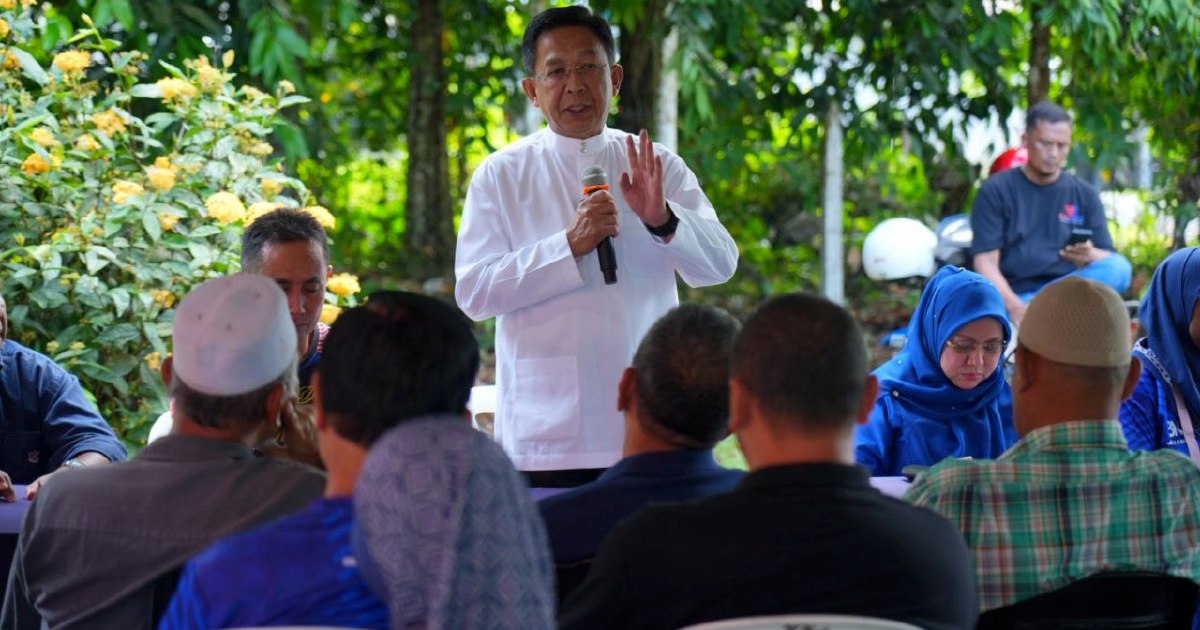
Perikatan Nasional has positioned Negri Sembilan Umno chairman Datuk Seri Jalaluddin Alias as a frontrunner to assume the menteri besar role should its electoral pact with Barisan Nasional prevail in the August 1 state election. The coalition's strategic signalling of Jalaluddin's candidacy reflects internal deliberations about leadership succession in one of Malaysia's smaller peninsular states, where political fortunes have shifted markedly in recent electoral cycles.
Hamzah Zainudin, a senior figure within the PN-BN alliance, disclosed the shortlist during an engagement in Jelebu, indicating that multiple candidates remain under consideration depending on the final composition of the state assembly. This measured approach to announcing potential chief ministers underscores the delicate balance required when managing coalition expectations across distinct party structures, particularly given the historical dominance of Umno in Negri Sembilan politics.
Negri Sembilan occupies a unique position within Malaysia's political landscape, representing neither a major urban centre nor a peripheral state. With a population concentrated in towns like Seremban and scattered across smaller district capitals, the state has experienced competitive electoral contests in recent years, demonstrating the volatility characteristic of mid-tier Malaysian states. The August 1 polling date positions this election within a broader cycle of state-level contests that collectively shape federal political dynamics.
Jalaluddin Alias brings significant institutional experience within Umno's organisational hierarchy, having consolidated considerable support within the party's Negri Sembilan machinery. His elevation to the party chairmanship reflects the influence he has accumulated across the state's electoral divisions and party structures. However, the articulation of "potential candidates" rather than a singular nominee suggests that internal negotiations remain fluid and dependent upon several variables, including the precise number of seats either coalition secures on election day.
The PN-BN understanding itself represents a tactical recalibration in Malaysian coalition politics. Rather than presenting entirely separate slates, the arrangement envisions shared governance structures and coordinated campaign strategies designed to prevent vote splitting that might benefit opposition parties. For Negri Sembilan specifically, this framework means that menteri besar selection will likely involve negotiations between PN and BN components, with Umno's strength in the state positioning it as a significant voice in final determinations.
Historical precedent in Negri Sembilan reveals how menteri besar appointments have reflected both electoral performance and intra-coalition political settlements. Previous transitions have sometimes involved unexpected developments, with coalition negotiations occasionally producing outcomes that surprised external observers. The naming of multiple potential candidates effectively signals that multiple scenarios remain possible, dependent on seat distributions and coalition bargaining outcomes.
Malaysian state elections carry particular significance within the federal system because they serve as bellwethers of broader political sentiment and provide opportunities for parties to consolidate or rebuild grassroots organisations. For PN, a coalition that has experienced considerable internal turbulence and shifting membership in recent years, state-level victories become crucial for demonstrating viability and attracting additional political talent. Success in Negri Sembilan would contribute to narratives of PN consolidation even as the broader question of PN's long-term trajectory remains contested within Malaysian politics.
The strategic communications surrounding Jalaluddin's potential appointment also reflect recognition that menteri besar candidates significantly influence voter behaviour, particularly in states where personal popularity translates into electoral outcomes. By elevating Jalaluddin's profile ahead of August 1, the coalition likely aims to mobilise Umno support and project stability and continuity in state governance. Conversely, opposition parties will undoubtedly scrutinise Jalaluddin's record and policy positions as part of their election campaigns.
Negri Sembilan's fiscal position and development priorities will substantially influence the menteri besar's agenda regardless of which coalition prevails. The state government manages infrastructure development, educational expansion, and economic diversification initiatives that collectively shape resident quality of life. Against this backdrop, leadership selection becomes a substantive question extending beyond symbolic political positioning.
The timeframe between announcement and election day—extending across several weeks—provides both coalitions opportunity to frame their respective leadership narratives and policy proposals. For PN-BN, emphasising Jalaluddin's administrative credentials and vision for state development becomes part of broader campaign architecture. This approach contrasts with opposition strategies, which typically emphasise accountability and alternative governance models.
Regionally, the Negri Sembilan election carries significance within Southeast Asia's broader democratic environment. Malaysian state elections continue to demonstrate competitive dynamics and meaningful voter engagement despite periodic concerns about electoral institutions. The outcome in Negri Sembilan will offer international observers fresh data regarding Malaysian electoral behaviour and coalition politics.
Looking forward, the menteri besar question extends beyond personality politics to substantive issues of governance capacity, economic management, and responsiveness to constituent demands. Whether Jalaluddin Alias ultimately assumes the position depends fundamentally on whether the PN-BN coalition commands sufficient seats to form government. Until August 1 arrives, speculation will continue regarding both electoral outcomes and subsequent leadership arrangements.

