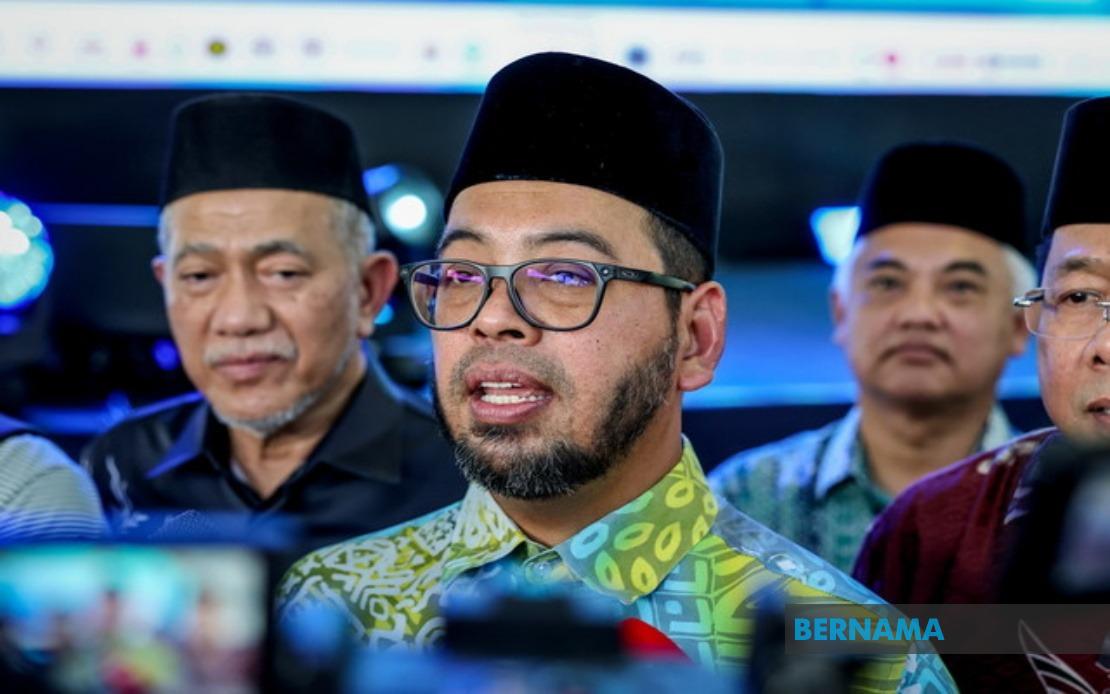
The Department of Islamic Development Malaysia (JAKIM) is moving to create a unified set of funeral management standards that will apply across the country, a development emerging from recent social media controversy surrounding burial procedures. Minister in the Prime Minister's Department (Religious Affairs) Dr Zulkifli Hasan announced the initiative during an official address in Bukit Mertajam, indicating that the refinement of these protocols represents a response to evolving needs within the Muslim community and the necessity to align practices with varying state legislation.
The push for standardisation reflects an acknowledgment that while several Malaysian states have already established their own funeral guidelines, these frameworks require updating and harmonisation. Rather than imposing a top-down solution, JAKIM's approach appears designed to create a comprehensive reference document that states can adapt to their specific legal contexts. This distinction is important in Malaysia's federal structure, where religious matters fall substantially under state jurisdiction while JAKIM serves as the national coordinating body for Islamic affairs.
According to Dr Zulkifli, the development process has already begun with foundational work in place, suggesting that the finalisation should not extend over an extended period. The minister emphasised that the guidelines will emerge "as soon as possible" while maintaining compatibility with existing state enactments. This measured timeline indicates that JAKIM is prioritising quality and consensus-building over rushed implementation, a sensible approach given the sensitivity of funeral practices within Islamic tradition and the diverse cultural contexts across Malaysia's regions.
The catalyst for this nationwide standardisation effort was a funeral management dispute that recently gained significant traction on social media platforms, originating in Selangor. While Dr Zulkifli declined to elaborate extensively on the specifics, the incident involved allegations that burial procedures at the Ukay Perdana Muslim Cemetery in Hulu Kelang were improperly delayed, raising questions about the competence and coordination of funeral management services. The Selangor Islamic Religious Council (MAIS) subsequently directed an urgent meeting between the deceased's family, the mosque management at Masjid Nurul Hidayah in Kampung Pandan Dalam, the funeral welfare organisation Badan Kebajikan Salatulrahim (BKS), and the Selangor Islamic Religious Department (JAIS) to investigate and resolve the matter.
MAIS Chairman Datuk Salehuddin Saidin framed the intervention as an opportunity to identify solutions beneficial to all stakeholders involved while simultaneously preventing recurrence of similar incidents. This collaborative approach underscores recognition within Malaysia's Islamic administrative structure that funeral management involves multiple parties with legitimate interests—families seeking to fulfil their religious obligations promptly, religious institutions ensuring compliance with Shariah requirements, and welfare organisations managing logistical operations. When these stakeholders lack clear, unified procedures, friction and public dissatisfaction can result.
For Malaysian Muslim families, the implications of JAKIM's standardisation effort are potentially significant. Funeral rites in Islam carry profound spiritual and time-sensitive dimensions; Islamic tradition emphasises conducting burials without unnecessary delay, ideally within 24 hours of death. When families encounter bureaucratic confusion, disagreements between institutions, or unclear procedural requirements, the result extends beyond administrative inconvenience into questions of religious compliance and family dignity. By establishing clearer national standards, JAKIM aims to ensure that families can navigate funeral arrangements with greater certainty and reduced anxiety during an already distressing period.
The broader Southeast Asian context adds another dimension to this development. As Muslim-majority or Muslim-plurality countries across the region grapple with how to modernise Islamic administrative systems while maintaining traditional values, Malaysia's experience offers relevant lessons. The JAKIM initiative demonstrates that religious standardisation need not mean imposing uniformity; instead, it can involve establishing baseline best practices that states retain flexibility to interpret according to local circumstances and legal frameworks. This model could potentially inform how other regional Islamic institutions approach similar challenges.
Dr Zulkifli's public call for all parties to remain calm and cooperate toward resolution, rather than permitting division to take root, reflects sensitivity to how funeral controversies can escalate emotionally. Funeral practices intersect with grief, faith, family honour, and institutional authority—volatile combinations capable of generating significant public sentiment if perceived mishandling occurs. By taking visible action to strengthen systems and demonstrate responsiveness, JAKIM works to maintain public confidence in Islamic institutional management.
The existence of multiple state-level funeral guidelines, while reflective of appropriate federal-state respect, has apparently created gaps and inconsistencies that the recent incident exposed. Different states may have varying standards regarding cemetery operations, funeral permit procedures, body preparation protocols, and communication responsibilities. Travellers or migrants who die in states other than their permanent residence may encounter unfamiliar procedures. A comprehensive national framework, voluntarily adopted and adapted by states, could substantially improve consistency and clarity without violating constitutional principles governing religious administration.
Implementation will require careful coordination between JAKIM, state religious councils, mosque authorities, funeral service providers, and welfare organisations. The guidelines will likely address timelines for burial, documentation requirements, roles and responsibilities of various institutions, standards for cemetery operations, and dispute resolution mechanisms. Critically, they must also consider contemporary challenges such as increased cremation requests, deaths involving suspicious or criminal circumstances requiring investigation, and funeral service provision during public health emergencies—issues that pre-existing state guidelines may not adequately address.
The standardisation process also provides an opportunity for JAKIM to incorporate best practices observed across different states and potentially internationally. Islamic funeral management has evolved considerably; many established Muslim communities worldwide have developed sophisticated systems addressing complex modern scenarios while maintaining traditional requirements. Malaysian states and institutions could benefit from this accumulated experience.
Dr Zulkifli's statement that basic guidelines already exist and require only "fine-tuning" should not obscure that standardisation across a country as diverse as Malaysia remains a substantial undertaking. Religious sensitivities, regional variations in practice, different state legislative frameworks, and the involvement of numerous institutional actors all complicate the process. However, the minister's confidence that the timeline need not extend unduly suggests JAKIM perceives sufficient existing consensus to move forward efficiently.
Ultimately, the department's initiative addresses a genuine gap in Malaysia's Islamic institutional architecture. While the recent Selangor controversy provided the immediate impetus, the underlying problem—fragmented funeral management standards creating confusion during vulnerable moments—affects the entire country. By working methodically to establish clearer, nationally-coordinated procedures while respecting state prerogatives, JAKIM moves toward a system better equipped to serve Malaysian Muslim communities with dignity and efficiency. The success of this effort will substantially depend on how effectively state authorities, religious institutions, and service providers embrace and implement the guidelines once finalised.

