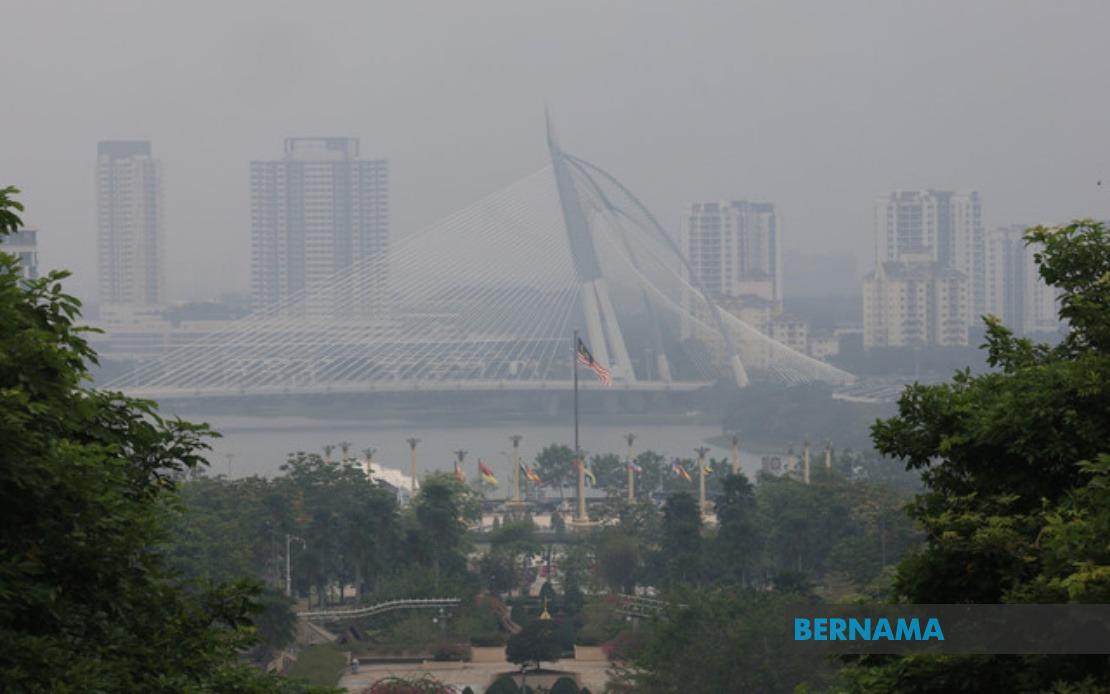
The Department of Islamic Development Malaysia has moved to organise collective prayers for divine intervention as hazardous air quality continues to affect multiple regions nationwide. Solat Hajat, a special supplication performed during times of crisis, will take place this evening at three prominent mosques under JAKIM's purview following the conclusion of Maghrib prayers, reflecting the escalating concern over environmental conditions gripping the country.
JAKIM's director-general Datuk Dr Sirajuddin Suhaimee confirmed that the coordinated prayer sessions would occur simultaneously at the National Mosque in Kuala Lumpur, the Putra Mosque, and Tuanku Mizan Zainal Abidin Mosque, both located in Putrajaya. The decision represents an institutional response to an environmental emergency that has prompted official religious guidance at the highest levels of Malaysia's administrative hierarchy. By mobilising the Islamic establishment's infrastructure, JAKIM signals both the severity of the current crisis and the importance of collective spiritual response in Malaysian public life.
In his statement, Dr Sirajuddin urged the Muslim community to participate actively in the evening's prayers, emphasising the dual nature of the appeal—seeking protection from immediate health threats while invoking peace and restoration for affected regions. His invitation transcends mere ritual observance, framing prayer as a concrete mechanism through which citizens can engage with the national crisis. The language employed underscores the multifaceted nature of haze impacts: physical health risks, environmental degradation, and the broader psychological toll on populations living under persistently poor air conditions.
The initiative carries explicit royal sanction, drawing on a decree issued by the Sultan of Pahang, Al-Sultan Abdullah Ri'ayatuddin Al-Mustafa Billah Shah, that called upon all Malaysians regardless of faith to engage in prayer and spiritual reflection. This cross-religious framing demonstrates how environmental crises can transcend sectarian boundaries in Malaysia's plural society. The Sultan's directive, complemented by the call from Minister in the Prime Minister's Department (Religious Affairs) Dr Zulkifli Hasan, illustrates alignment between religious institutions and government on the urgency of addressing current atmospheric pollution through both material intervention and spiritual mobilisation.
The haze crisis currently gripping Malaysia reflects recurring seasonal patterns while highlighting persistent transboundary air pollution challenges endemic to Southeast Asia. As of the morning of August 26, the Air Pollutant Index recorded unhealthy readings across seventeen distinct locations spanning six states and both federal territories. Sarawak, Selangor, Negeri Sembilan, Johor, Melaka, and Perak—representing a geographic spread from Peninsular Malaysia's west coast through the east to the island of Borneo—all reported areas where pollution concentrations exceeded safe thresholds for vulnerable populations.
The geographic distribution of affected areas underscores how haze phenomena create no jurisdictional boundaries, simultaneously impacting urban centres like Kuala Lumpur and Putrajaya alongside industrial zones and agricultural regions. For Malaysian residents, particularly those with respiratory vulnerabilities including children and elderly populations, the health implications are immediate and tangible. The necessity of official prayer initiatives reflects how governments, lacking immediate technological solutions to transboundary pollution, mobilise cultural and religious frameworks to address public anxiety and maintain social cohesion during environmental emergencies.
The haze recurrence pattern speaks to deeper structural challenges in regional environmental governance. Indonesia's agricultural burning practices, combined with industrial emissions and vehicular pollution across Malaysia itself, create seasonal atmospheric degradation that demands sustained diplomatic and technical solutions. JAKIM's prayer initiative, while spiritually meaningful within Islamic tradition, implicitly acknowledges that immediate remediation lies beyond unilateral Malaysian action—a reality that shapes policy discussions at regional forums and international environmental conferences.
For Malaysian businesses, particularly those in logistics, aviation, and outdoor sectors, haze events generate operational complications and economic losses that accumulate across consecutive days of poor air quality. Healthcare systems experience increased demand from respiratory-related presentations. Urban populations struggle with restricted outdoor activities, affecting lifestyle patterns and economic productivity. The collective nature of the crisis, affecting Malaysians regardless of socioeconomic status or geographic location, creates shared vulnerability that religious institutions can help process communally.
JAKIM's decision to coordinate prayers across multiple high-profile mosques demonstrates how Malaysia's institutional landscape responds to environmental emergencies through mechanisms blending spiritual tradition with contemporary crisis management. The involvement of federal-level religious authorities lends official weight to the initiative while demonstrating government acknowledgment of public concern. For observant Muslims, participation offers both spiritual practice and collective action, channelling anxiety about environmental conditions into structured religious observance.
The haze situation illustrates broader Southeast Asian environmental interdependencies that individual nations struggle to address unilaterally. Regional mechanisms for monitoring, early warning, and coordinated response remain underdeveloped relative to the severity and frequency of transboundary pollution events. Malaysia's approach—combining immediate prayer initiatives with longer-term diplomatic engagement on regional environmental governance—reflects pragmatic acceptance of current constraints while maintaining commitment to eventual structural solutions.
As evening approaches and worshippers gather at the three designated mosques, the prayers themselves become sites where Malaysia's diverse population confronts shared environmental vulnerability. The Solat Hajat, traditionally performed during times of collective distress, channels religious commitment toward addressing crisis conditions affecting citizens' daily lives and health. Whether such spiritual mobilisation produces measurable environmental improvement remains uncertain; what is clear is that for Malaysian society, managing environmental emergencies now requires institutional coordination spanning religious, political, and public health domains simultaneously.

