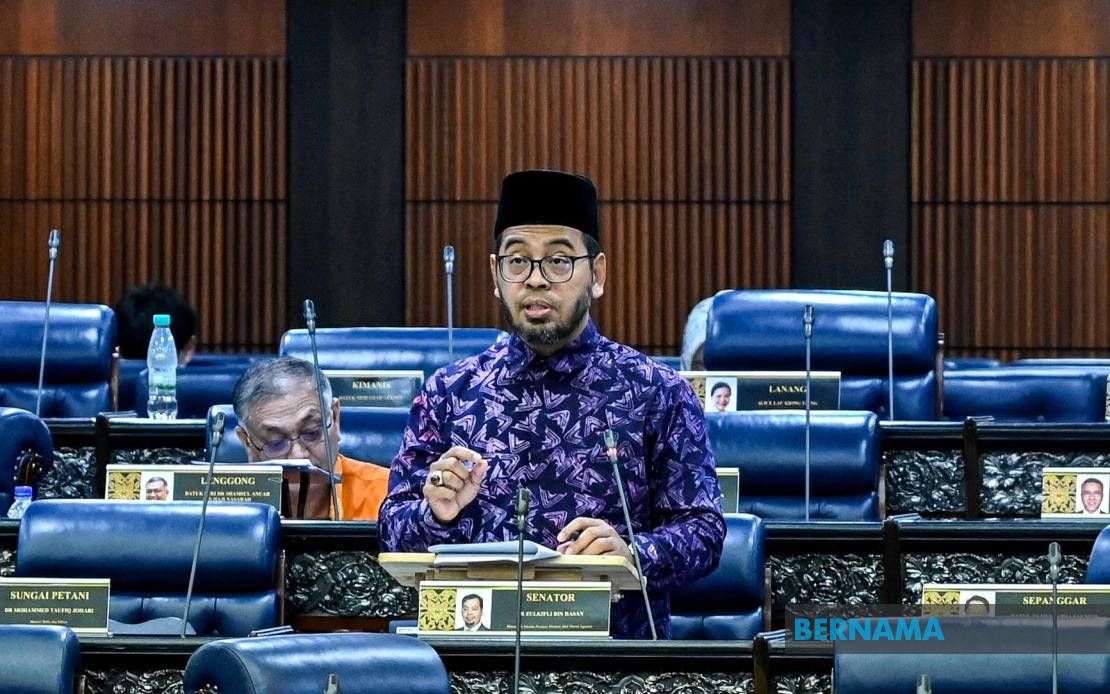
The Malaysian government is deploying a coordinated multi-agency strategy to combat the expanding reach of Islamic teachings deemed deviant from mainstream Sunni orthodoxy, with mounting emphasis on digital surveillance and cross-border monitoring. The shift reflects growing concern that unorthodox movements have adapted to modern technological channels, making traditional enforcement methods increasingly inadequate. Dr Zulkifli Hasan, the Minister in the Prime Minister's Department responsible for religious affairs, outlined the government's integrated response during parliamentary proceedings, highlighting the evolving sophistication of groups promoting alternative Islamic interpretations.
The challenge facing Malaysian authorities has fundamentally transformed over recent years. Rather than relying on conventional clandestine networks and face-to-face gatherings, groups promoting teachings that diverge from Ahli Sunnah Wal Jamaah orthodoxy now exploit encrypted messaging platforms, social media networks and online forums to disseminate their ideology. These movements frequently obscure their religious messaging beneath layers of alternative framing—positioning themselves as personal development workshops, wellness initiatives, charitable organisations or informal study circles. This camouflage makes identification and intervention considerably more difficult for authorities, particularly when content crosses international borders and reaches audiences beyond Malaysia's regulatory jurisdiction.
The sophistication of these approaches extends beyond mere technological adaptation. According to Zulkifli's parliamentary statement, contemporary heterodox movements employ psychologically sophisticated narratives, motivational frameworks grounded in spiritual language, conspiracy theories, and the cultural currency of prominent public figures to attract adherents. This combination of persuasive techniques proves particularly effective among young people seeking community, spiritual meaning and intellectual engagement. The deliberate exploitation of emotional vulnerabilities and the presentation of fringe doctrines as enlightened alternatives to mainstream Islam represent a significant departure from the transparent proselytisation methods of earlier decades.
Enforcement actions undertaken in recent months demonstrate the authorities' determination to implement tangible interventions. In May, authorities detained 288 individuals identifying with the Ahmadiyya Qadiani movement in Sabah, signifying one of the more substantial enforcement operations. Concurrently, a coordinated raid on a Syiah centre located in Petaling Jaya resulted in the detention of 226 foreign nationals, suggesting that heterodox movements in Malaysia maintain considerable international membership and coordination networks. These enforcement actions, while significant, represent only the visible dimension of a broader struggle to contain ideological movements that authorities view as threatening established religious orthodoxy and social cohesion.
The coordination required to execute these enforcement operations demands unprecedented cooperation among disparate government institutions. JAKIM works alongside state-level Islamic religious departments, federal police authorities, the Malaysian Communications and Multimedia Commission—which possesses digital surveillance capabilities—the National Security Council, municipal authorities, immigration enforcement and the national civil registry. This institutional complexity reflects the multifaceted nature of the challenge: heterodox movements operate simultaneously as religious entities, potential security concerns, cross-border phenomena and digital networks, requiring expertise and jurisdictional authority distributed across multiple agencies. Effective coordination remains persistently difficult given institutional cultures, bureaucratic procedures and resource constraints within Malaysia's governance structure.
Beyond enforcement and detention, authorities have developed rehabilitation and intervention frameworks intended to reintegrate adherents into mainstream Islamic understanding. Targeted counselling for affected individuals and community leaders represents the most direct intervention method, while Syariah court orders can mandate placement in faith rehabilitation centres specifically designed to reinforce orthodox Islamic doctrine. These rehabilitation programmes operate under supervision of state Islamic authorities and aim to reconstruct the religious identity of individuals who have embraced heterodox interpretations. The approach implicitly acknowledges that detention alone proves insufficient—genuine ideological reorientation requires intensive engagement with religious education and pastoral support.
The government has established the National Steering Committee to Address Threats to Faith as an institutional framework for coordinating preventative initiatives. This committee incorporates representatives from the Ministry of Education, the Ministry of Higher Education, the Ministry of Home Affairs and JAKIM, positioning religious education and youth engagement at the centre of preventative strategy. This interministerial approach recognises that vulnerable populations—particularly students and young adults—require proactive religious formation grounded in orthodox Islamic scholarship. Rather than waiting for individuals to encounter heterodox movements, authorities aim to establish intellectual and spiritual foundations resistant to alternative interpretations through structured educational curricula and community programmes.
Specialised initiatives targeting youth form the practical manifestation of this preventative philosophy. The Institut Pemantapan dan Perkaderan Akidah Malaysia conducts faith-strengthening programmes for younger populations, while the My Insaniah Programme and Rakan Masjid Programme operate through partnerships with the Ministry of Youth and Sports to embed religious resilience within broader youth development frameworks. These initiatives operate on the assumption that young people properly engaged within institutional Islamic structures and communities will develop immunities against heterodox messaging and alternative doctrinal appeals. The KAFA 2.0 curriculum reform strengthens Islamic education requirements for Malaysian children, intending to foster stronger religious identity and doctrinal clarity from earlier developmental stages.
The significance of these coordinated efforts extends beyond Malaysia's borders, given the transnational character of contemporary heterodox movements and the increasing portability of Islamic theological disputes through digital networks. Southeast Asia's diverse Muslim populations and the region's growing digital interconnectedness mean that heterodox movements gaining momentum in one jurisdiction frequently influence communities across multiple nations. Malaysia's institutional response consequently possesses regional implications, potentially establishing models for other Southeast Asian authorities grappling with similar challenges. The explicit acknowledgment of border-crossing ideology suggests that Malaysian authorities increasingly perceive heterodox Islamic movements as security and social cohesion matters, warranting international cooperation and information-sharing protocols with regional partners.
Critiques of Malaysia's approach—raised by civil liberties advocates and religious minorities—emphasise concerns about definitional flexibility, due process safeguards and the potential for regulatory overreach against legitimate theological diversity. The classification of Ahmadiyya as inherently deviant and subject to enforcement action remains contested internationally, with civil rights organisations questioning whether detention represents proportionate response to theological difference. Similarly, Syiah Islam, while distinct from Sunni orthodoxy, constitutes an established Islamic tradition with centuries of theological development and millions of international adherents. The government's framing of such movements as threats requiring detention and rehabilitation reflects specifically Malaysian understandings of orthodoxy and religious authority rather than universal Islamic jurisprudence, raising complex questions about state authority over theological interpretation.
Looking forward, the sustainability of these multi-agency coordination efforts depends on persistent political commitment and adequate resourcing. Digital surveillance and content monitoring require sophisticated technical capabilities and continuous investment as heterodox movements develop more sophisticated encryption and platform-shifting strategies. Rehabilitation programmes demand trained personnel, appropriate facilities and long-term commitment despite uncertain success rates. Educational initiatives require curriculum development, teacher training and cultural shifts within educational institutions. The government's whole-of-government rhetoric masks the considerable institutional, financial and personnel requirements necessary to sustain these efforts over extended periods, particularly when competing against numerous other policy priorities and budgetary constraints.

