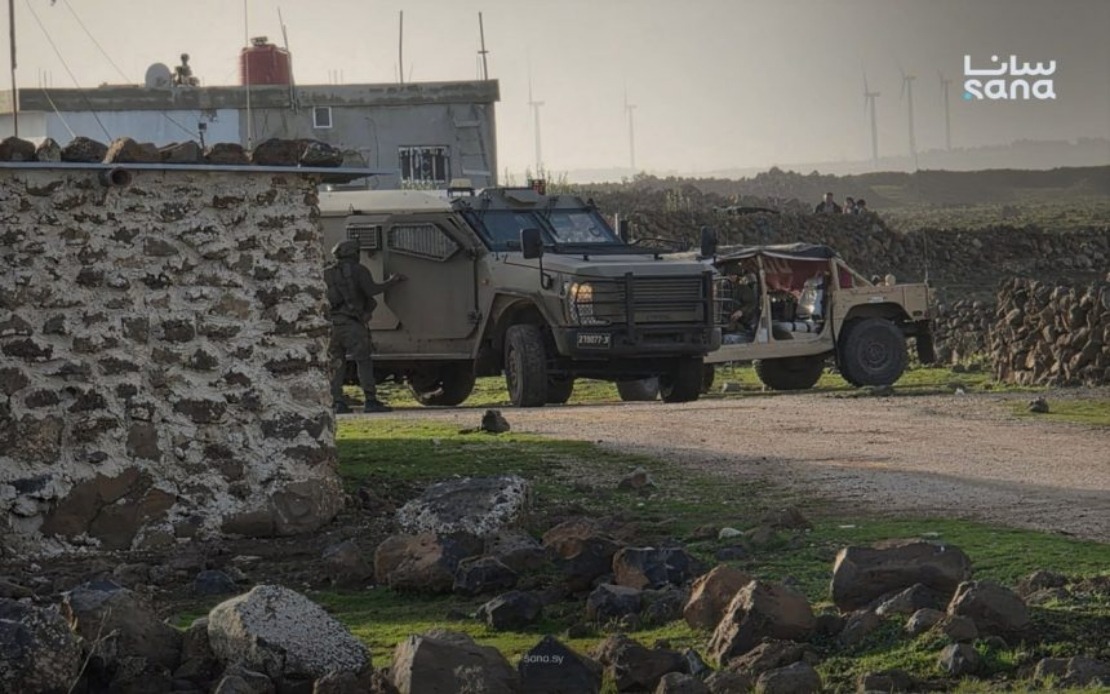
An Israeli military contingent of six vehicles crossed into Syria's southwestern Quneitra province on Saturday, according to reports from the Syrian Arab News Agency and Turkish media outlets. The incursion saw the vehicles move toward the Kudna Dam in the central Quneitra countryside, with unmanned drones simultaneously conducting aerial reconnaissance over the region. The operation underscores the intensifying military presence Israeli forces have maintained across Syria's southern border areas since the dramatic political upheaval that reshaped the country's leadership in recent months.
The crossing represents a continuation of what Syrian officials describe as systematic violations of their nation's territorial integrity. These breaches have become increasingly frequent following the collapse of Bashar al-Assad's regime in December 2024, an event that fundamentally altered the security calculus in the region. The fall of Assad's government created a power vacuum that fundamentally changed the dynamics between Syria and its neighbors, particularly Israel, which has historically maintained a contentious relationship with Damascus.
Israel's military posture shifted decisively after the regime change. In response to Assad's downfall, Israeli officials formally announced the termination of the 1974 disengagement agreement that had governed the demilitarized zone between the two nations. This agreement, brokered after the Yom Kippur War, had established a buffer zone maintained by United Nations peacekeepers and created a framework of predictable military interaction despite the broader Israeli-Syrian conflict. By rejecting this accord, Israel freed itself from the constraints that had governed its military movements in the contested territories.
The collapse of institutional arrangements left southern Syria vulnerable to Israeli military expansion. For several months preceding this particular incursion, the region has experienced an escalating pattern of Israeli military activity. Israeli forces have conducted repeated raids throughout southern Syria, systematically carried out search operations targeting various objectives, and arrested numerous individuals. Beyond these reactive measures, Israeli military personnel have established permanent checkpoints throughout southern Syrian territory, effectively creating a zone of Israeli control that extends beyond the traditional buffer zone.
The timing of this expansion reflects broader regional instability that Malaysia and other Southeast Asian nations must monitor closely. Syria's transition period presents a unique vulnerability window as new governance structures remain fluid and military forces vie for control. For Malaysian policymakers and regional analysts, these developments matter because they demonstrate how quickly established international agreements can be discarded when political circumstances shift dramatically. The unilateral termination of the 1974 disengagement agreement sets a precedent that other nations might exploit in similar circumstances.
The drone surveillance component of Saturday's operation indicates a sophisticated military presence. Aerial reconnaissance combined with ground vehicle deployment suggests planning for sustained operations rather than isolated incidents. This integration of air and ground assets reflects the technological capabilities Israel brings to bear in contested spaces and represents the kind of asymmetric military dominance that smaller regional players cannot effectively counter without external support.
For Syria's fragile transition government, these continuing violations complicate efforts to establish authority and legitimacy. A government unable to prevent foreign military incursions into its own territory faces credibility challenges both domestically and internationally. This dynamic particularly affects any Syrian administration's ability to negotiate with other nations or exercise control over border regions. The occupied territories under Israeli control effectively represent a de facto division of Syrian sovereignty, even if no formal territorial changes have been announced.
The implications for the broader Middle East are significant. Israel's willingness to abandon long-standing agreements and expand military operations into Syria without apparent diplomatic consequences may encourage similar adventurism elsewhere. Neighboring states, particularly those sharing borders with Israel, must reassess their own security arrangements and vulnerabilities. The precedent suggests that strategic agreements offer protection only so long as they benefit the militarily superior party, a sobering lesson for regional stability.
Malaysia's perspective on these developments should consider both the humanitarian dimensions and the broader implications for international law. The repeated incursions, searches, and arrests represent violations of established principles governing state sovereignty and territorial integrity that Malaysia has consistently championed in international forums. Southeast Asian nations that have advocated for respect for territorial sovereignty and non-interference in internal affairs should view these Israeli actions as concerning precedents that undermine the rules-based international order upon which smaller nations depend.
The international community's muted response to these incursions remains noteworthy. Unlike previous Syrian-Israeli conflicts that generated immediate diplomatic activity and international attention, the current situation has received relatively limited engagement from major global powers. This apparent indifference may reflect the complexity of Syria's internal situation, where the new government structure remains unclear and international recognition is still consolidating. However, the lack of sustained international pressure suggests that Israel faces minimal consequences for its military expansionism.
Moving forward, the situation in southern Syria will likely remain volatile. The absence of functioning international mechanisms to enforce the 1974 agreement means Syrian authorities must either develop new security arrangements with Israel or accept a prolonged period of military vulnerability in border areas. Any future Syrian government will inherit this security challenge and must determine whether negotiations with Israel or reliance on regional allies offer more sustainable solutions.
For Malaysia and other nations observing these developments, the situation serves as a reminder that international agreements require robust enforcement mechanisms and sustained commitment from the international community to remain effective. The easy abandonment of the disengagement agreement demonstrates that even decades-old arrangements can collapse when political circumstances change and enforcement capacity proves inadequate. This reality underscores the importance of transparent, multilateral approaches to regional security that involve broader international participation rather than bilateral arrangements dependent on mutual restraint.

