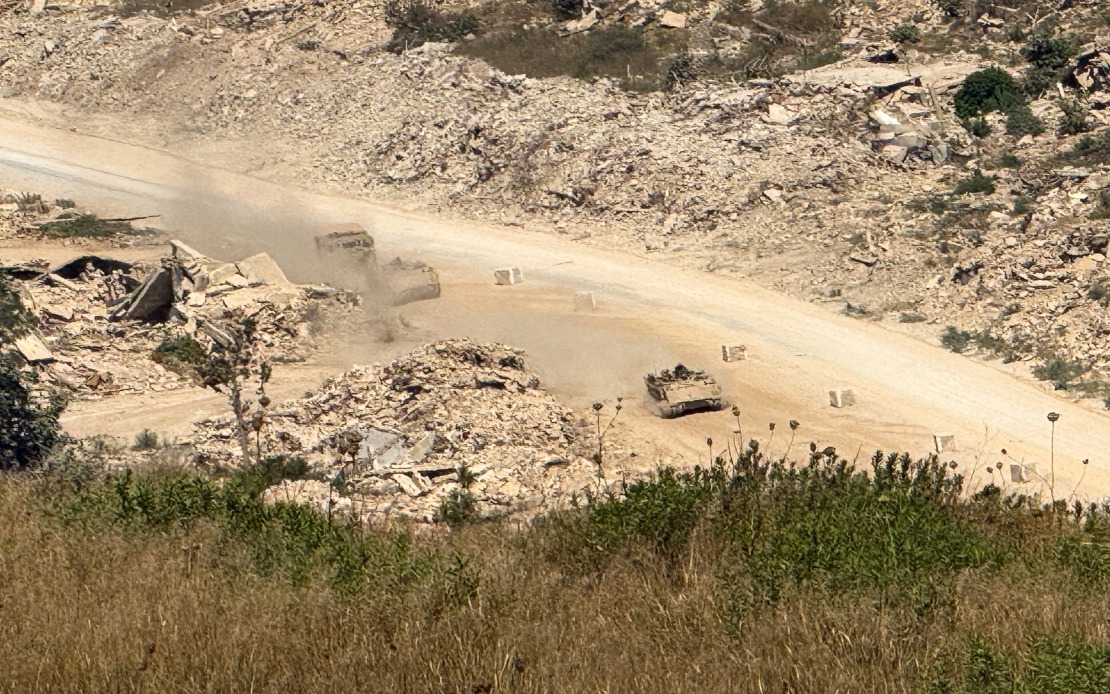
Israeli military operations intensified across southern Lebanon on Monday, with forces executing multiple strikes including artillery shelling, ground incursions, and residential destruction across several towns and villages in the region's administrative jurisdictions. The operations signalled a deepening contradiction between diplomatic efforts underway in Rome and active military engagements on the ground, highlighting the fragility of current ceasefire arrangements between the two neighboring states.
According to Lebanon's National News Agency, the Monday incursions centred on several populated areas within southern Lebanon's Nabatieh governorate. Machine gun fire targeted the Wadi al-Salouqi location while Mansouri experienced overnight artillery bombardment. Israeli forces simultaneously detonated two explosive devices in the Mansouri vicinity, causing significant disturbance to the civilian population. The coordination of artillery, small arms fire, and controlled explosions suggested a sustained tactical operation rather than isolated incidents.
The intensity of Monday's operations extended across multiple villages within the immediate conflict zone. In Kfar Tebnit, Israeli forces executed a substantial explosion that damaged infrastructure and raised civilian alarm. The outlying areas of Nabatieh al-Fawqa came under repeated artillery fire from Israeli positions positioned across the border. Additionally, Khiam experienced residential fires deliberately set by Israeli personnel, destroying family homes and displacing inhabitants. These house burnings represent a particularly severe escalation in tactics, moving beyond military targeting toward property destruction affecting the civilian sphere.
Israeli military movements also penetrated the western periphery of Mays al-Jabal, accompanied by artillery fire concentrated on residential structures. Drone reconnaissance operations conducted at low altitude over the Zahrani area indicated Israeli surveillance activity extending surveillance networks deeper into Lebanese territory. The combination of ground forces, aerial operations, and artillery support demonstrated a comprehensive military presence that substantially exceeds what frameworks and agreements negotiated diplomatically would ostensibly permit.
These military operations arrive merely days following the conclusion of the seventh round of official Lebanese-Israeli negotiations held in Rome under American diplomatic sponsorship. Those talks, which concluded on Thursday, specifically addressed implementation mechanisms for a framework agreement originally established on June 26. The timing suggests either strategic miscalculation regarding negotiation momentum or deliberate military pressure designed to advance territorial objectives while diplomatic discussions continue.
During a Cabinet meeting on Friday, Lebanese President Joseph Aoun characterized recent negotiation progress as encouraging, specifically citing advancement on matters concerning border demarcation and the treatment of detained persons. His optimistic public characterization stood in marked contrast to the Monday military escalation, creating a disconnect between official diplomatic messaging and operational military reality that observers across the Middle East have noted with concern.
The foundational framework agreement contemplates a phased Israeli withdrawal from Lebanese territories currently under military control. The arrangement envisions establishing initial "pilot zones" in designated areas where withdrawal would commence, with corresponding Lebanese Army deployments and the eventual disarmament of non-state armed groups including Hezbollah. However, the military operations conducted Monday suggest Israel maintains objectives extending beyond what the negotiated framework would accommodate, potentially signalling intent to extract maximum territorial advantage before formal agreement implementation.
The broader context of the current conflict reveals the stakes driving these operations. Since military hostilities commenced on March 2, Lebanese authorities document 4,335 fatalities and 12,277 injured civilians. Displacement figures exceed 1 million people forced from their homes, representing one of the region's most severe humanitarian emergencies. These casualty and displacement figures underscore the genuine suffering experienced by Lebanese civilian populations who endure both active military operations and the subsequent displacement and reconstruction challenges.
Israeli military forces have penetrated more than 10 kilometres into Lebanese territory during the current campaign, substantially exceeding historical occupation boundaries in some sectors. Certain occupied areas have remained under Israeli control for decades, while others were seized during the 2023-2024 conflict period. The military advance demonstrated on Monday appeared designed to consolidate territorial gains and establish facts on the ground that might influence eventual boundary demarcation discussions occurring simultaneously in diplomatic settings.
For Malaysian policymakers and Southeast Asian observers, the Lebanese-Israeli situation carries broader implications regarding how regional powers employ military operations to strengthen negotiating positions. The pattern of conducting strikes while engaged in formal talks represents a negotiating strategy increasingly deployed across global conflicts, where military pressure and diplomatic engagement operate as complementary instruments rather than sequential phases. Malaysia's experience mediating regional disputes underscores how such dual approaches complicate conflict resolution.
The compliance record regarding ceasefire arrangements remains central to assessing whether diplomatic progress can translate into sustainable peace. Documented violations by Israeli forces, occurring against the backdrop of ongoing formal negotiations, suggest fundamental disagreements persist regarding the conflict's ultimate resolution and the territorial arrangements that should govern future Lebanese-Israeli relations. International observers emphasize that successful implementation of any negotiated framework depends substantially on demonstrable commitment to respecting agreed limitations on military operations.
For Lebanese populations inhabiting southern border regions, the Monday operations and ongoing military operations create persistent insecurity that complicates reconstruction efforts and humanitarian assistance delivery. The deliberate house burnings constitute a particularly destabilizing tactic that extends conflict impacts beyond military installations toward civilian residential infrastructure. This approach raises serious questions regarding proportionality and the protection of civilian property that international legal frameworks ostensibly guarantee.
The continuation of military operations despite advancing negotiations suggests that Israeli strategic objectives may extend beyond what the current framework agreement contemplates. Whether Monday's escalation represents tactical pressure designed to influence Rome negotiations, or reflects fundamental disagreement regarding implementation modalities remains unclear to external observers. The coming weeks will reveal whether diplomatic engagement ultimately prevails in constraining military operations or whether operational campaigns continue alongside negotiation processes without meaningful coordination between military and diplomatic objectives.

