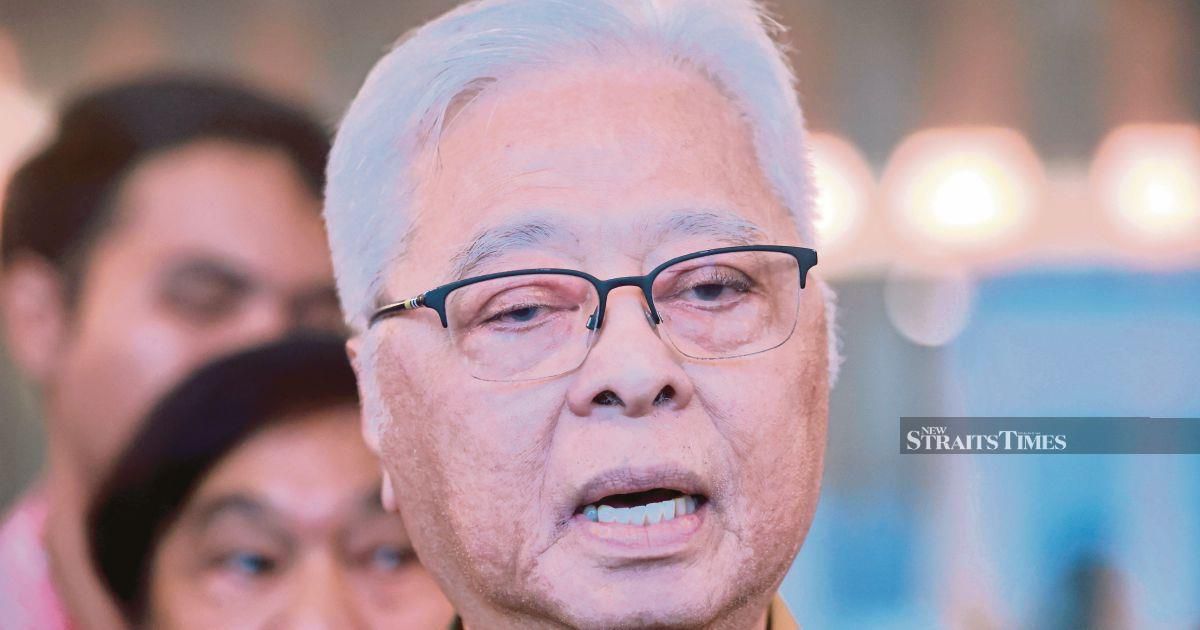
Datuk Seri Ismail Sabri Yaakob appears headed toward joining an exclusive and troubling cohort of former Malaysian leaders who have confronted the criminal justice system while out of office. His imminent facing of charges would mark him as the third ex-premier to do so, succeeding Datuk Seri Najib Razak and Tan Sri Muhyiddin Yassin in this particular distinction.
The trajectory of Ismail Sabri through Malaysia's political landscape has been marked by his tenure as the ninth Prime Minister, a relatively brief period that began in August 2021 following the collapse of the Perikatan Nasional government. During his eighteen-month administration, he presided over a period of significant national challenge, navigating the aftermath of pandemic restrictions and attempting to stabilize a fractious coalition that ultimately could not withstand mounting political pressures and defections.
This development carries profound implications for Malaysia's ongoing democratic narrative and the accountability mechanisms that govern its highest offices. The emergence of three consecutive former prime ministers facing serious legal proceedings speaks to deeper structural tensions within the nation's political ecosystem. Whether this reflects genuine institutional strengthening through impartial application of law or signals deeper political instrumentalisation remains a matter of intense public debate and scrutiny.
Najib Razak's legal battles, rooted in the sprawling 1Malaysia Development Berhad scandal that became globally emblematic of large-scale financial misconduct, have consumed nearly a decade of court proceedings. His 2020 conviction on money laundering charges was subsequently followed by additional legal actions, establishing a precedent that even the highest office provides no sanctuary from accountability. The complexity and scope of those proceedings demonstrated Malaysia's willingness to pursue comprehensive investigations into alleged wrongdoing at the apex of power.
Muhyiddin Yassin's subsequent entry into the criminal justice system introduced another dimension to this pattern. His charges have been tied to alleged financial improprieties, further reinforcing the notion that former premiers cannot expect immunity based on their previous station. These parallel cases have created a framework whereby the judiciary and prosecutorial authorities have begun treating ex-leaders with the same legal rigour applied to ordinary citizens, marking a departure from historical practice.
For Ismail Sabri, the specific charges and circumstances remain subjects of keen examination. The details of his case will inevitably invite comparison with his predecessors' experiences, and observers will scrutinize whether the legal framework is being applied consistently or whether political dynamics influence prosecutorial decisions. The transparency of the process and the robustness of due process protections will substantially shape public perception of institutional integrity.
This sequence of events carries particular resonance for Southeast Asian governance observers. Many nations in the region grapple with questions about how to balance accountability for leaders with the preservation of democratic stability. Malaysia's experience demonstrates that sustained legal pressure on former premiers, while demonstrating commitment to the rule of law, can also consume institutional energy and potentially exacerbate political divisions if the process is perceived as weaponised.
The political ramifications extend across multiple dimensions of Malaysian public life. The ruling coalition must navigate the challenge of maintaining legitimacy while confronting the reality that its contemporary competitors have each faced serious legal jeopardy. Simultaneously, opposition coalitions must carefully manage how they address the legal situations of their former representatives, balancing calls for accountability with concerns about victimisation or selective prosecution.
Civil society organisations and international governance watchdogs will undoubtedly monitor the proceedings with considerable attention. Malaysia's reputation regarding judicial independence and the fair treatment of political figures operates within the context of regional and global assessments of institutional quality. The manner in which these cases proceed will influence investor confidence, diplomatic relationships, and the nation's standing within international governance frameworks.
The broader pattern also raises questions about institutional memory and precedent within Malaysia's governmental structures. When successive premiers face criminal charges, institutional vulnerability becomes apparent—the mechanisms designed to provide oversight and ensure accountability must themselves withstand scrutiny regarding their own fairness and effectiveness. This creates a recursive problem of legitimacy that extends beyond individual cases.
For ordinary Malaysians observing these developments, the takeaway appears increasingly clear: occupancy of the Prime Minister's office, though conferring tremendous power during tenure, offers no protection from legal consequences thereafter. This represents a meaningful evolution from past practice, when political protection extended beyond office. Whether this constitutes genuine democratic maturation or reflects worrying political instability in the handling of power transitions remains contested terrain.
The implications for future political leadership are equally significant. Those contemplating elevation to the premiership must now factor into their calculations the realistic possibility that their subsequent years might involve protracted legal entanglement. This awareness may influence both the recruitment of talent into senior politics and the decision-making calculus of sitting premiers regarding institutional integrity and adherence to legal norms during their tenure.

