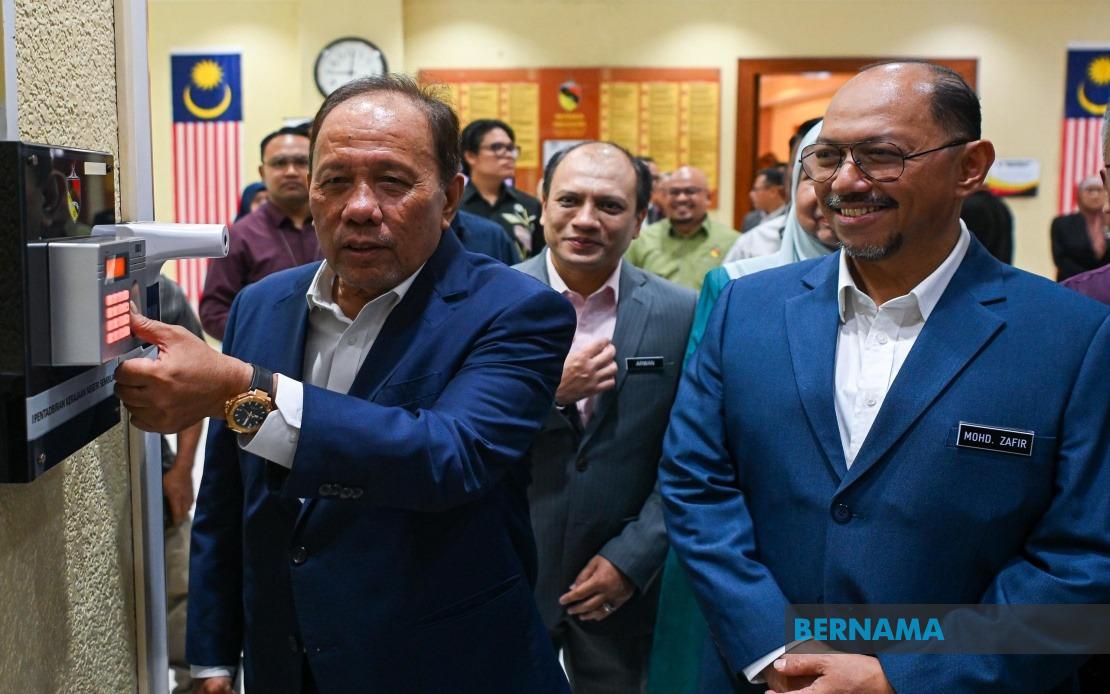
Datuk Ismail Lasim, who recently assumed office as Negeri Sembilan's Menteri Besar, has moved to reassure stakeholders that his appointment followed proper constitutional channels and established protocols. Speaking from Wisma Negeri in Seremban on the day he formally commenced his duties, Ismail expressed confidence that every procedural requirement had been met and fulfilled in accordance with relevant state legislation.
The newly appointed chief minister's comments represent a direct response to allegations levelled by Tan Sri Rais Yatim, chairman of the Wawasan think tank, who had publicly questioned the legitimacy of the appointment process. Rais Yatim's concerns encompassed broader issues surrounding potential external pressure on constitutional matters affecting Negeri Sembilan's governance framework and administrative customs. These claims had generated considerable discussion within political circles regarding the independence of state-level decision-making processes.
Ismail's path to the top position in Negeri Sembilan was secured through his successful campaign in the Juasseh state constituency during the recently concluded state elections. He underwent formal investiture ceremonies before Yang Dipertuan Besar Tuanku Muhriz Tuanku Munawir at Istana Besar Seri Menanti the preceding Sunday, completing the traditional constitutional requirements that precede assumption of office in the state.
The electoral outcome in Negeri Sembilan reflected broader political realignments across the country. Barisan Nasional emerged as the dominant force by capturing 18 of the 36 available state seats, while Perikatan Nasional secured seven seats. This distribution granted both major coalitions the parliamentary arithmetic necessary to govern independently, with BN's superior numbers positioning it to lead state administration.
For Malaysian political observers, Negeri Sembilan's recent transition illustrates the ongoing complexity of state-level power dynamics in a federal system where both ruling coalitions maintain significant presence. The state has historically served as a battleground between competing national alliances, and this election cycle reaffirmed the competitive nature of peninsular state politics despite federal consolidation under Barisan Nasional leadership.
The allegations raised by Rais Yatim touch on deeper institutional concerns within Malaysia's constitutional framework. Questions regarding the appointment of chief ministers and potential external interference in state affairs speak to broader anxieties about federalism and the relative autonomy of state governments. In Malaysia's constitutional arrangement, menteri besars hold significant executive power within their respective states, though they operate within parameters established by federal law and the Yang Dipertuan Agong's constitutional role.
Ismail's defence of procedural propriety reflects the importance of institutional legitimacy in Malaysia's political system. When high-profile appointments face scrutiny, questions about constitutional compliance become matters of public concern extending beyond partisan considerations. The formal articulation of adherence to proper channels represents an attempt to restore confidence in the integrity of state-level governance processes.
The timing of Rais Yatim's criticism, emerging after the appointment had already been formally executed, raises questions about the nature and specificity of the alleged irregularities. Without detailed clarification of the purported procedural violations, the debate has remained somewhat abstract, though the implications for constitutional interpretation remain significant if substantive concerns about interference in state affairs prove warranted.
Negeri Sembilan's situation reflects patterns observable across several Malaysian states where transitional moments between administrations occasionally generate controversy regarding appointment processes and adherence to constitutional provisions. The state's relatively small population and geographic position between Selangor and Pahang have occasionally positioned it as a focus of federal-level political attention.
For the broader Southeast Asian context, Malaysia's experience with managing succession processes in state-level positions offers insights into how federal systems navigate institutional transitions while maintaining public confidence. The emphasis placed by Ismail on procedural correctness indicates recognition that legitimacy in Malaysian politics requires more than mere electoral success—it demands demonstrable respect for constitutional frameworks and established conventions.
Moving forward, Ismail's tenure as Menteri Besar will likely be assessed partly through the lens of whether his administration successfully addresses the concerns raised about institutional independence and proper governance protocols. The credibility of his defence rests substantially on subsequent administrative performance and whether governance structures operate transparently and in accordance with constitutional parameters.
The incident also underscores the role of civil society organisations and independent observers in scrutinising governmental procedures. Rais Yatim's intervention through Wawasan represents the kind of institutional accountability mechanism that characterises more mature democracies, though the effectiveness of such oversight depends on public receptiveness and media engagement with substantive critiques rather than purely partisan positioning.

