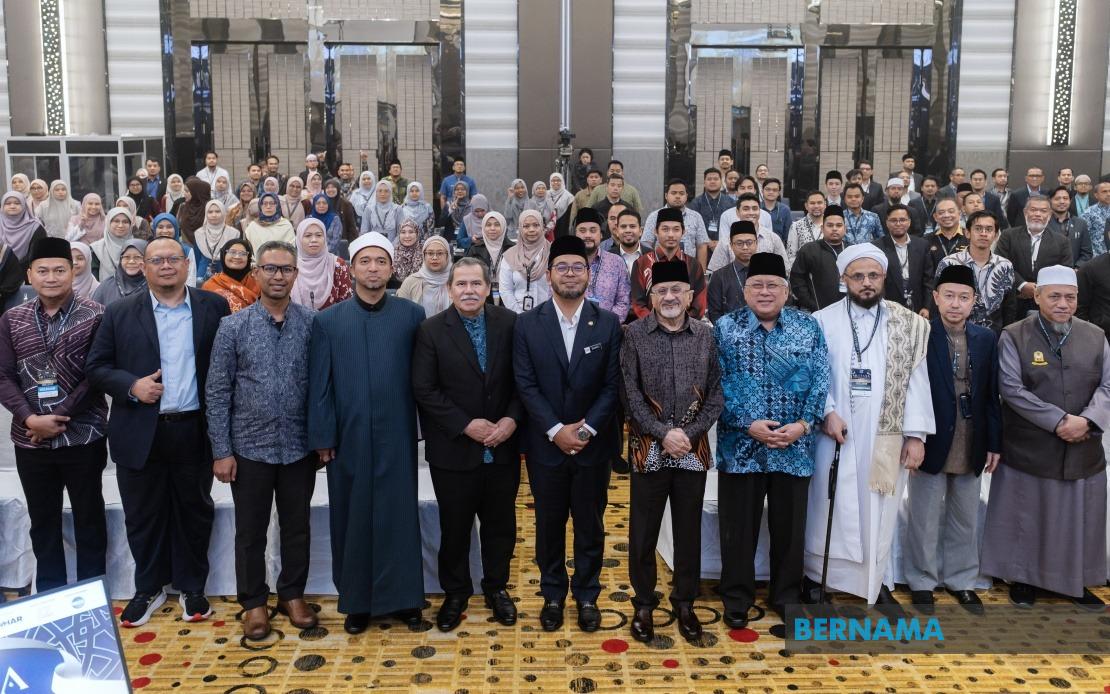
Dr Zulkifli Hasan, the Minister in the Prime Minister's Department (Religious Affairs), has outlined an ambitious vision for Islamic social finance as a transformative force in Malaysia's approach to alleviating poverty and accelerating inclusive economic development. Speaking at the MULTAQA SIDR Islamic Social Finance Conference in Kuala Lumpur, Zulkifli articulated how this emerging financial paradigm transcends conventional charitable frameworks to create sustainable pathways out of economic disadvantage for vulnerable communities across the nation.
The minister's remarks represent a significant policy pivot within the Malaysian government's economic agenda. Rather than treating Islamic social finance as a peripheral or religiously-motivated initiative, the administration increasingly recognises it as a mainstream economic instrument comparable in strategic importance to conventional financial systems. This institutional elevation carries profound implications for how Malaysia structures its poverty alleviation programmes and positions itself within the broader global conversation on inclusive finance and Islamic economics.
To realise this potential, the government intends to catalyse collaboration spanning multiple institutional spheres. Zulkifli outlined plans to engage government agencies, universities and higher education institutions, and private sector players in a coordinated effort to expand and sophisticate the Islamic social finance ecosystem. This tripartite partnership model acknowledges that sustainable development of the sector requires not merely regulatory oversight but intellectual innovation, empirical research, and commercial investment from diverse stakeholders.
The Department of Waqf, Zakat and Haj (JAWHAR) has been designated as the coordinating agency responsible for fortifying governance standards and professional practices within Islamic organisations, particularly non-governmental entities operating in the social welfare space. This institutional designation underscores the government's determination to bring Islamic NGOs into closer alignment with contemporary governance benchmarks and accountability mechanisms. The move reflects growing recognition that legitimacy and impact of Islamic charitable institutions depend increasingly on transparent operations and demonstrated competence.
University collaboration emerges as a cornerstone of this reform agenda. Zulkifli emphasised that partnerships between higher education institutions and the voluntary sector are indispensable for modernising the management and governance structures of Islamic NGOs. This emphasis on academic engagement suggests the government views the sector as requiring intellectual infrastructure—research capacity, training programmes, and evidence-based best practices—that universities are uniquely positioned to supply. Such collaboration can facilitate knowledge transfer between academic expertise and practical community engagement.
The concept of Islamic social finance as "The Third Force" articulated by Zulkifli represents a conceptual reframing with practical consequences. Traditionally, social assistance operates on a consumptive model, providing immediate relief to those in hardship. The minister's formulation proposes instead an empowerment paradigm whereby Islamic social finance mechanisms actively build productive capabilities and economic resilience within communities. This distinction between relief and empowerment suggests future programmes should prioritise skills development, enterprise support, and wealth-creation opportunities over straightforward cash transfers or material provision.
The launch of Malaysia's Islamic Social Finance Report 2026 at the conference provides a comprehensive institutional snapshot of sector development, existing constraints, and latent opportunities. The report's designation as a key reference document for institutions, industry stakeholders, and academic researchers underscores the government's commitment to evidence-based policymaking and the sector's professionalisation. Such publications facilitate coordination among dispersed actors and establish shared analytical frameworks for understanding the Islamic social finance landscape.
Governance integrity constitutes a critical vulnerability that Zulkifli explicitly highlighted. References to parliamentary debates concerning the Tabung Haji Royal Commission of Inquiry report signal the minister's concern that lapses in financial stewardship within Islamic institutions undermine the credibility of the entire ecosystem. Zulkifli's warning that unresolved integrity issues could damage Islam's public image reflects a sophisticated understanding that institutional malfeasance extends beyond conventional reputational damage to threaten religious authority itself. This linkage between financial governance and religious legitimacy illustrates the high stakes of professionalising Islamic social finance operations.
For Malaysian stakeholders, these developments carry several implications. Individuals engaged in poverty alleviation work should anticipate increased focus on professionalism and measurable outcomes within Islamic organisations. Donors and community members can expect more transparent governance frameworks and clearer accountability mechanisms. Universities and research institutions face opportunities to contribute substantively to sector development through teaching, research, and capacity-building initiatives. Private corporations seeking corporate social responsibility platforms may find strategic alignment through Islamic social finance initiatives structured to meet both financial and social objectives.
Regionally, Malaysia's institutional elevation of Islamic social finance positions the country as a potential thought leader and implementation model. As Southeast Asian economies grapple with persistent poverty and inequality, the Malaysian approach—integrating Islamic institutional traditions with contemporary governance standards and collaborative frameworks—offers lessons applicable across diverse contexts where Islamic finance and charitable traditions remain culturally embedded. The conference itself, attracting academic and professional participants across the region, signals Malaysia's aspiration to set regional benchmarks for Islamic social finance practice.
The government's concurrent emphasis on innovation suggests openness to novel financial instruments and service delivery mechanisms within the Islamic social finance space. Fintech applications, crowdfunding platforms, and other emerging technologies may find integration within reformed Islamic social finance structures. This technological openness, combined with governance reforms and academic engagement, indicates a comprehensive modernisation agenda rather than marginal adjustment of existing practices.

