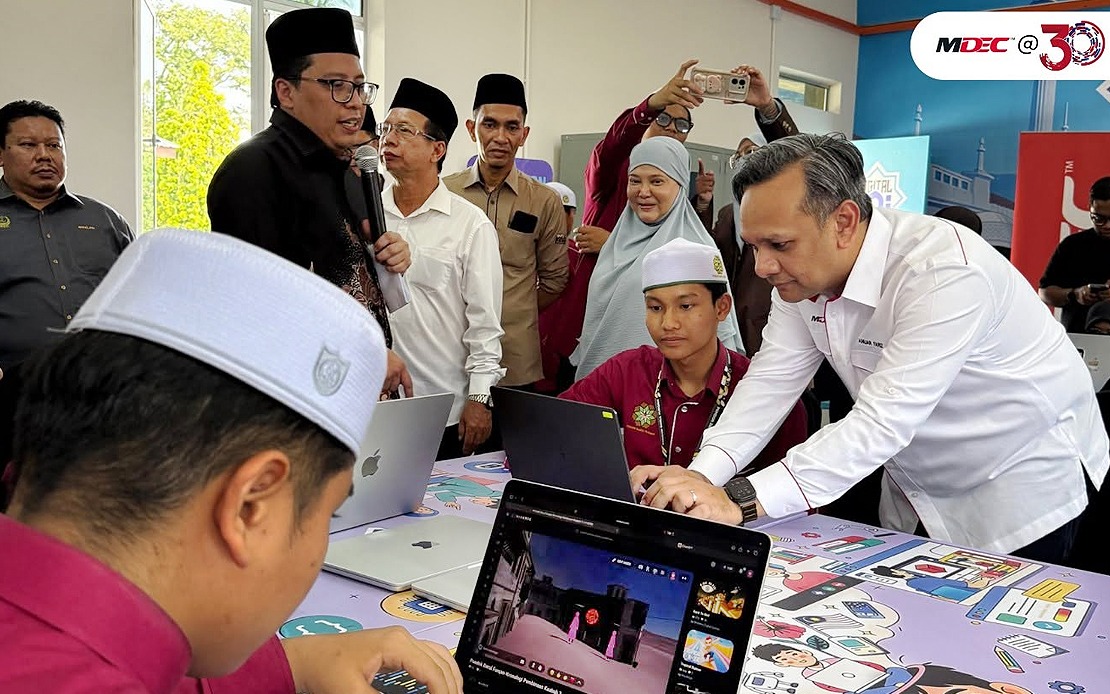
The Malaysia Digital Economy Corporation (MDEC) has formally handed over a Digital Maker Hub to Pondok Darul Furqan in Tambun, Ipoh, marking a significant step in bridging the digital divide within Malaysia's Islamic education sector. This facility represents a strategic intervention to ensure that religious institutions and their constituencies gain meaningful access to emerging technologies and digital capabilities, addressing a long-recognised gap in the country's broader digital transformation agenda.
The Digital Maker Hub functions as a dedicated interactive learning environment furnished with contemporary equipment including computers, high-speed internet, interactive smartboards, robotics kits, and microcontroller systems. These resources are specifically curated to enable hands-on engagement with practical technology applications, moving beyond theoretical instruction to experiential learning that equips both educators and pupils with functional digital competencies. According to MDEC chief executive officer Anuar Fariz Fadzil, this physical infrastructure forms the backbone of a comprehensive technological learning experience designed to foster innovation and creative problem-solving.
The initiative operates under the broader Islamic Education Institution Digital Transformation Programme, commonly referred to as Digital IPI, which represents a collaborative undertaking between MDEC and the Department of Islamic Development Malaysia (JAKIM). This partnership reflects recognition that digital capability development cannot be confined to secular institutions if Malaysia is to realise its aspiration of becoming a genuinely inclusive AI Nation by 2030. The programme acknowledges that Islamic schools educate a substantial segment of Malaysia's youth population and that excluding these institutions from digital advancement would represent both a missed opportunity and a strategic oversight.
Malaysia's stated commitment to achieving AI Nation status by 2030 hinges substantially on developing a sufficiently large and capable digital workforce across all demographic and institutional segments. The Digital IPI initiative directly addresses this imperative by ensuring that Islamic education facilities can cultivate technology-ready graduates prepared to participate meaningfully in the digital economy. Anuar Fariz emphasised that comprehensive talent development demands that technological access extends beyond privileged communities, encompassing religious education institutions whose student populations might otherwise remain digitally marginalised.
The programme carries explicit alignment with the Malaysia Digital Action Plan 2030, positioning digital capability development within Islamic schools as integral rather than peripheral to national economic strategy. By integrating technological training into the educational experience of Islamic institution students and teachers, the initiative seeks to position these individuals as active contributors and creators within the digital economy rather than passive consumers of technology. This shift from consumption to contribution represents a fundamental reorientation that could unlock significant human capital previously underutilised in Malaysia's digital transformation efforts.
At Pondok Darul Furqan itself, the launch activities extended beyond facility handover to include experiential learning opportunities. Thirty students and five teachers participated in a two-day MetaSkool Metaverse Programme that introduced virtual environment technology through interactive sessions designed to stimulate creative exploration. This pedagogical approach recognises that familiarity with emerging technologies like metaverse applications must begin through direct engagement rather than abstract instruction, particularly for learners whose prior exposure to such tools may be limited.
The current deployment represents merely the opening phase of a broader rollout strategy. Under the pilot programme framework, five additional Islamic education institutions located in Kedah, Kelantan, Negeri Sembilan, Pahang and Penang will receive comparable Digital Maker Hub facilities. This phased geographic distribution suggests a deliberate effort to ensure equitable distribution across different regions and states, avoiding concentration of resources in urban or developed areas whilst neglecting peripheral regions. The pilot approach also enables the programme to refine its implementation methodology based on early experiences before potential scaling to additional institutions.
Prime Minister Datuk Seri Anwar Ibrahim formally launched the Digital IPI programme in March, lending high-level political endorsement to this technological integration initiative. The programme currently projects reach to more than 3,000 students and 50 teachers through structured training modules addressing digital literacy, artificial intelligence fundamentals, digital creativity and content creation, immersive learning technologies, and metaverse applications. These curriculum components reflect contemporary digital competency requirements whilst acknowledging that Islamic education contexts may require tailored approaches to technology instruction.
The programme architecture explicitly seeks to accomplish integration of religious education and technological learning rather than treating these as competing or incompatible domains. This holistic approach recognises that students within Islamic institutions need not experience tension between spiritual and technical learning but rather can develop both dimensions in complementary fashion. The embedding of values such as trustworthiness within technology education suggests an understanding that digital capability divorced from ethical grounding produces incomplete rather than comprehensive development.
For Malaysian policymakers and educators observing this initiative, several implications emerge. The recognition that Islamic education institutions constitute important digital transformation infrastructure challenges traditional assumptions that religious education operates in isolation from modern economic priorities. Furthermore, the programme demonstrates that technological access and digital capability development need not conflict with or compromise religious educational missions, opening potential for similar initiatives within other alternative or community-based educational frameworks. The success or challenges encountered in implementing Digital IPI across its pilot sites may provide valuable lessons applicable to broader efforts at democratising digital skills access throughout Malaysia's diverse educational landscape.

