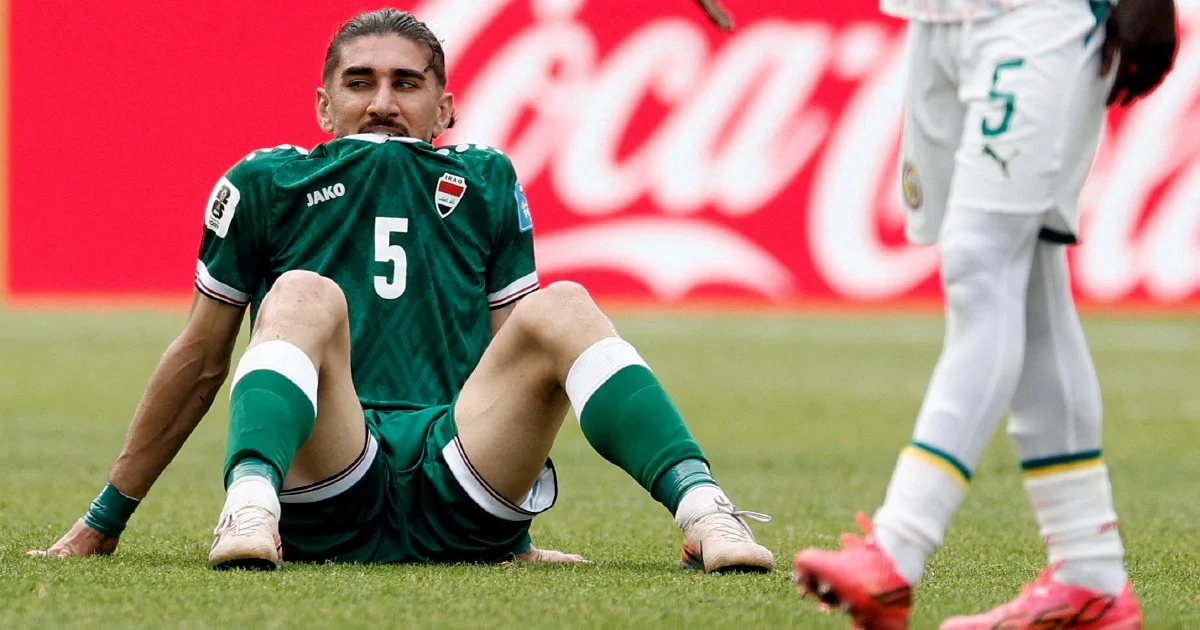
Iraq's Olympic Committee has committed to scrutinising the circumstances surrounding the national football team's underwhelming performance at the recent World Cup, signalling an institutional reckoning that extends beyond the immediate tournament results. The announcement, made on Monday, reflects growing frustration among Iraqi sports administrators with what they characterise as an avoidable setback for a nation with considerable football heritage and a substantial playing population.
The investigation will examine multiple facets of the team's campaign, from tactical and technical decisions to administrative and logistical dimensions that may have hampered performance. This broad-based review suggests the Olympic Committee recognises that tournament failure often stems from systemic rather than isolated problems, requiring examination of everything from coaching standards to player preparation protocols and support infrastructure.
For Malaysia and other Southeast Asian nations watching developments in Iraqi football, the institutional response carries instructive lessons. Regional football federations frequently face similar pressures when national teams underperform on the world stage, yet comprehensive investigations remain relatively uncommon. Iraq's willingness to examine structural weaknesses openly demonstrates an approach to accountability that some Asian football associations have only recently begun to embrace.
The Iraqi sports authorities have signalled their intention to implement preventative measures designed to ensure subsequent World Cup campaigns produce results more commensurate with the nation's ambitions. These measures will likely encompass improved coaching infrastructure, enhanced player development pathways, and possibly revised selection criteria that emphasise consistency and tactical discipline over individual talent alone.
Iraq's football sector has endured considerable challenges beyond the realm of sport itself, with infrastructural constraints and geopolitical circumstances affecting the team's ability to prepare adequately for major tournaments. The Olympic Committee's commitment to reform thus represents an effort to maximise performance within these broader contextual limitations, demonstrating that even institutional reinvention cannot entirely overcome external obstacles.
The timing of this investigation carries significance for Middle Eastern football more broadly. Iraq historically competed as a serious regional force, winning the AFC Asian Cup in 2007 and establishing itself as a fixture in World Cup competitions. Recent tournament participation has yielded diminishing returns, suggesting that the talent pipeline that sustained earlier success may have eroded through insufficient investment or strategic neglect.
Regional observers will scrutinise whether the investigation produces concrete, measurable reforms or remains a symbolic gesture. The credibility of Iraqi football's rehabilitation depends substantially on translating institutional acknowledgement of failure into tangible changes affecting player development, coaching expertise, and competition structure. This transition from diagnosis to implementation frequently challenges football associations across Asia, where rhetorical commitment to reform sometimes outpaces actual resource allocation and systemic change.
The Olympic Committee's public announcement itself serves a political function within Iraqi sports governance, signalling to domestic stakeholders and international observers that the institution takes accountability seriously. This transparency contrasts with previous eras when football disappointments might have received less institutional scrutiny, reflecting evolving standards for sports administration across the Middle East.
Neighbouring nations and regional football confederations will monitor Iraq's reform trajectory with interest, particularly regarding whether investment materialises in youth development systems, coaching education programmes, and domestic league strengthening. These foundational elements determine a nation's capacity to generate consistently competitive players, ultimately shaping World Cup qualification prospects and tournament performance.
For Malaysian readers particularly, Iraq's situation underscores the interconnectedness of football quality and institutional commitment. Southeast Asia's varied World Cup fortunes partly reflect the depth of commitment different federations invest in systematic player development, coaching standards, and competitive infrastructure. Nations that treat World Cup failures as catalysts for institutional examination typically recover more effectively than those that attribute setbacks purely to circumstance or individual player performance limitations.
The investigation also reflects broader regional aspirations within Asian football. Iraq, like several other Middle Eastern nations, views World Cup qualification and competitive performance as markers of national sporting progress and cultural achievement. The willingness to confront failure transparently suggests evolving maturity within the region's sports governance structures, where accountability increasingly matters to institutional leadership and public opinion alike.

