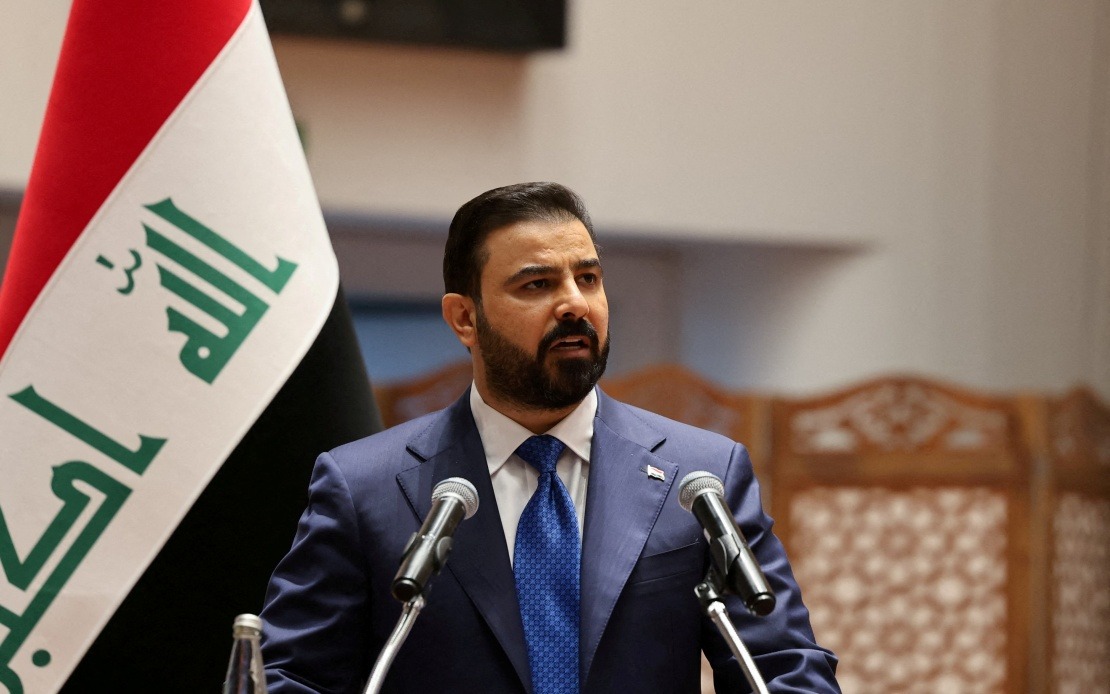
Iraq will not exit the Organisation of the Petroleum Exporting Countries and instead intends to work within the framework to secure a production quota deemed fair to its national interests, Prime Minister Ali Al-Zaidi stated on Thursday during an interview with Al-Hadath broadcaster. The declaration, made during a visit to Moscow, underscores Baghdad's determination to remain a cooperative member of the cartel while simultaneously pushing back against existing allocation structures that the government views as insufficient.
The Iraqi leader's remarks arrive at a pivotal moment for the cartel, which has faced mounting pressures regarding quota distribution among member states. Al-Zaidi's explicit statement—that Iraq counts on securing a just production assignment within OPEC—reflects growing frustration with current arrangements and signals Baghdad's intent to engage in forthcoming discussions about production levels. The timing of the announcement, coupled with diplomatic engagement in Russia, suggests coordinated efforts among oil-producing nations to recalibrate quotas in light of shifting market dynamics and production capabilities.
Recent OPEC decisions illustrate the ongoing negotiations shaping member allocations. In early June, the cartel authorised production increases for several nations, including Iraq, which received approval to raise its output by 26,000 barrels per day, bringing total production to 4.405 million bpd. Kuwait was permitted to expand production by 16,000 bpd to reach 2.66 million bpd, while Oman gained clearance to boost output by 5,000 bpd to 836,000 bpd. These incremental adjustments reflect the complex balancing act OPEC undertakes when reconciling the economic ambitions of member states with broader cartel objectives around market stability.
Baghdad's push for quota revision gains legitimacy through ongoing technical assessments of its productive capacity. During June, Iraqi Oil Ministry spokesman Salim Al-Ruqabi disclosed that OPEC+ had initiated a comprehensive evaluation of Iraq's oil production capabilities with the explicit purpose of reviewing the nation's quota allocation. This assessment phase suggests recognition within the cartel that Iraq's current quota may not align with its geological potential and actual production infrastructure, providing factual grounding for Al-Zaidi's negotiating position.
For Malaysian and Southeast Asian energy analysts, Iraq's stance holds significance beyond regional oil markets. As a major OPEC producer, Iraq's commitment to cartel membership and its advocacy for quota fairness influence global crude pricing and supply dynamics that affect economies throughout Asia. Malaysia, as an energy-importing nation with substantial petrochemical industries, remains sensitive to shifts in crude availability and pricing structures determined by OPEC decisions. Iraq's production levels directly impact regional energy costs and investment calculations for regional refineries and downstream operators.
The political dimension of Al-Zaidi's statement warrants examination. Iraq has navigated significant economic and security challenges in recent years, and oil revenues constitute a critical revenue source for state finances and reconstruction efforts. A more generous production quota would translate directly into enhanced export revenues, strengthening Baghdad's fiscal position and capacity to invest in domestic development. The Prime Minister's diplomatic engagement in Moscow signals Iraq's willingness to leverage international relationships to advance its quota interests within OPEC forums.
OPEC's quota system inherently generates tension, as member states possess varying geological advantages, production costs, and economic dependencies on petroleum revenues. Iraq's insistence on fairness reflects a broader principle that quotas should reflect productive realities rather than historical arrangements. With substantial proven reserves and expansion potential, Baghdad argues credibly that current allocations underutilise its capacity and disadvantage its economy relative to other members with comparable or inferior capabilities. This argument resonates within the cartel, where producers increasingly demand quota structures reflecting contemporary production potential.
The broader geopolitical context enriches understanding of Iraq's position. As a nation recovering from conflict and rebuilding state institutions, Baghdad must demonstrate economic progress to its population and international partners. Oil-dependent economies face particular urgency in maximising revenue during periods of elevated global prices, as such windows prove transient. Al-Zaidi's determination to secure fairer quotas reflects rational economic interest in capitalising on current market conditions that favour producers.
Looking forward, Iraq's negotiating strategy appears calibrated for sustained engagement within OPEC rather than confrontational posturing. By emphasising commitment to cartel membership while asserting rights to equitable treatment, Baghdad positions itself as a cooperative partner with legitimate grievances. This approach contrasts with previous episodes where member states threatened withdrawal or unilateral production increases, instead seeking solutions through established mechanisms. The ongoing technical assessment of Iraqi capacities provides an objective foundation for quota adjustments, potentially smoothing path toward revised allocations that address Baghdad's concerns while maintaining cartel cohesion.

