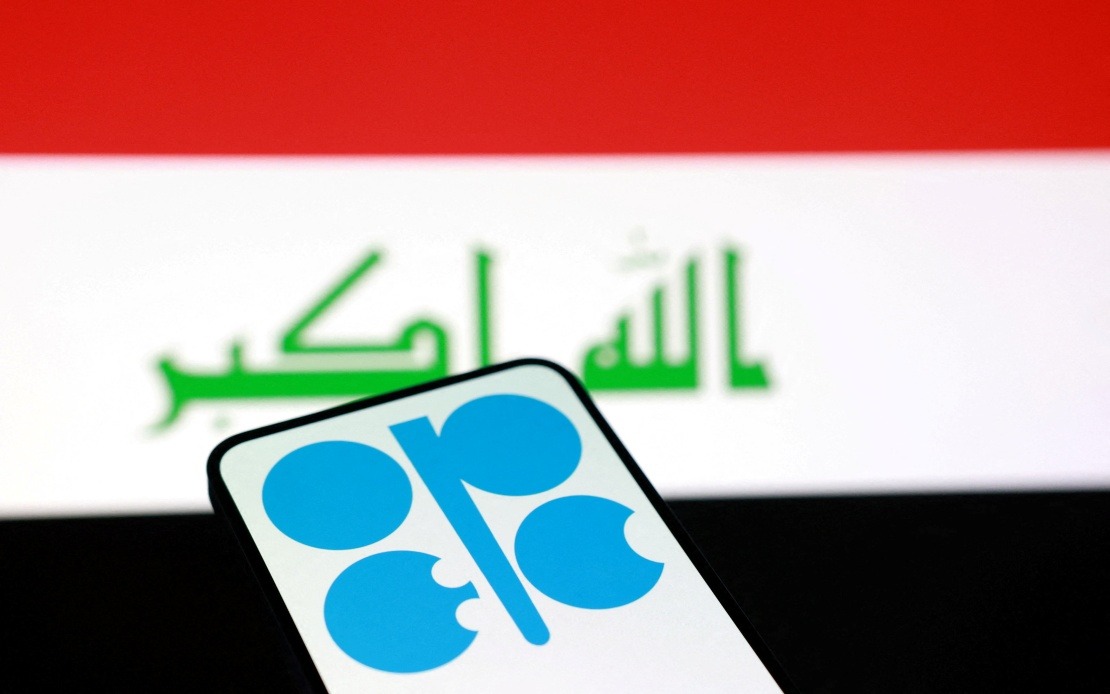
Iraq's Oil Ministry has moved swiftly to quash international reports suggesting Baghdad might abandon its OPEC membership if production quotas remain unchanged, instead reaffirming its commitment to the cartel while maintaining pressure for a fundamental reassessment of output allocations. The clarification came after Bloomberg reported Thursday that Iraq could potentially reconsider membership if its production ceiling were not increased, prompting the Baghdad government to issue a formal statement denying any such threat and distinguishing between diplomatic frustration and actual withdrawal plans.
The Iraqi government has been explicit that neither Prime Minister Mohammed Shia al-Sudani nor the wider cabinet has raised the matter of OPEC withdrawal, a significant point given how such policy shifts typically emanate from the highest political levels. Instead, the Oil Ministry's position reflects a more calibrated approach: Iraq remains engaged with OPEC's institutional framework and decision-making processes, but intends to make its case for revised production targets through technical committees and consensus mechanisms rather than through ultimatums. This distinction matters considerably for regional energy markets, as it signals Baghdad's intention to work within established channels rather than pursue unilateral action that could destabilize OPEC's already fragile unity.
The crux of Iraq's grievance centres on what officials describe as an unfair production ceiling that fails to reflect the country's actual technical capacity to extract oil or its pressing economic reconstruction needs. For decades, Iraq has been constrained by OPEC quotas that bore little relationship to its potential output, a situation Baghdad attributes to the broader geopolitical and security context that has defined the nation's modern history. According to the Oil Ministry, production ceilings must be recalibrated to account for Iraq's special circumstances, a euphemistic reference to the cumulative devastation from prolonged warfare, international sanctions, and infrastructure sabotage by militant groups targeting oil facilities.
Crucially, OPEC and its aligned producers have already initiated a formal review process designed to reassess the maximum sustainable production capacity of each member state. This exercise, being conducted in coordination with an independent international consulting firm and involving Iraq's active technical participation, represents a potential pathway for Baghdad to achieve its quota objectives without forcing a confrontational stand. The findings from this capacity assessment are expected to inform production target negotiations for 2027, creating a window during which Iraq can present detailed evidence of its production capabilities and justify higher allocations on technical rather than purely political grounds.
Iraq's aspiration to recover its historical position as OPEC's second-largest producer carries symbolic and economic weight. Before decades of conflict, sanctions, and internal instability, Iraq routinely ranked second only to Saudi Arabia in regional oil output, a status that reflected both its vast reserves and its role as a cornerstone of Middle Eastern energy markets. Restoring this position would translate into substantially higher export revenues essential for funding reconstruction, supporting public services, and addressing unemployment among a population where economic desperation has historically fueled extremism. For Southeast Asian energy importers like Malaysia, Singapore, and Thailand, an expanded Iraqi supply would enhance regional energy security and potentially moderate global crude prices.
The broader OPEC+ context involves a gradual restoration of production from the historic cuts implemented during pandemic-driven demand collapse. The cartel and its non-OPEC allies, most notably Russia, have agreed to begin unwinding voluntary production reductions over the coming months, with the full resumption of previous output levels expected by later this year. This expansion of available supply creates an opportune moment for Iraq to argue that its quota should rise in tandem with overall OPEC production levels, a logic that may prove more palatable to fellow members than demands that appear to redistribute limited quota allocations at others' expense.
Iraq's Oil Ministry spokesman Salim Al-Rikabi has emphasised that Baghdad harbours no intention of departing OPEC and remains committed to the cartel's mechanisms and structures. However, this public reassurance is carefully paired with a firm statement that Iraq intends to proceed with capacity development according to its own production capabilities and economic requirements, effectively signalling that output may expand regardless of formal quota decisions. This apparent contradiction reflects a calculated negotiating posture: by pledging loyalty to OPEC while simultaneously indicating unilateral production increases, Iraq applies pressure without formally breaking cartel ranks or triggering punitive responses from Saudi Arabia and the United Arab Emirates, who guard OPEC's collective decision-making authority jealously.
The emphasis on Iraq's "special situation" warrants deeper examination for regional observers. Over four decades, Iraq has endured the Iran-Iraq War, subsequent international embargoes, the 2003 invasion and subsequent insurgency, civil conflict during the rise of the Islamic State, and ongoing terrorist attacks targeting energy infrastructure. These circumstances have left the country's oil sector fragmented, with aging equipment requiring substantial capital investment, trained personnel dispersed, and security concerns complicating operations. The Oil Ministry's argument essentially holds that OPEC quotas calibrated without accounting for these extraordinary circumstances perpetuate an unfair distribution that penalizes Baghdad for conditions beyond its control.
For Malaysian policymakers and energy analysts, Iraq's situation underscores broader questions about how international commodity cartels balance equity, efficiency, and political stability. OPEC's quota system has historically relied on arcane formulae blending production history, reserve base, and political negotiation, producing outcomes that often fail to satisfy member states and occasionally invite institutional crises. Iraq's push for transparent, technically-justified capacity assessments aligns with global trends toward evidence-based governance and could establish precedents affecting other members including Nigeria and Venezuela, who have also contended with quotas deemed insufficiently generous relative to their endowments.
The upcoming production capacity review thus carries implications well beyond Baghdad's immediate interests. Should the independent consulting firm's findings substantially validate Iraq's claims of underutilized potential, the results could trigger a broader recalibration of OPEC quota architecture. Such a shift might strengthen cartel cohesion by addressing longstanding grievances, or conversely could create new disputes if findings appear to disadvantage other members. For Southeast Asian energy consumers, a more transparent and technically-grounded OPEC quota system could yield more predictable global oil supplies, though higher Iraqi output would simultaneously mean the cartel collectively produces more, which typically exerts downward pressure on prices—a mixed outcome depending on timing and global demand conditions.
Baghdad's carefully calibrated response to Bloomberg's reports ultimately reflects sophisticated diplomatic management of a complex position: genuine commitment to OPEC structures combined with determined advocacy for revised terms. By rejecting withdrawal threats while maintaining production expansion momentum, Iraq signals that it will not be marginalized within the cartel, but neither will it unilaterally destabilize OPEC through dramatic confrontation. This approach may prove more effective than explicit ultimatums in achieving quota improvements, particularly as the cartel begins expanding overall production and faces renewed scrutiny over fairness among members.

