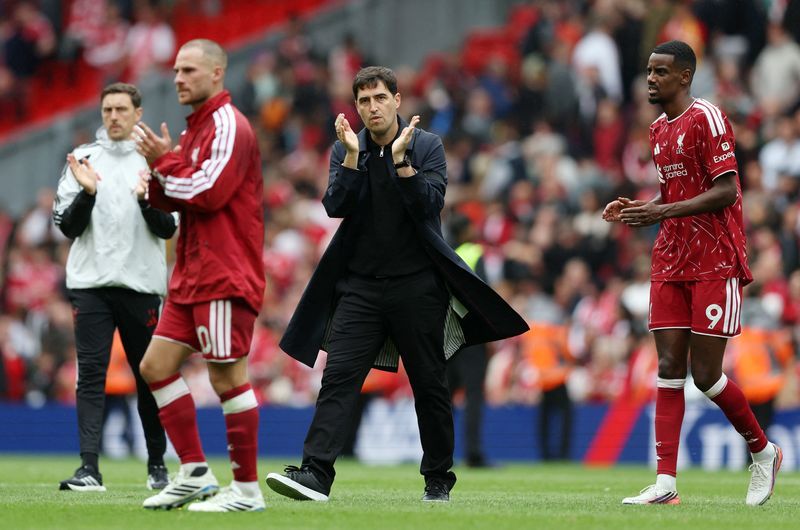
Liverpool's managerial transition entered a critical phase this week when new boss Andoni Iraola showed measured optimism despite the club's inability to secure a victory in their opening matches. After a 2-2 draw against Nottingham Forest on Saturday, the former Bournemouth manager acknowledged both the progress being made and the frustration of dropping points, drawing encouragement from how his squad responded when trailing for the second consecutive outing.
The appointment of Iraola represents a significant philosophical shift for Anfield. His predecessor oversaw a more measured tactical approach during his two seasons in charge, but the Spanish manager's philosophy centres on aggressive, tempo-driven football that emphasises pressing, quick transitions, and pace-based attacking play. This represents a return to the identity supporters associate with the club's most successful recent periods, when relentless intensity defined their football across Europe. Iraola believes this approach will restore Liverpool to the competitive heights they once occupied and address the structural weaknesses that caused their dramatic collapse last season.
That collapse remains a sobering backdrop to this new chapter. Despite spending a Premier League record £446 million on reinforcements during the previous campaign, Liverpool slipped from their 2025 title-winning position to fifth place, a humbling reversal that necessitated managerial change. The scale of that investment followed by such underperformance intensified pressure on the club's decision-making processes and raised questions about tactical implementation, player integration, and overall project direction. Iraola's mandate is unambiguous: restore competitive credibility and return the club to title contention through a distinctive tactical framework.
Yet implementing tactical transformation requires both time and the correct personnel. Against Nottingham Forest, Liverpool's first-half performance illustrated the gap between Iraola's vision and current execution. The visitors conceded from a direct counterattack through Dan Ndoye, while extended passages saw Liverpool play without sufficient urgency or intensity. The Spanish manager's post-match assessment candidly identified this deficiency, pinpointing their passivity off the ball and excessive defensive spacing as primary concerns that created unnecessary vulnerabilities. Iraola stressed that winning duels and maintaining compactness without possession formed the foundation upon which more attacking prowess could develop.
The transformation visible after half-time suggested that Iraola's message resonated with his players. Alexander Isak equalised shortly after the hour, and newcomer Victor Munoz secured the draw with a late leveller, demonstrating the attacking potential within Liverpool's squad when intensity increased. Munoz's contribution across both opening matches impressed Iraola, who highlighted the winger's consistent threat creation and defensive contribution despite the team's overall search for cohesion. The manager's willingness to identify individual performances while addressing collective deficiencies reflects his approach to managing this rebuilding phase with realistic expectations.
Liverpool's ability to recover from losing positions for successive matches offers tactical encouragement, even if the absence of victories creates mounting frustration. Iraola has publicly acknowledged that his high-intensity system requires an adaptation period, making his optimism about trajectory rather than immediate results understandable. The club's supporters, having experienced years of Jurgen Klopp's demanding football before the more conservative tactical selections of recent seasons, likely retain appetite for the aggressive approach Iraola promises. The philosophical shift carries inherent risks, but the manager's conviction suggests belief that the current squad possesses the athleticism and technical quality to execute this demanding system effectively.
Strengthening the playing personnel addresses one dimension of this challenge. Reports indicate Liverpool have finalised an agreement to sign France winger Bradley Barcola from Paris Saint-Germain, with the 23-year-old's directness and explosive pace aligned perfectly with Iraola's tactical requirements. Barcola's arrival would provide additional high-speed attacking options while potentially addressing the width and pace imbalances that contributed to their first-half vulnerabilities against Nottingham Forest. Such reinforcements suggest the club recognises that Iraola's system demands specific athletic and technical profiles to function optimally, and recruitment strategies are adapting accordingly.
The broader context of Liverpool's managerial change resonates across the Premier League and European football more widely. The club's decision to abandon the measured approach that characterised their recent seasons reflects the competitive intensity required to compete for major trophies in contemporary football. Iraola's appointment signals confidence that aggressive, possession-based pressing represents the modern blueprint for success, a philosophy shared by several leading European institutions. For Malaysian and Southeast Asian football enthusiasts, Liverpool's tactical evolution illustrates how elite clubs continually refine their methodologies in pursuit of competitive advantage, often oscillating between different philosophical approaches as circumstances demand.
Liverpool's current position occupies an uncomfortable space between promise and realisation. The entertainment value has increased markedly, with attacking play more direct and purposeful than previously observed. However, the absence of victories creates genuine frustration for a club accustomed to competing for major honours. Iraola's insistence that results will follow as the tactical system beds in reflects confidence grounded in tactical logic rather than blind optimism. The manager recognises that transforming a team's fundamental approach requires patience, yet also understands that winless streaks cannot extend indefinitely without creating wider concerns about his stewardship.
The next phase of Liverpool's season will determine whether Iraola's optimism proves justified or premature. Victories must arrive soon, as draws against Nottingham Forest and Newcastle, however encouraging in isolation, accumulate into a problematic points deficit if they continue. The manager's refusal to panic despite the winless start demonstrates confidence in his methodology, but pragmatically acknowledges that football ultimately measures success through points on the table rather than stylistic preferences or second-half improvements. As Liverpool navigate this critical transition, the balance between patience required for tactical implementation and results demanded by elite competition will define whether Iraola's appointment represents the catalyst for restoration or the beginning of a prolonged struggle.

