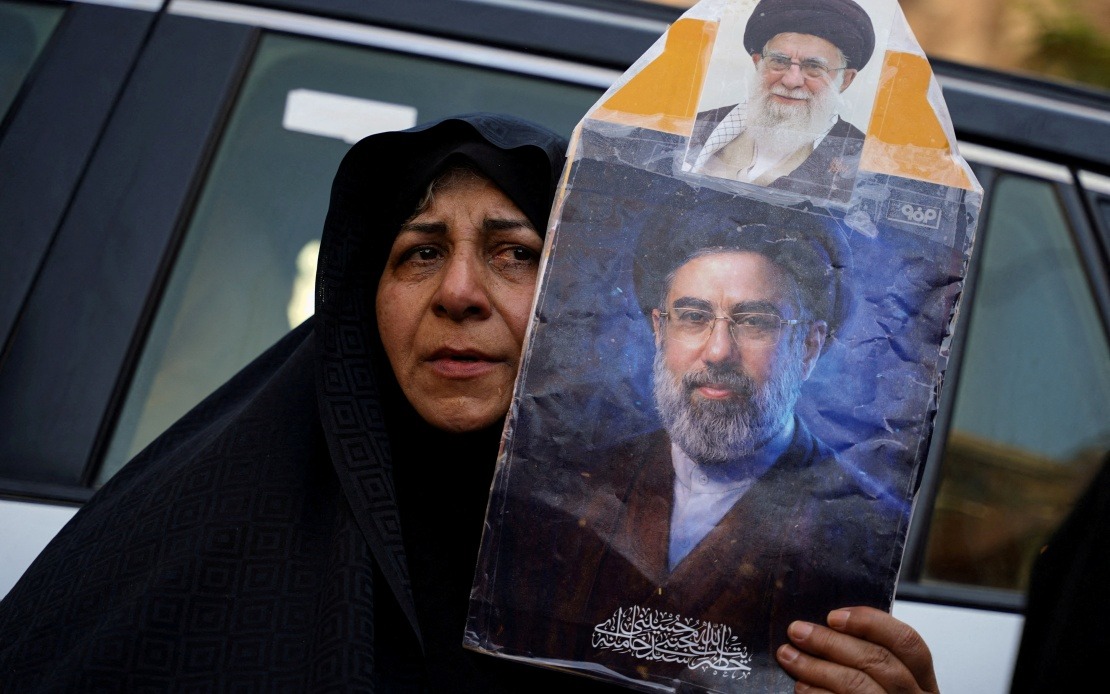
The diplomatic rupture between Iran and the United States has deepened dramatically, with Tehran's top authority questioning the fundamental reliability of American commitments on the international stage. Iranian Supreme Leader Mojtaba Khamenei, speaking through state media channels, has lambasted the Trump administration for what he characterises as systematic violations of a peace accord signed barely a month prior, arguing that the repeated breaches expose a pattern of American duplicity in international negotiations.
The memorandum of understanding in question was inked by Iranian President Masoud Pezeshkian and Trump on June 18, representing one of the most significant diplomatic overtures between the two adversarial nations in recent years. The accord was designed to establish a framework for sustained dialogue, with both parties committing to formal negotiations within a 60-day window aimed at reaching a comprehensive final agreement that could potentially reshape Middle Eastern geopolitical calculations.
Khamenei's rhetoric reflects profound frustration with what Tehran perceives as Washington's inability or unwillingness to honour its international obligations. By characterising Trump's signature as "worthless and invalid", the Supreme Leader is essentially delegitimising not merely the current agreement but the foundational credibility upon which all future diplomatic engagement must rest. Such language carries serious implications for confidence-building measures and the prospects for any meaningful rapprochement between the two nations.
The Iranian leader's message, disseminated to the Iranian population through state media, went beyond simple diplomatic protest. Khamenei painted a broader indictment of American foreign policy conduct, describing the United States as having "revealed its true and unmasked face" through what he termed a "dark experience of crime and breach of promises". This framing suggests Tehran views the violations not as isolated incidents but as manifestations of deeper structural untrustworthiness embedded within American statecraft.
Central to understanding this escalation is the deteriorating security situation that has accompanied the diplomatic breakdown. Rather than the agreed accord creating space for de-escalation, the region has witnessed an alarming cycle of military exchanges. The United States has conducted multiple strikes targeting Iranian interests in recent days, while Tehran has responded with retaliatory attacks against American military installations and facilities scattered throughout the region. This tit-for-tat pattern undermines the very premise upon which the June memorandum was constructed.
The deterioration became official when Iran's Deputy Foreign Minister for Legal and International Affairs, Kazem Gharibabadi, formally announced on the same day as Khamenei's remarks that the Islamic Republic is suspending compliance with its obligations under the accord. This represents a significant escalation beyond rhetorical protest, signalling that Tehran is prepared to unwind the diplomatic initiative rather than continue fulfilling commitments it believes are unilateral. Gharibabadi's statement directly blamed Washington for initiating the breach of faith, positioning Iran as responding to American violations rather than as the primary transgressor.
For observers in Malaysia and across Southeast Asia, this rupture carries troubling implications for broader international order and the reliability of multilateral agreements. The episode demonstrates how quickly diplomatic frameworks can unravel when underpinned by shallow mutual commitment or when domestic political pressures in major powers override treaty obligations. If an accord negotiated at the highest levels between two major regional players cannot survive weeks of implementation scrutiny, questions naturally arise about the durability of other international understandings.
Khamenei's warning that Iran expects Washington to anticipate "unforgettable lessons" should it persist with what he labels warmongering introduces a menacing dimension to the standoff. The language suggests Tehran is contemplating significant escalatory responses, though the precise nature of such "lessons" remains strategically ambiguous. This opacity itself becomes a destabilising factor, as regional actors must recalibrate threat assessments and defensive postures without clear understanding of red lines or escalation thresholds.
The breakdown also exposes fundamental misalignments in how Washington and Tehran interpret agreements and compliance obligations. What America may view as necessary security responses, Iran construes as unwarranted violations that nullify reciprocal commitments. This interpretative gulf reflects deeper structural distrust accumulated through decades of contentious relations, sanctions regimes, and military confrontations. Bridging such divides typically requires painstaking confidence-building starting from positions of acknowledged mutual grievance rather than accusations of fundamental bad faith.
Regional dynamics complicate matters further. Other Middle Eastern players, including Israel and Gulf monarchies, maintain their own perspectives on the Iran-US trajectory and hold leverage over how events unfold. The fragile equilibrium that the June memorandum attempted to establish now appears destabilised, with all parties recalibrating strategies in an environment of heightened uncertainty and tit-for-tat military exchanges.
For Southeast Asian nations navigating a complex great power environment, this episode underscores the importance of diversifying diplomatic relationships and avoiding over-dependence on any single partner's commitments. The spectacle of a major power abandoning freshly signed accords challenges the assumptions underlying regional stability frameworks and suggests that written agreements alone may provide insufficient anchors for long-term partnerships.

