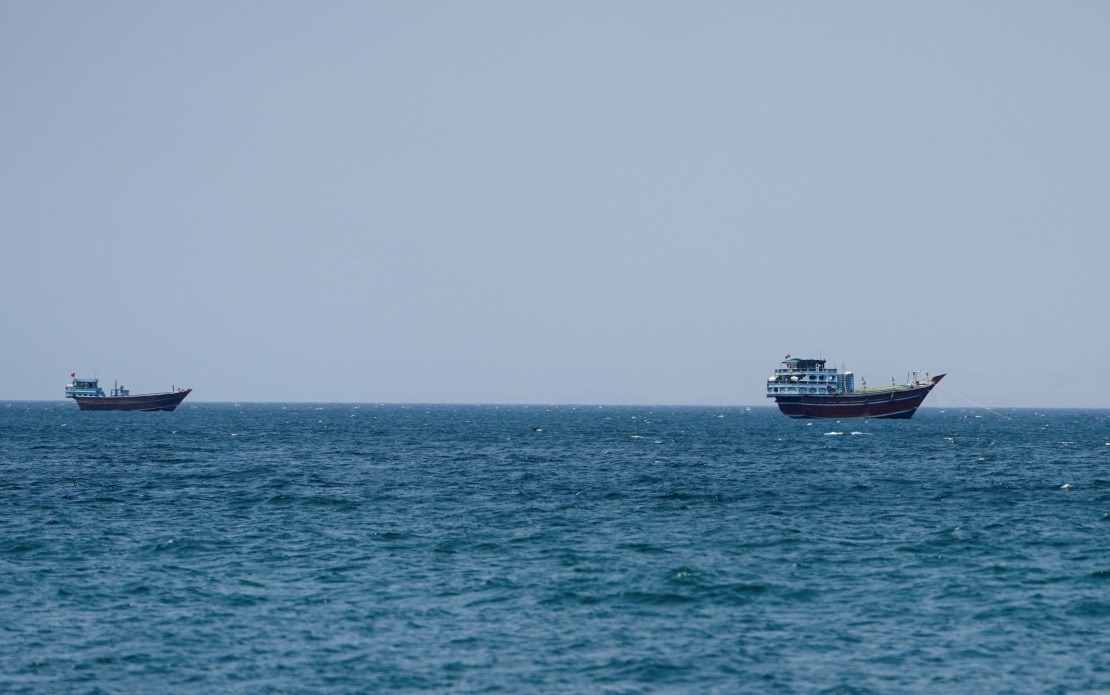
Iran's newly appointed security chief has made clear that restoration of full traffic through the Strait of Hormuz—a critical waterway currently operating under Tehran's imposed restrictions—hinges entirely on Washington's willingness to meet specific demands. Mohsen Rezaei, heading the Supreme National Security Council, conveyed this stance during talks with China's ambassador to Tehran, signalling that economic and diplomatic leverage remain central to Iran's strategy in the standoff with the United States.
The restrictions on the Strait of Hormuz, implemented since March in response to what Iran characterises as US-Israeli aggression, represent one of the Islamic Republic's most potent tools in negotiations with Washington. This critical passage, through which roughly one-third of the world's seaborne oil exports transit, carries immense geopolitical weight. By maintaining control over access, Iran projects both resolve and bargaining power in its broader conflict with Western powers and their regional allies. For Malaysia and other Southeast Asian economies heavily dependent on Middle Eastern energy supplies, the dispute carries tangible consequences through potential disruptions to global oil markets.
Rezaei articulated three main Iranian prerequisites for reopening the waterway. First, the United States must cease military operations against Iran and its network of regional partners, particularly militia groups and resistance movements across Syria, Iraq, and Yemen. Second, Washington must release financial assets that have been frozen under international sanctions regimes. Third, Tehran has reportedly conveyed additional undisclosed conditions through intermediaries engaged in backchannel diplomacy. This layered approach suggests Iran is attempting to extract maximum concessions while maintaining some negotiating flexibility.
The involvement of intermediaries in these indirect talks reflects the absence of formal diplomatic channels between Tehran and Washington. Regional powers, particularly Oman, have historically served as mediators in US-Iran disputes, and their continued role indicates that neither side has entirely closed the door to resolution. However, Rezaei's comments suggest Iran believes the current balance of leverage favours its position, reducing incentive for rapid capitulation.
A notable dimension of Rezaei's remarks concerns a potential bilateral agreement with Oman over transit routes. Despite its geographic position as co-guardian of the Strait, Oman's capacity to unilaterally alter Iran's policy appears limited. Rezaei's explicit statement that any Oman-Iran arrangement would have no bearing on Iran's closure decision underscores Tehran's determination to frame the strait dispute as fundamentally a matter of sovereignty and resistance rather than routine maritime administration. This rhetorical positioning strengthens Iran's hand domestically while signalling to international actors that conventional maritime law cannot supersede its security calculations.
During the same meeting, Rezaei commended China for opposing a US-led draft resolution at the UN Security Council targeting Iran during the March escalation. This appreciation reflects Iran's strategic realignment toward Beijing, particularly as Washington and its allies increase pressure through sanctions and military posturing. For Malaysia, caught between great power competition in the region, Iran's pivot toward China carries implications for regional stability and economic partnerships.
Rezaei emphasised the importance of Iran-China strategic partnership, highlighting their shared membership in organisations including the Shanghai Cooperation Organisation and BRICS. These platforms represent alternative power structures challenging Western-led international institutions. By anchoring Iran's security outlook to Beijing, Rezaei signals that Tehran perceives durable support from China more reliable than any negotiated settlement with Washington. This alignment potentially complicates US efforts to build consensus for punitive measures against Iran and suggests Iran believes it can sustain its current posture indefinitely.
The timing of these statements, delivered by a newly appointed security chief, carries significance. Rezaei's appointment itself reflects efforts by Iranian hardliners to consolidate control over national security policy, particularly amid ongoing tensions with the West. His uncompromising rhetoric on the Strait of Hormuz likely reflects factional consensus among Iran's security establishment that concession on this issue would signal weakness domestically and internationally.
For regional observers including Malaysia, the Strait of Hormuz dispute exemplifies how geopolitical tensions thousands of kilometres away directly influence energy security and economic stability. Malaysian reliance on imports means that sustained restrictions or military incidents in the Persian Gulf could drive up fuel costs and disrupt shipping schedules. Additionally, Malaysia's position as a major trading nation means that broader regional instability discourages investment and complicates supply chain management.
The fundamental dynamic at play involves competing visions of acceptable outcomes. Iran seeks recognition as a regional power whose security concerns merit respect and whose regional allies merit non-interference. The United States seeks to maintain its military dominance in the Middle East and constrain Iran's regional influence. Without significant shifts in either position, the current standoff appears durable. Rezaei's comments suggest Iran believes it can maintain restrictions indefinitely if necessary, banking on the economic costs to Western allies and neutral parties eventually creating pressure on Washington to negotiate.
The path toward resolution likely requires dramatic external developments—whether military escalation forcing reassessment, major shifts in US domestic politics altering Washington's Iran policy, or mediation breakthroughs leveraging China or other powers. Until such catalysts emerge, the Strait of Hormuz will probably remain a zone of tension, with Iran using closure as leverage and global energy markets absorbing the risk premium.

