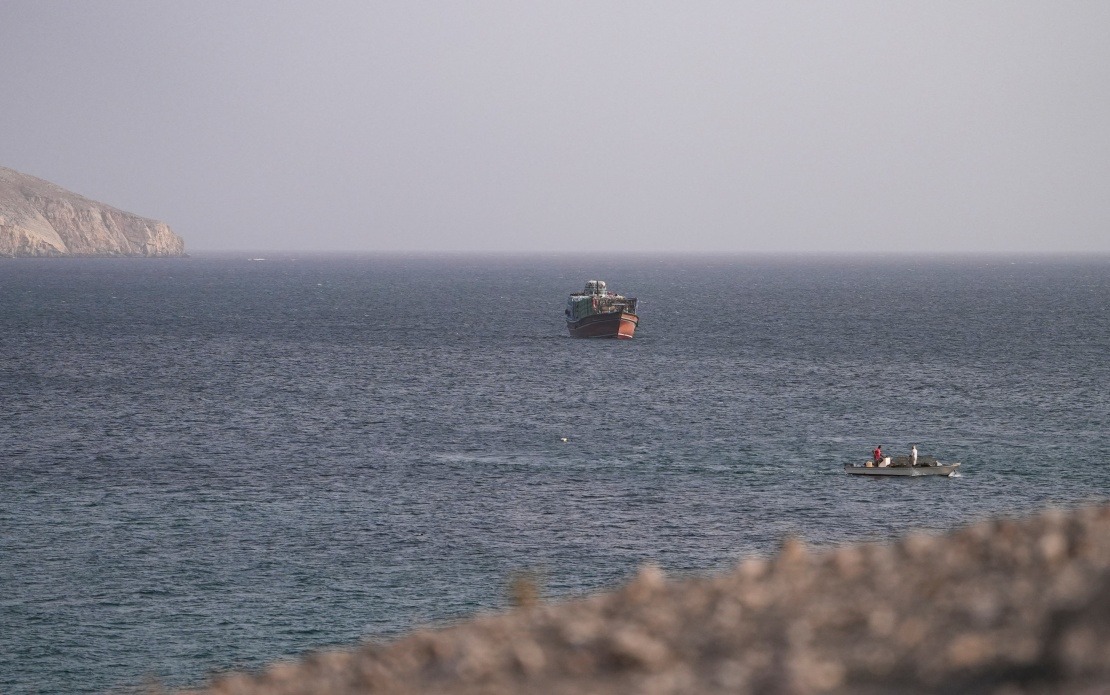
Iran has indicated it will not allow the Strait of Hormuz to revert to its pre-conflict operational status, marking a strategic pivot in how the world's most critical oil chokepoint will function moving forward. Foreign Ministry Spokesperson Esmaeil Baqaei made the assertion during a televised address on Sunday night, emphasizing that any emerging arrangement with Oman represents a reconfiguration rather than a simple restoration of previous conditions. The statement reflects Tehran's determination to reshape maritime governance in the waterway through which roughly one-third of global seaborne oil passes annually.
Baqaei clarified that ongoing discussions between Tehran and Muscat centre on establishing a comprehensive framework for maritime security and safe navigation rather than simply reopening shipping corridors. The two nations, as the Strait's sole coastal states, bear joint responsibility for managing the waterway according to his interpretation. These conversations commenced immediately following a ceasefire announcement on April 8, with multiple negotiating rounds having occurred since. The emphasis on bilateral dialogue underscores Iran's preference for regional rather than international mechanisms governing the Strait's future operations.
The Iranian diplomat highlighted that Abbas Araghchi's first foreign visit as Iran's Foreign Minister after the conflict was specifically to Oman, where discussions with the Sultan and Foreign Minister focused on establishing secure maritime passages through the Strait. This prioritization signals the strategic importance Tehran places on the Omani relationship in reshaping the waterway's management. Baqaei referenced provisions within a broader memorandum of understanding on conflict resolution, specifically citing a fifth clause establishing that Iran should manage the Strait in consultation with Oman and through dialogue with other regional actors. This framework provides Iran with primary authority while maintaining the appearance of cooperative regional engagement.
Crucially, Baqaei announced that the future maritime route through the Strait would constitute an entirely new passage, distinct from both the current northern and southern routes. This represents more than technical adjustment—it signals Iran's intention to assert control over shipping patterns and potentially redirect international commerce according to its strategic preferences. During the initial implementation phase spanning roughly three weeks, he noted that the northern route operated securely with regular maritime traffic. However, he attributed disruptions within the subsequent period to what he characterized as an act of aggression against Iran, suggesting external interference derailed the original arrangement.
The Iranian position emphasizes preventing misuse of the Strait by parties hostile to Iran, framing security concerns around protecting Iranian sovereignty. Baqaei stressed that any mechanism governing future maritime passage must fully respect Iran's sovereign rights, establishing a non-negotiable baseline for ongoing negotiations. The bilateral nature of Iran-Oman talks explicitly excludes third-party involvement, though regional implications are unavoidable given the Strait's global significance. This approach allows Tehran to present its actions as regional consensus-building while maintaining independence from international pressure.
Baqaei directly addressed persistent threats from American officials, dismissing such rhetoric as ineffective and noting Iran's historical experience with military aggression. He referenced what he characterized as two or three major military campaigns against Iran by the United States, suggesting Iran has already confronted worst-case scenarios and developed corresponding resilience. This framing positions current American warnings as neither novel nor compelling. Baqaei asserted that Iranian decision-making derives from national interest calculations and security assessments rather than external intimidation, establishing an official posture of imperviousness to pressure tactics.
The spokesperson contested claims attributed to American President Donald Trump suggesting Iran had requested cessation of military operations, labeling such statements as repeatedly disproven assertions. He characterized social media-based communications from American officials as components of psychological warfare and media manipulation campaigns. Past experience, according to Baqaei, demonstrates that threats and media pressure prove ineffective in compelling Iran to abandon stated positions. This rhetorical strategy positions Iran as rational and principled while portraying American communications as propagandistic manipulation.
Baqaei disclosed receiving diplomatic contacts from Bulgaria, the United Kingdom, and Ukraine within the preceding 24 hours, suggesting continuing international engagement around the crisis. He articulated Iran's intention to communicate consequences associated with potential future aggression or military escalation. The Iranian position establishes that countries providing military bases, facilities, or logistical support to parties attacking Iran would bear responsibility for such aggression and face corresponding consequences. This formulation appears partially directed at regional American allies potentially involved in operations against Iranian interests.
Baqaei grounded Iran's position in established international law principles and self-defence rights, arguing that nations possess inherent responsibilities to safeguard national interests and security. The statement positions Iran's actions within recognized legal frameworks rather than characterizing them as aggressive posturing. He concluded by distinguishing between the status of a new agreed maritime route through the Strait and the broader question of whether the waterway itself should remain open or restricted. Baqaei linked the Strait's ultimate operational status to regional security developments and specifically to American actions, suggesting Iran retains flexibility in final determinations.
For Malaysian and Southeast Asian observers, these developments carry significant implications given regional dependence on Hormuz transit for energy security. The Strait's functionality directly affects oil prices and supply reliability across Asia-Pacific markets. Iran's determination to implement new operational frameworks could introduce unpredictability into shipping patterns and potentially increase transit costs through insurance and administrative requirements. The emerging Iran-Oman arrangement might establish precedents for how regional powers manage critical maritime infrastructure, potentially influencing governance of other strategic waterways. Malaysia, as a maritime nation with substantial energy imports through the Strait, faces uncertain operational conditions during the transition period, though any stabilization through bilateral Iranian-Omani arrangements might ultimately prove preferable to prolonged conflict-related disruptions affecting global commerce.

