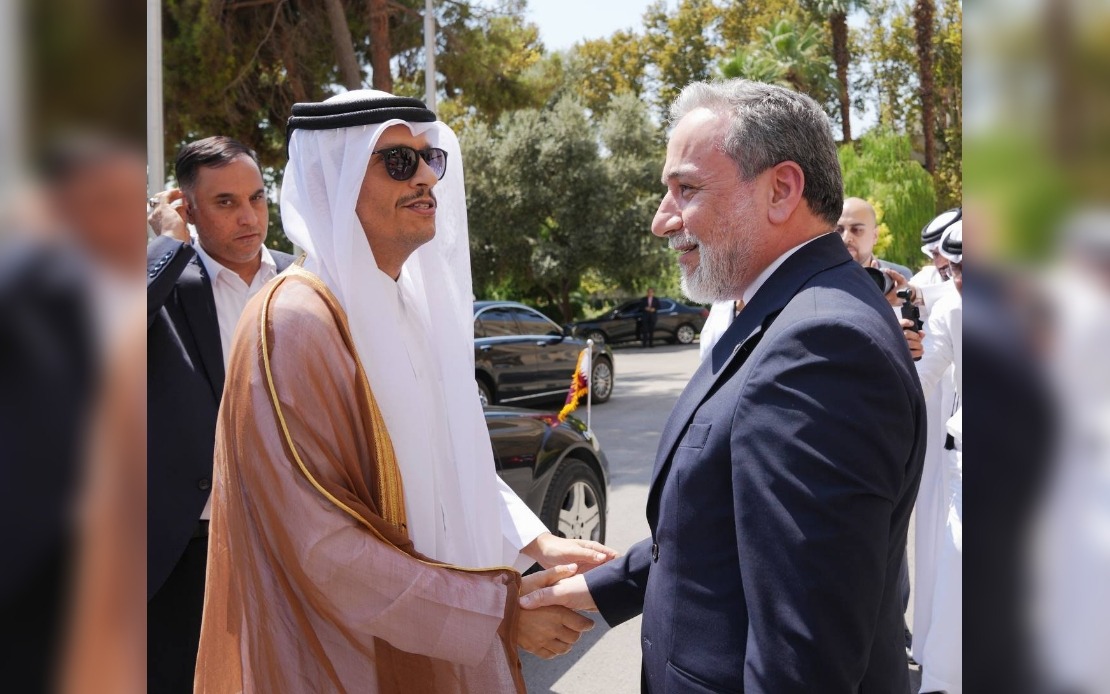
Iran's Foreign Minister Abbas Araghchi has signalled that restoring diplomatic relations with the United States remains a realistic possibility, provided Washington changes its approach to negotiations. Speaking after high-level talks with Qatar's leadership in Tehran, Araghchi emphasized that the path forward hinges on American policymakers recognising a fundamental principle: pressure-based diplomacy does not yield results with Iran. His measured optimism, expressed via social media on Friday, represents the clearest signal yet from Iranian leadership regarding its willingness to re-engage diplomatically with Washington amid escalating regional tensions.
Araghchi's comments followed substantive discussions with Qatar's Prime Minister and Foreign Minister Sheikh Mohammed bin Abdulrahman bin Jassim Al Thani, whom he characterised as productive and forward-thinking. The Iranian diplomat specifically highlighted that the conversations proved constructive in nature, suggesting Doha's mediation efforts are creating space for genuine dialogue between the two governments. This terminology—framing the talks as "creative discussions"—signals that both sides may be exploring innovative solutions rather than retreating to entrenched positions, a potentially significant shift in the broader diplomatic landscape.
The condition Araghchi articulated reveals Iran's core grievance in its relationship with the United States: a perception that Washington relies on coercion rather than mutual respect. His statement that pressure "doesn't work" directly challenges the sanctions-first approach that has defined American policy toward Tehran for decades. By contrast, Araghchi outlined what Iran views as prerequisites for successful engagement: the United States must build trust through consistent actions, communicate with respect for Iranian sovereignty, acknowledge Tehran's legitimate rights within international frameworks, and honour any commitments made during negotiations. These requirements suggest Iran is prepared to negotiate, but only within a framework that treats it as an equal stakeholder.
Qatar's diplomatic initiative assumes particular significance in this regional context, as the small Gulf nation has positioned itself as a neutral mediator capable of facilitating communication between adversaries. Sheikh Mohammed's visit to Tehran on Thursday marked his first such trip since military escalations began in late February, involving strikes by the United States and Israel. By undertaking this journey, Qatar demonstrated its commitment to de-escalation and signalled to all parties that dialogue remains prioritized within Gulf diplomatic circles. The timing of the visit, coming amid broader regional instability, underscores how critical regional players view the need for channelled communication.
The Qatari foreign minister conducted wide-ranging discussions with Iran's senior leadership during his Tehran visit, meeting not only with Foreign Minister Araghchi but also with President Masoud Pezeshkian, Parliament Speaker Mohammad Bagher Qalibaf, and Secretary of Iran's Supreme National Security Council Mohsen Rezaei. This comprehensive engagement across Iran's political hierarchy suggests Qatar was conveying messages on behalf of multiple parties, likely including the United States and other regional actors. The breadth of these interactions indicates that both nations treat the mediation effort with considerable seriousness, investing significant political capital in exploring pathways toward de-escalation.
Beyond broad diplomatic principles, the talks addressed specific technical proposals aimed at reducing immediate tensions. Among these initiatives was the concept of establishing a temporary joint navigational corridor through the Strait of Hormuz, one of the world's most strategically vital waterways through which roughly one-third of global seaborne traded oil passes. Additionally, discussions encompassed mine-clearing operations in sensitive maritime areas, reflecting concerns that the aftermath of previous military incidents has left hazards threatening regional shipping. These concrete proposals suggest that negotiators are attempting to move beyond rhetorical gestures toward implementable confidence-building measures that could reduce the risk of accidental escalation.
For Malaysia and Southeast Asian observers, the implications of renewed Iran-US diplomacy extend beyond Middle Eastern geopolitics. The region depends heavily on stable energy supplies flowing through the Strait of Hormuz, making any military confrontation or blockade in the Persian Gulf a direct threat to economic stability across Asia-Pacific. Moreover, prolonged Iran-US tensions contribute to regional fragmentation and arms proliferation, outcomes that destabilise the broader international order upon which ASEAN nations depend. A diplomatic breakthrough would therefore benefit Southeast Asian interests by reducing energy price volatility and lowering the likelihood of supply disruptions that can ripple across global markets.
The Iranian narrative advanced by Araghchi also carries implications for how developing nations negotiate with major powers. By insisting that pressure tactics prove counterproductive and that genuine dialogue requires mutual respect and trust-building, Iran articulates principles that resonate with smaller powers throughout Asia who often find themselves subjected to coercive diplomacy. Should Iran succeed in achieving a negotiated settlement that acknowledges its sovereignty and security concerns, it would establish a precedent suggesting that developing nations need not capitulate to great power pressure, provided they maintain diplomatic channels and cultivate regional allies.
Qatar's mediation reflects the broader evolution of Gulf diplomacy following the 2021 Abraham Accords and subsequent regional realignments. As traditional alliances have become more fluid, individual Gulf states have expanded their diplomatic flexibility, with Qatar particularly emphasizing its role as a neutral broker. This approach contrasts sharply with the rigid alliance structures that dominated the region for decades, suggesting a maturing diplomatic ecosystem where pragmatism occasionally trumps ideological alignment. For regional stability, this development could prove beneficial, as it creates additional channels through which disputes might be negotiated rather than militarised.
Looking forward, whether Iran's optimism regarding diplomatic prospects materialises depends substantially on whether the United States reciprocates the signalling coming from Tehran and Doha. American policymakers must determine whether they view current negotiations as genuine opportunities or merely tactical manoeuvres by Iran. If Washington perceives Araghchi's comments as a serious opening, the coming weeks and months will test whether both governments can overcome years of accumulated grievances and establish the foundational trust necessary for sustained diplomacy. The role of Qatar and potentially other regional and international mediators will prove crucial in bridging the substantial gap between Iranian and American positions.

