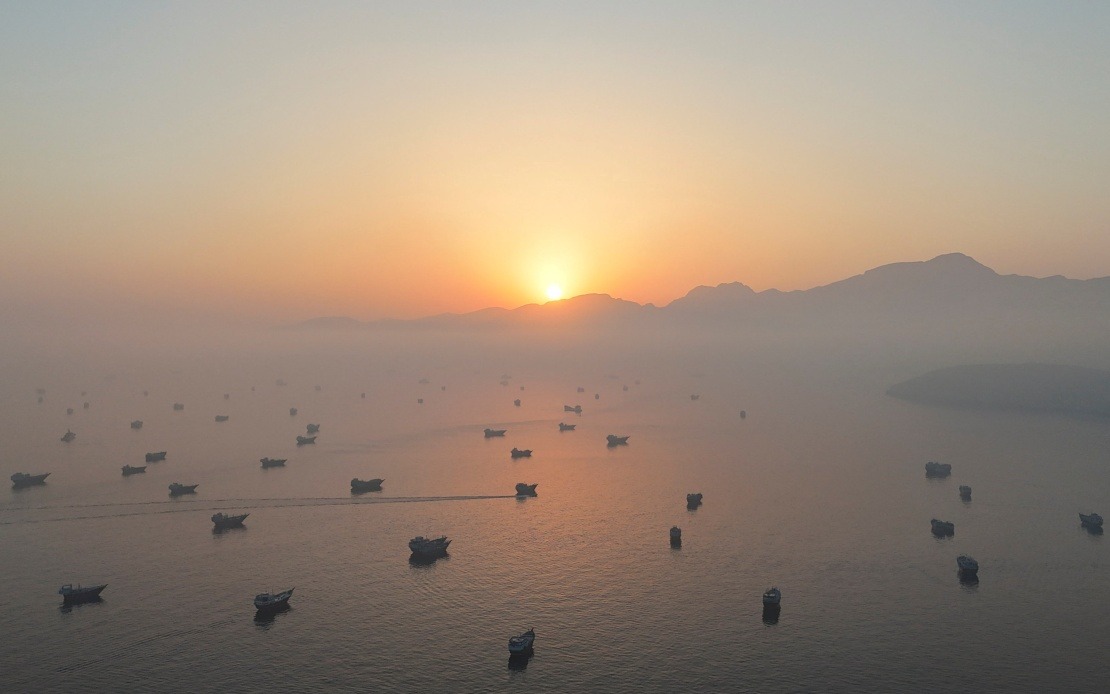
Iran's Foreign Minister Abbas Araghchi announced in Baghdad on June 28 that his country will assume complete administrative control over the Strait of Hormuz within the next 30 days, signalling a dramatic escalation in tensions as the recently negotiated ceasefire between Tehran and Washington unravels. The assertion comes amid escalating military confrontations and represents a significant leverage point for Iran in what has become an increasingly volatile standoff.
The Strait of Hormuz represents one of the world's most economically critical waterways, serving as the chokepoint through which a substantial portion of global oil shipments transit daily. Any disruption to traffic through the strait carries immediate implications for energy markets across Asia-Pacific and beyond, making Iran's statement particularly consequential for regional stability and international commerce. Araghchi's declaration that the waterway will be "placed entirely under Iranian administration" within the specified timeframe underscores Tehran's determination to unilaterally control this strategic asset.
The Foreign Minister explicitly warned against what he characterised as external interference or attempts to establish competing structures within the strait's management framework. He cautioned that such actions would "further complicate the situation, generate additional tensions, and delay the reopening of this strategically vital waterway." The language reflects Iran's desire to position itself as the sole legitimate authority over maritime traffic in its territorial waters, a position that directly challenges the international consensus supporting freedom of navigation.
The deterioration of the ceasefire appears to have been triggered by fresh military exchanges. In February, when initial Israeli and American strikes against Iranian targets occurred, Tehran responded by effectively blockading the Strait of Hormuz through coordinated threats and attacks on commercial shipping. That action demonstrated Iran's capability and willingness to weaponise control over the waterway, transforming maritime commerce into a negotiating tool. The current announcement suggests Iran is prepared to repeat this strategy if its demands are not met.
The framework recently established between the United States and Iran explicitly designated the reopening of the Strait of Hormuz as a cornerstone component of the agreement. This negotiated settlement was intended to provide a pathway toward de-escalation and the resumption of normal shipping operations. The accord also contained a critical provision stipulating that Iran would refrain from imposing transit fees on vessels during a 60-day negotiation window, ostensibly to facilitate free passage and demonstrate good faith.
However, analysts anticipate that the question of potential shipping fees could emerge as a major sticking point in future discussions. International maritime law and the UN Convention on the Law of the Sea contain provisions permitting coastal states to levy certain charges for navigational services, yet excessive or discriminatory fees could violate principles of freedom of navigation. Iran's potential assertion of fee-charging authority could become a flashpoint, particularly given the geopolitical sensitivities surrounding the waterway.
Iran has indicated that it plans to engage Oman in direct negotiations regarding the future management of the strait, framing these discussions within the context of international law and in coordination with other neighbouring states. This diplomatic overture appears designed to legitimise Iran's control while obtaining regional endorsement. Oman, which occupies a strategic position at the entrance to the Persian Gulf and maintains generally balanced relations across the regional divide, could serve as a useful intermediary in these discussions.
The broader implications for Malaysian and Southeast Asian readers are substantial. As a major trading nation dependent on stable energy supplies and reliable maritime corridors, Malaysia faces direct exposure to disruptions in the Strait of Hormuz. Any escalation that threatens shipping through this waterway would immediately affect energy costs, supply chains, and regional economic stability. The strait handles roughly one-third of all internationally traded liquefied natural gas, making disruptions particularly acute for energy-importing nations across Southeast Asia.
The collapse of the ceasefire reflects deeper structural tensions in the Middle East that show limited signs of resolution through diplomatic channels. The cycle of attack and counter-attack, combined with both sides' willingness to weaponise critical infrastructure, suggests that the underlying conflict remains fundamentally unresolved. The international community's ability to maintain leverage over Iran's actions appears increasingly constrained, raising concerns about whether existing diplomatic frameworks can prevent further escalation.
For Malaysian policymakers and businesses, this situation underscores the strategic importance of diversifying energy sources and supply routes, reducing dependence on the Strait of Hormuz where practical. The recurring threat of disruption through this waterway highlights vulnerabilities in current global energy architecture and the risks associated with concentration of critical maritime passages in geopolitically volatile regions. Strengthening regional cooperation on maritime security and energy resilience has become increasingly urgent.

