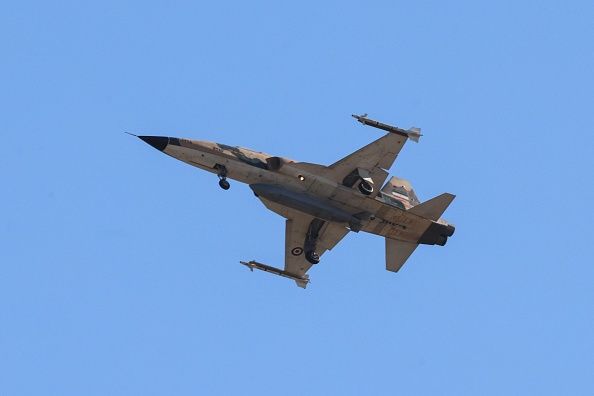
Iran's military leadership has intensified its dispute with Qatar and Kuwait over the fate of detained personnel, demanding unfettered access to investigate circumstances surrounding pilots whom Tehran alleges were seized by Qatari forces. Mohammad Baqerzadeh, who heads the Committee for the Search for Missing Persons within Iran's Armed Forces General Staff, declared on Sunday that a specialist Iranian team and air force experts have been seeking entry into Qatar for months to conduct an independent investigation, according to reporting from the semi-official Tasnim news agency cited in regional media.
The standoff centres on an incident in March when Iranian aircraft reportedly violated Qatari airspace and failed to respond to radio contact attempts. Qatar's account, released Saturday, maintains that its search and rescue operations recovered the remains of one pilot following the incursion. Doha has signalled willingness to coordinate the handover of remains and has invited Iranian officials to review the comprehensive details of how the search and rescue teams conducted their operations, yet says it has received no substantive response from Tehran to these overtures.
However, Iran flatly rejects Qatar's narrative, instead asserting that pilots were apprehended rather than killed, and characterises the Qatari position as deliberately obstructive. Baqerzadeh's public statements suggest a pattern of what Iran views as deliberate obstruction by Qatari officials, who he claims have repeatedly postponed and prevented access to the investigation site. The commander has also called for urgent intervention by the International Committee of the Red Cross, a move that escalates the matter beyond bilateral channels and signals Iran's frustration with the current diplomatic deadlock.
The dispute with Qatar forms part of a broader constellation of tensions between Iran and multiple Gulf Cooperation Council members. Beyond the pilot issue, Baqerzadeh expanded the scope of his accusations to include Kuwait's detention of four Iranians, whom he describes as similarly being denied due process and information regarding their status. This multi-front disagreement reflects deeper regional anxieties and mistrust that extend well beyond any single incident.
According to Iran's official account from May, the four detained individuals were affiliated with the Islamic Revolutionary Guard Corps and were conducting routine maritime patrol operations when they inadvertently entered Kuwaiti territorial waters due to navigation malfunction. Kuwait, meanwhile, characterises the same incident with vastly different intent, claiming the four were suspected of planning hostile actions against the emirate. This fundamental disagreement over both the facts and the motivations behind the incursion illustrates the interpretive gulf separating the two governments.
The timing and escalation of Iranian demands deserve contextual attention. For Malaysian observers and regional watchers, these disputes underscore the fragile nature of Gulf security arrangements and the absence of robust mechanisms for managing maritime incidents or personnel custody issues. The parallel disputes with both Qatar and Kuwait suggest Iran perceives a coordinated or opportunistic pattern of detention, rather than isolated events, which raises stakes for regional stability.
Qatar's invitation to Tehran to examine search and rescue operations represents a diplomatic opening, yet the absence of Iranian engagement suggests either deep scepticism about Qatar's account or domestic political pressure within Iran's military establishment to take a maximally assertive stance. The demand for Red Cross involvement indicates Iran views bilateral channels as insufficient and seeks international oversight to validate its version of events and pressure Gulf states toward concessions.
The fate of captured military personnel has historically been emotionally charged in Iranian domestic politics, with significant nationalist and military institutional interests at stake. Any admission that pilots were killed in Qatari custody, rather than recovered as remains, would carry different implications for Iran's credibility and deterrence posture. Conversely, if Qatar's account is accurate, Iran's continued insistence on pilot capture may reflect institutional resistance to accepting the loss of military assets.
For Southeast Asian governments and observers, this Gulf dispute carries indirect significance. Disruptions to Gulf maritime stability can ripple through global shipping and energy markets, affecting regional economies dependent on energy security and transit routes. Additionally, the unresolved nature of these detention cases could serve as precedent for how maritime incidents between littoral states are adjudicated absent clear international agreements, a concern relevant to South China Sea tensions and ASEAN maritime security more broadly.
The absence of neutral international mechanisms to investigate such incidents or verify the treatment of detainees reflects a persistent challenge in international relations, particularly in regions where mistrust runs deep. While the Red Cross represents an established neutral body, its ability to operate depends on consent from all parties, and Iran's invocation of its role may not compel Qatari or Kuwaiti cooperation.
As these disputes persist unresolved, they risk hardening positions and reducing diplomatic flexibility. The involvement of Iran's military hierarchy in public statements suggests the matter has escalated beyond the purview of foreign ministries and diplomatic professionals. This institutional expansion of the dispute typically makes negotiated resolution more difficult and raises the stakes for national honour and credibility among competing power centres within each government.

