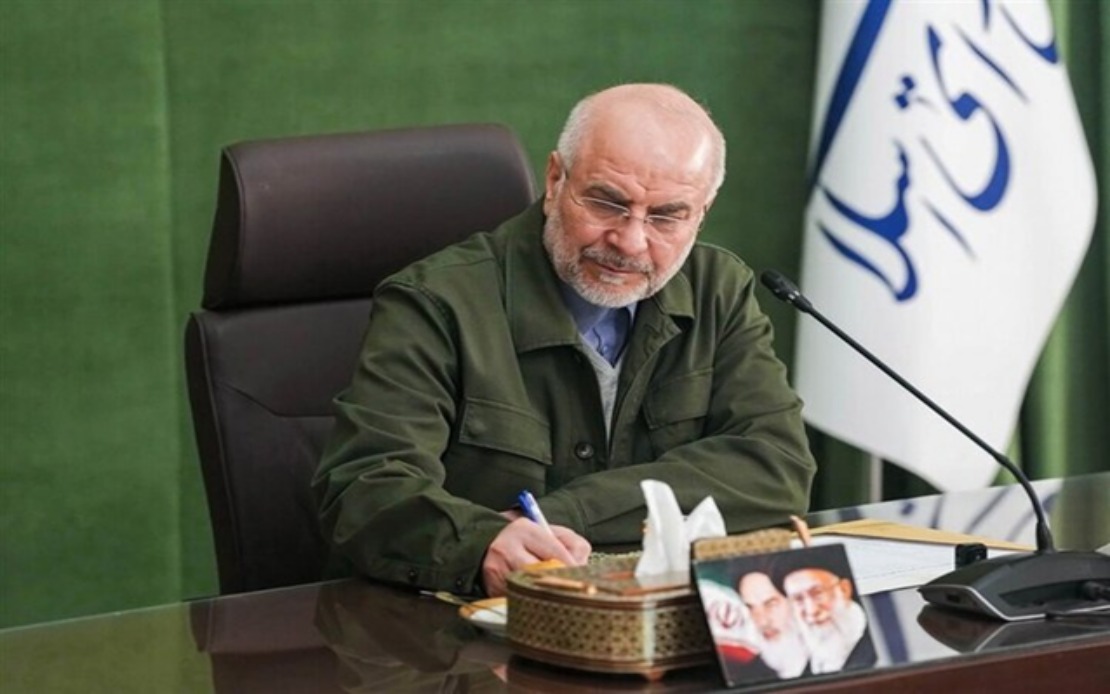
Tensions between Iran and the United States have flared anew over the intended use of assets frozen during decades of economic sanctions, with Tehran flatly rejecting Washington's assertions about how the released funds should be deployed. Iranian Parliament Speaker Mohammad Bagher Ghalibaf, who serves as a principal negotiator in the ongoing nuclear discussions, used social media on Thursday to dispel what he characterized as American misrepresentations regarding the allocation of unfrozen resources. His pointed response underscores the persistent mistrust that continues to complicate bilateral engagement, even as both nations formally committed to a framework agreement just eight days prior.
Ghalibaf's rebuttal carried a barbed edge, suggesting that the United States had manufactured expectations about Iranian purchasing patterns without foundation. His metaphorical statement—that Iran was merely harvesting the consequences of American policy rather than committing to agricultural imports—reflected broader Iranian frustration with what officials perceive as Washington's attempt to condition the release of frozen capital on predetermined spending outcomes. The public disagreement revealed how fragile the current negotiating environment remains, with fundamental questions about financial sovereignty remaining unresolved despite the preliminary accord.
The memorandum of understanding signed on June 18 established a 60-day framework for comprehensive negotiations targeting both Iran's nuclear programme and the broader sanctions regime that has crippled the Iranian economy for years. However, the document's silence on asset utilization appears to have left considerable room for competing interpretations, with each side advancing starkly different visions of how unfrozen funds should be managed. For Malaysia and other Southeast Asian nations maintaining economic ties with Iran, such disputes carry real implications for future trade relationships and the stability of regional commerce.
Official Iranian responses through multiple channels demonstrated consistent positioning on the asset question. The Foreign Ministry's spokesperson, Esmaeil Baghaei, articulated Iran's stance unambiguously on Tuesday, asserting that the nation would exercise complete discretion over asset deployment in accordance with its perceived national interests, free from external constraints or stipulations. Baghaei further clarified that procurement decisions would rest on conventional commercial criteria—price competitiveness and product quality—rather than political considerations or reciprocal obligations.
The Central Bank Governor, Abdolnaser Hemmati, adopted a marginally more nuanced position while maintaining the same fundamental principle. Although acknowledging that Iran bore no legal obligation to purchase American agricultural commodities, Hemmati left open the theoretical possibility that such acquisitions might proceed if United States goods demonstrated genuine price advantages relative to alternatives from other suppliers. This carefully calibrated language suggested room for pragmatic engagement while resisting any notion of coerced purchasing arrangements.
The American position, articulated through Vice President JD Vance and President Donald Trump in consecutive days, presented a starkly different framework. Vance asserted that unfrozen Iranian assets would logically flow toward purchasing American soybeans, corn, and wheat—commodities representing substantial agricultural sectors within the United States economy. Trump's subsequent statement elevated the proposal further, suggesting that released funds be deposited into an American-controlled escrow mechanism with explicit restrictions limiting their use exclusively to purchases of American foodstuffs and medical supplies, further specifying grains and other agricultural products.
This transatlantic disagreement assumes particular significance within the context of broader Middle Eastern geopolitics and international sanctions regimes. For nearly two decades, comprehensive American sanctions against Iran have constricted the Islamic Republic's access to international markets, constrained its financial institutions, and fundamentally distorted trade patterns across the region. The current negotiations represent a potential inflection point in this longstanding confrontation, yet the immediate disputes over asset management demonstrate how difficult negotiators on both sides are finding it to bridge even preliminary technical questions.
The timing of these public exchanges proved particularly revealing, emerging just days after negotiators from both countries concluded another round of discussions in Switzerland. The fact that fundamental disagreements about asset utilization remained unresolved after formal talks suggested that significant conceptual distance persists on central provisions of any final agreement. For regional observers including Malaysia, such discord raises questions about whether the current diplomatic momentum can be sustained sufficiently to yield a comprehensive settlement or whether fundamental incompatibilities will ultimately derail the process.
From the Malaysian and Southeast Asian perspective, the stakes extend beyond abstract questions of nuclear diplomacy. Iran represents a significant source of petroleum, petrochemical products, and agricultural commodities for the region. A sustained confrontation would likely deepen Iran's isolation and force regional trading partners to navigate complicated sanctions compliance requirements. Conversely, a successful negotiated resolution could unlock substantial trade opportunities and enhance regional stability through reduced tensions between two major powers whose rivalry has shaped Middle Eastern security architecture.
The rhetorical escalation evident in recent statements suggests that negotiators remain far apart on foundational issues despite the surface-level accord. Iran's insistence on unilateral control over asset deployment reflects deep-seated concerns about sovereignty and Western conditionality, themes that resonate throughout Tehran's political establishment across ideological divides. American demands for asset controls, conversely, reflect persistent security concerns and domestic political pressure from agricultural interests seeking export markets and sanctions advocates demanding verification mechanisms.
Looking ahead, the 60-day window established by the June 18 memorandum will test whether both parties can navigate these disputes and construct a durable agreement. The asset question, seemingly technical, actually encapsulates the broader challenge confronting negotiators: achieving sufficient mutual confidence to allow genuine sanctions relief while maintaining adequate safeguards and oversight. As discussions proceed, observers across Southeast Asia will be monitoring whether the current tensions represent normal negotiating positions that can be reconciled or harbingers of fundamental incompatibility that will ultimately prove insurmountable.

