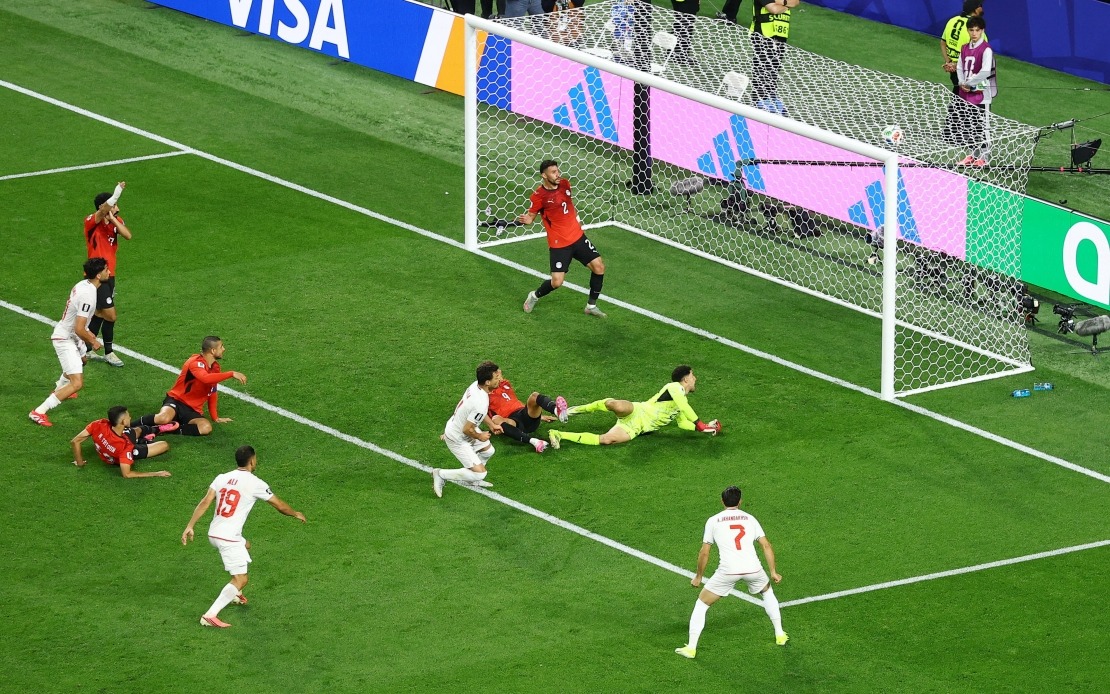
Iran's national football team has launched a final rebuke at what officials characterised as discriminatory conduct during their participation in the World Cup, as the delegation prepared to depart the tournament following their elimination on Saturday. The Iranian Football Federation for the Islamic Republic of Iran (FFIRI) released a strongly worded statement highlighting the various obstacles and restrictions they encountered throughout their stay, underscoring tensions that persisted during the competition amid wider geopolitical concerns between Iran and the United States.
The team's exit came after a frustrating 1-1 draw against Egypt that proved insufficient to advance beyond the group stage. Iran's hopes suffered a significant blow when officials disallowed one of their goals following an extended VAR consultation, a decision that compounded existing grievances about the conditions under which the delegation had been operating. Throughout the tournament, the Iranian contingent had repeatedly raised objections regarding multiple facets of their experience, citing what they viewed as systematic disadvantages compared to other competing nations.
Logistical complications defined much of Iran's World Cup experience from the outset. Initially scheduled to establish their tournament base in Arizona, the delegation faced last-minute changes that forced them to relocate to Tijuana, Mexico instead. This repositioning, coupled with various travel restrictions imposed specifically for their matches within the United States, created significant operational challenges for the team. Such complications extended beyond mere inconvenience, as they required the squad to undertake arduous journeys for matches and disrupted the standard preparation routines that other national teams enjoyed.
The geopolitical context underlying these obstacles cannot be ignored. The decades-long antagonism between Iran and the United States has historically manifested in numerous policy disputes and sanctions regimes. The World Cup provided a stage where these tensions manifested indirectly through the logistical and administrative challenges faced by the Iranian delegation. For Malaysian and Southeast Asian observers, this situation illustrates how international sporting competitions can become entangled with diplomatic rifts, a reality that occasionally affects regional teams navigating complex international political landscapes.
In their formal statement, the FFIRI extended appreciation to international media organisations that documented their circumstances. The federation acknowledged the importance of transparent reporting that captured not only the sporting dimensions of their participation but also the procedural and administrative difficulties they confronted. This emphasis on media coverage reflects a broader strategy by aggrieved parties in international sport to appeal to public opinion and journalistic scrutiny when formal channels prove unresponsive.
The Iranian delegation also directed substantial praise toward Mexico and specifically the residents of Tijuana, who hosted them during the relocation. The warmth and hospitality extended by local communities provided a counterbalance to the difficulties encountered through official channels. This recognition served multiple purposes: it demonstrated diplomatic grace by acknowledging goodwill from their hosts, and it implicitly contrasted the welcoming reception in Mexico with the perceived coldness of official structures in the United States. Such gestures carry symbolic weight in international relations, particularly when nations seek to build solidarity with neighbouring countries that have shown sympathy to their circumstances.
The VAR incident that eliminated Iran illustrates a broader debate within world football regarding technology's role in determining outcomes. Lengthy VAR reviews have increasingly become points of contention, with critics arguing that extended consultations undermine the flow of play and create opportunities for subjective decision-making despite technology's purported objectivity. For Iran, already navigating an atmosphere of perceived disadvantage, such moments reinforced their conviction that external factors were working against them.
From a Southeast Asian perspective, Iran's experience at the World Cup carries relevance beyond mere sporting interest. Regional nations occasionally find themselves navigating complicated relationships with powerful countries that might influence their international sporting experiences. The principle that competitions should operate fairly and free from political interference remains fundamental to the integrity of global sport. Observers in Malaysia and across ASEAN may contemplate how their own teams might face comparable challenges should geopolitical tensions escalate in ways that intersect with sporting competitions.
The Iranian federation's decision to make formal statements rather than allow grievances to fade quietly demonstrates a commitment to establishing a public record of their treatment. This approach seeks to create accountability through transparency, ensuring that future host nations and international sporting bodies understand that delegations will document and publicise instances of perceived discrimination. Such precedents can influence how future tournaments are organised, particularly regarding provisions for nations experiencing international isolation or tension.
As the Iranian delegation departed, their statements served as both a farewell and a warning. While they had failed to achieve the sporting objective of advancing through their group, they had succeeded in amplifying concerns about fairness in international competition. The echo of these complaints would likely reverberate through sporting governance circles and diplomatic corridors, contributing to ongoing discussions about how World Cups and other major tournaments can better ensure equitable treatment for all participating nations regardless of their political circumstances or international standing.

