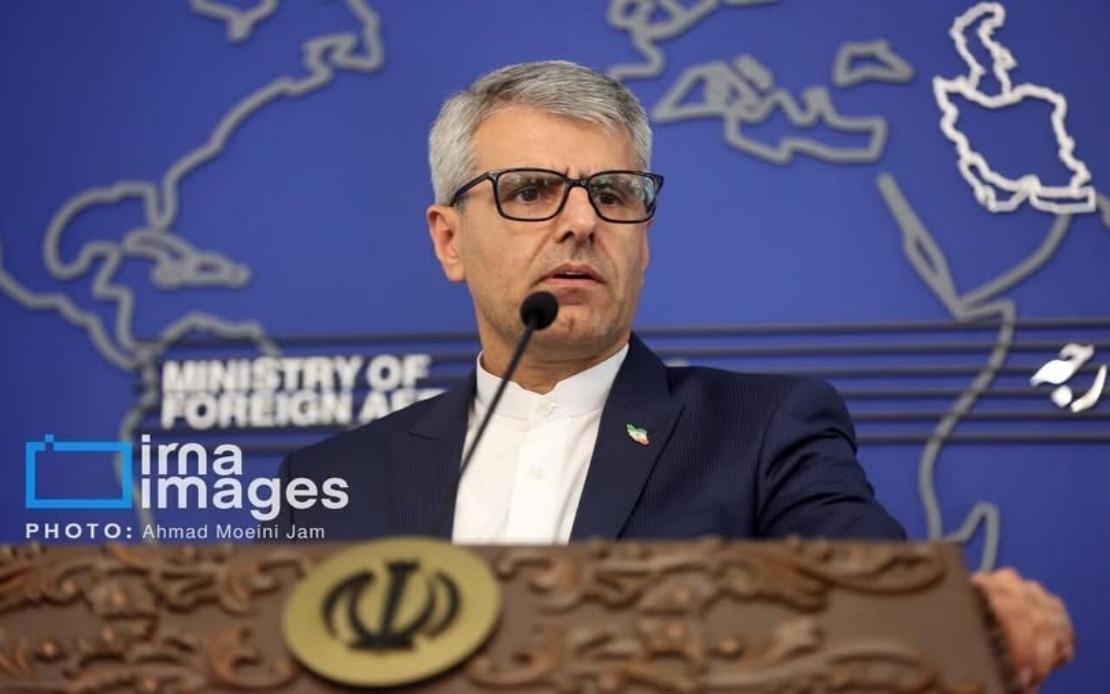
Iran has escalated its diplomatic pressure on the United States to enforce what it terms an "unconditional" withdrawal of Israeli forces from Lebanese soil, positioning the withdrawal as a non-negotiable prerequisite for implementing broader peace arrangements between Tehran and Washington. The demand, articulated by Iranian Foreign Ministry spokesman Esmaeil Baqaei during a briefing in Istanbul on Sunday, represents a hardening of Iran's negotiating stance as the two nations attempt to navigate a complex regional security crisis that has destabilised the eastern Mediterranean and Middle Eastern geopolitics.
Baqaei's statement underscores Iran's interpretation of a June 18 memorandum signed with the United States, which both capitals claim represents a framework for de-escalation across multiple conflict zones. According to Iranian officials, the agreement explicitly addresses the Lebanon situation alongside broader regional tensions, yet implementation remains contested. Iran contends that the accord obligates Washington to compel Israeli compliance with territorial withdrawal, transforming the US from neutral mediator into enforcer of Tehran's core demands. This framing reveals the precarious nature of the current diplomatic window, wherein each party reads the same document through fundamentally different lenses regarding enforcement mechanisms and timelines.
The Iranian foreign ministry statement emphasises that ending military operations against Lebanon and restoring Lebanese sovereignty constitute foundational conditions for any durable settlement. Baqaei articulated this not as a negotiating position but as a fundamental prerequisite, suggesting that from Tehran's perspective, without concrete Israeli withdrawal, subsequent agreements lack legitimacy. This rhetorical positioning matters significantly for regional states watching these negotiations, as it signals Iran will not accept face-saving compromises that leave Israeli military presence intact in any form. For Malaysia and ASEAN observers, this demand reflects a broader pattern wherein regional powers instrumentalise external powers to enforce their own strategic objectives rather than seeking genuine conflict resolution.
Iran's Parliament Speaker Mohammad Bagher Qalibaf, who led the recent negotiating team in Switzerland, reinforced these demands through a separate diplomatic channel, telephoning Lebanese Parliament Speaker Nabih Berri to reaffirm Tehran's commitment to achieving peace. Qalibaf characterised Iran's pursuit of Lebanese stability as "serious," a qualifier suggesting previous efforts may have been perceived as conditional or tactical. His emphasis on Lebanon as a central component of the first clause within the "Islamabad memorandum"—the apparent Iranian designation for the June accord—indicates that documents circulating in these negotiations may carry different names and interpretations depending on which capital is discussing them, a red flag for implementation fidelity.
The establishment of a trilateral conflict-control mechanism involving Iran, the United States, and Lebanon represents a procedural concession from Iran, one it frames as necessary after alleging American violations of previous understanding. This monitoring structure suggests that rather than trusting Washington to enforce Israeli compliance unilaterally, Tehran has embedded itself directly into oversight mechanisms. For Southeast Asian policymakers accustomed to ASEAN's consensus-based, non-interference model, this approach reflects a fundamentally different approach to regional security wherein external powers and affected states jointly police agreements rather than maintaining independent sovereignty over implementation.
Qalibaf articulated Iran's strategic objectives with clarity: ending warfare, facilitating refugee returns, terminating occupation, and securing Israeli departure. These goals, while superficially straightforward, embed competing interpretations of what constitutes "ending the war"—does it mean ceasefire, peace treaty, or elimination of military capacity? The ambiguity surrounding these foundational terms suggests that even as diplomats convene in neutral venues like Switzerland, fundamental disagreements about conflict resolution pathways persist. Malaysia's experience with regional disputes provides relevant perspective here; definitions matter enormously when enforcing agreements across multiple sovereignties with divergent security philosophies.
The Iranian insistence on linking Lebanon peace to broader Iran-US relations reflects a strategic calculation that individual regional disputes cannot be compartmentalised. By tethering Lebanese withdrawal requirements to the comprehensive 14-point understanding, Iran leverages its negotiating position across multiple domains simultaneously. This approach creates interdependencies wherein concessions in one area become currency for demands in another, complicating diplomatic resolution and extending uncertainty across the entire agreement framework. For regional observers, this interconnectedness suggests that any apparent progress on one front masks continued stalemate on core issues.
American receptivity to these Iranian demands remains unclear from available statements, though the ongoing negotiation itself suggests Washington has not rejected the framework entirely. The existence of the June memorandum indicates some baseline agreement about pursuing regional stabilisation, yet Iran's subsequent demands for timeline-specific Israeli withdrawal suggest the initial accord lacked such specificity. This gap between broad memoranda and concrete implementation measures has plagued Middle Eastern peace efforts for decades, where signing ceremonies provide political cover for continued strategic competition beneath diplomatic veneers.
For Southeast Asian regional security architecture, these developments carry instructive lessons regarding great-power mediation and regional conflict resolution. Iran's approach demonstrates how smaller powers can leverage great-power competition to advance their interests, yet also risks entrapment within strategic calculations that prioritise superpower interests over genuine local stabilisation. Malaysia and ASEAN partners must observe whether this Iranian-American negotiation produces durable regional peace or merely postpones conflicts pending shifts in great-power alignments or domestic political circumstances in either capital.
The broader 14-point understanding that frames these discussions remains largely opaque to external observers, creating uncertainty about whether all parties genuinely understand their respective obligations and timelines. Iran's public demands for explicit American enforcement of Israeli withdrawal may reflect either genuine concern about implementation gaps or tactical positioning ahead of further negotiations. The coming weeks will reveal whether the US accepts Iran's framing of the memorandum as obligating American enforcement action or maintains that the accord establishes frameworks within which regional actors must negotiate bilaterally. That distinction will fundamentally shape whether this diplomatic window produces lasting regional stability or remains another ephemeral moment in the region's persistent strategic competition.

