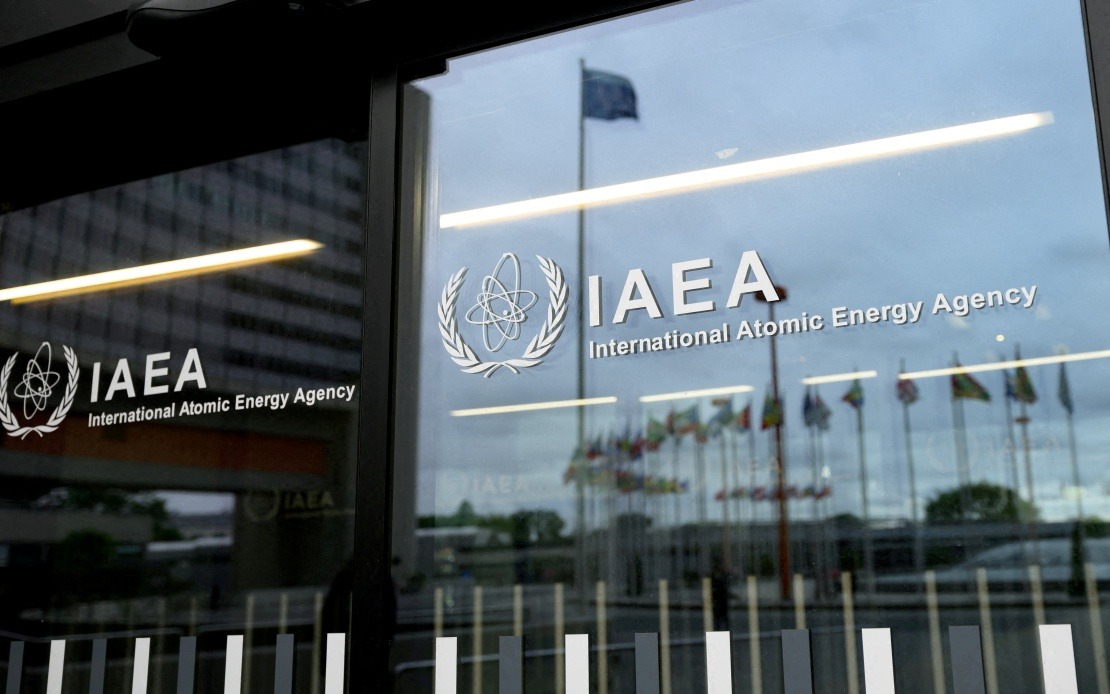
Iran has firmly rejected demands for International Atomic Energy Agency inspections of its nuclear facilities, declaring that access to these sites will only be granted as part of a comprehensive final agreement with the United States and contingent upon the complete lifting of economic sanctions. The position was articulated by Iran's Deputy Foreign Minister for Legal and International Affairs Kazem Gharibabadi in a statement on Wednesday, signalling a hardline stance as both nations enter a critical 60-day negotiating window.
Gharibabadi's remarks came in direct response to International Atomic Energy Agency Director General Rafael Grossi's announcement that inspections would commence in Iran following the recent US-Iran memorandum of understanding signed on June 18. The deputy minister made clear that any discussions regarding nuclear facility access and the review of materials would be strictly confined within the parameters of a final comprehensive accord, and only after the United States demonstrates tangible commitment by dismantling all sanctions regimes targeting Tehran.
The Iranian official also confirmed that no meeting transpired between Iran's negotiating delegation and Grossi during recent talks in Switzerland, despite the IAEA director's apparent request for such engagement. This denial underscores the tension between Iran's insistence on linkage between nuclear transparency and sanctions relief, and the international community's preference for immediate verification measures.
The memorandum of understanding, which entered force on June 18, establishes a structured 60-day timeframe for intensive negotiations aimed at producing a binding final agreement governing Iran's nuclear programme and the restoration of economic relations through sanctions termination. Negotiations commenced with the first substantive round held in Switzerland over the weekend, with both delegations engaging in what officials have characterised as constructive discussions regarding the pathway forward.
Iran's three primary nuclear installations—the enrichment facilities at Fordow and Natanz, along with the research reactor complex at Isfahan—have become focal points in recent regional military escalations. The facilities were targeted during a 12-day military campaign in June 2025, with additional strikes occurring following the outbreak of broader conflict on February 28 this year. The United States and Israel conducted successive waves of attacks directed at Iranian nuclear installations and military infrastructure, intensifying international concerns about the stability of Iran's atomic programme and the risks of further escalation.
The current standoff reflects a fundamental disagreement over sequencing in nuclear diplomacy. Western negotiators and the IAEA traditionally favour establishing verification mechanisms early in discussions to ensure transparency throughout the process. Iran's position inverts this preference, treating nuclear access as a final concession to be granted only after sanctions are comprehensively lifted and confidence in US commitment has been established through concrete economic measures.
This approach carries significant implications for Southeast Asian nations and Malaysia specifically. Any prolonged nuclear impasse involving Iran could further destabilise regional energy markets, as Iranian oil and gas supplies affect global pricing mechanisms that directly influence fuel costs across the Association of Southeast Asian Nations. Malaysia, as both an energy consumer and a nation with significant maritime interests in the Persian Gulf region, has a stake in achieving nuclear accord and preventing further escalation in the Middle East.
The timing of these negotiations remains precarious given the recent pattern of military strikes. The fact that Iran's nuclear facilities have already sustained damage from air campaigns means that verification becomes technically more complex, as inspectors must now assess not only current capabilities but also the extent of previous destruction and any ongoing reconstruction efforts. This physical reality strengthens Iran's negotiating position insofar as it creates legitimate questions about what constitutes a fair baseline for comparative assessment.
Gharibabadi's public statement through social media represents a deliberate choice to communicate Iran's negotiating bottom lines directly to international audiences rather than through confidential diplomatic channels. This tactic suggests that Tehran perceives public pressure and demonstrated resolve as essential leverage in obtaining concessions from Washington. The approach also signals to domestic constituencies that the government is not capitulating to external demands for transparency without equivalent reciprocal gains.
The 60-day negotiation window represents a compressed timeline for resolving one of the most contentious international disputes of the past two decades. Previous nuclear negotiations involving Iran, culminating in the 2015 Joint Comprehensive Plan of Action, required years of patient diplomacy. The current accelerated schedule suggests both parties sense opportunity but also urgency in preventing further military escalation that could engulf the entire region.
For Malaysia and ASEAN, the outcome of these negotiations carries broader implications beyond nuclear policy. A successful agreement could reduce regional militarisation and redirect resources toward economic cooperation. Conversely, failure to reach accord could intensify military competition and potentially disrupt vital shipping lanes through which Malaysian and Southeast Asian trade flows. The stakes thus extend far beyond Iran's nuclear programme into questions of regional stability and prosperity.
The next phase of negotiations will likely centre on confidence-building measures that do not require full sanctions relief but demonstrate good faith from both sides. Whether Iran will permit limited IAEA access to non-sensitive facilities as a gesture of compliance while maintaining restrictions on militarised sites remains an open question. The resolution of this technical dispute may ultimately determine whether the broader political agreement can be concluded within the stated 60-day timeframe.

