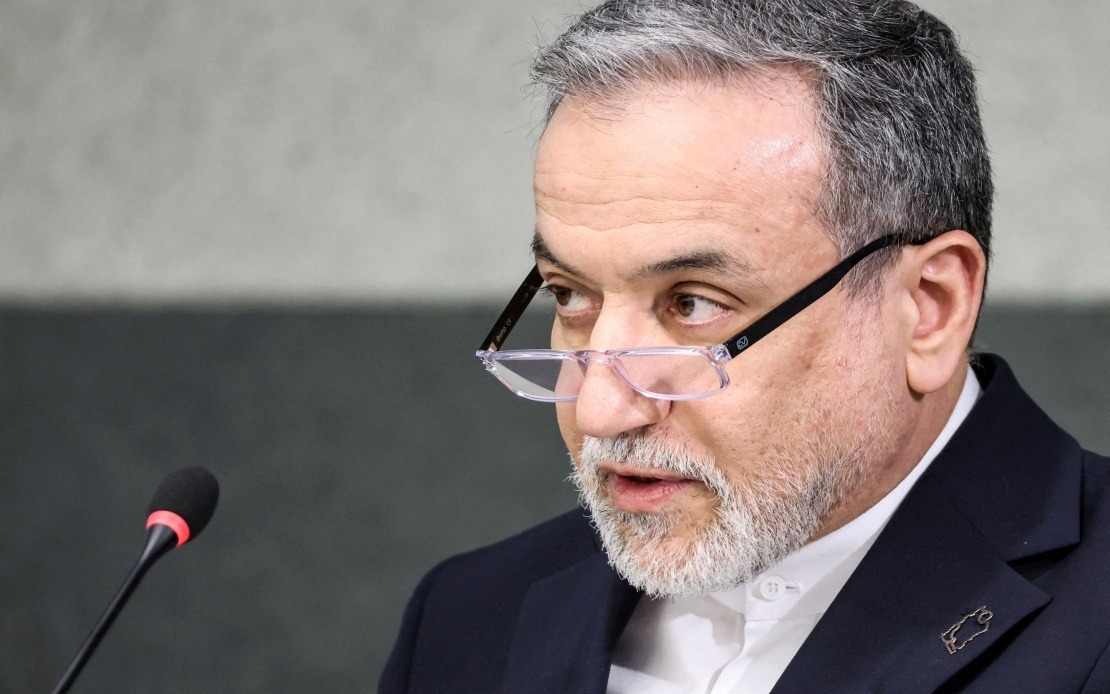
Iran has pushed back sharply against US President Donald Trump's announcement that Washington will blockade Iranian shipping and impose a 20 per cent toll on vessels passing through the Strait of Hormuz, with Foreign Minister Abbas Araghchi insisting that Tehran remains the rightful guardian of this globally vital waterway. Speaking Monday, Araghchi acknowledged the principle that whoever maintains security and safe passage through the chokepoint should receive compensation, but rejected the specific terms Washington has proposed as excessive.
The Strait of Hormuz, located between Iran and Oman, stands as one of the world's most critical maritime passages, with roughly one-fifth of global oil shipments passing through its narrow channel daily. The waterway's strategic importance to the international economy cannot be overstated, particularly for Asia-Pacific nations including Malaysia, Singapore, and other regional trading hubs that depend entirely on uninterrupted flow through this route. Any disruption or toll scheme could significantly impact fuel costs and supply chains across the region, making Iran's response consequential far beyond the bilateral US-Iran relationship.
Araghchi's measured tone in his public statement via the X social media platform suggests a carefully calibrated diplomatic response. While appearing to accept the logic that security provision warrants compensation, he explicitly rejected Trump's 20 per cent figure as unreasonable, stating that "20 per cent is of course too much. We will be fair." This phrasing implies potential room for negotiation, though it remains unclear what percentage Iran might consider acceptable or whether such discussions are actually underway between the two adversarial governments.
The foreign minister's repeated emphasis that Iran will remain the "guardian" of the Strait forever speaks to Tehran's broader strategic narrative about regional dominance and its refusal to cede control to Washington. This language echoes longstanding Iranian claims to custodianship of the waterway based on geographical proximity and historical presence, a position that directly conflicts with Washington's post-Cold War strategy of maintaining naval dominance and freedom of navigation throughout the region.
Trump's announcement represents a dramatic escalation in US-Iran hostilities, moving beyond traditional military posturing into economic warfare that would affect global commerce. The proposal to blockade Iran while simultaneously charging tolls suggests a two-pronged strategy: containing Iranian economic activity while monetizing American security provision. Whether such a scheme could be legally or practically implemented remains questionable, given international maritime law and the presence of other regional naval powers.
The backdrop to this exchange is a deteriorating security environment in the Persian Gulf region, marked by tit-for-tat military actions between American and Iranian forces despite ongoing diplomatic efforts. Pakistan has reportedly served as a mediator, facilitating a memorandum of understanding intended to reduce hostilities and establish a framework for lasting peace. Yet the continued escalatory rhetoric from both sides suggests these peace efforts remain fragile and potentially ineffective, with each party seemingly intent on demonstrating strength to domestic audiences and regional allies.
For Malaysia and Southeast Asian nations, this confrontation carries immediate economic implications. Malaysian trade routes, particularly those transporting petroleum and liquefied natural gas, depend on Strait of Hormuz passage. Any regime of tolls, blockades, or military confrontation in the waterway would raise shipping costs, increase insurance premiums, and introduce supply chain uncertainty. Malaysian policymakers and business leaders are likely watching these developments with concern, given the region's energy security vulnerabilities and limited alternatives for shipping crude oil and refined products.
The broader geopolitical context involves shifting alignments in the Middle East and beyond. The Trump administration's approach to Iran reflects a confrontational stance that contrasts sharply with previous diplomatic efforts by other US administrations. Regional actors, including Gulf Cooperation Council members and increasingly China and India, maintain complex stakes in maintaining stability around Hormuz. China, in particular, depends heavily on uninterrupted oil flows through the strait and has incentives to prevent either a US-Iran conflict or a toll regime that would advantage American power.
Araghchi's response also reflects internal Iranian politics and the need to project strength domestically while managing international perceptions. By claiming perpetual guardianship and offering to negotiate on terms while rejecting the American proposal outright, the foreign minister appeals to nationalist sentiment within Iran while leaving diplomatic channels technically open. This rhetorical positioning allows Iran to appear reasonable to international audiences while maintaining a hardline stance toward Washington.
The underlying question for regional stability is whether these two powers can establish any form of modus vivendi regarding Hormuz passage or whether the waterway will become an ongoing flashpoint for confrontation. Historical precedent suggests that extended great power competition over critical chokepoints tends to generate incidents and escalatory cycles, even when neither party desires full-scale war. The presence of multiple other naval powers operating in the region, from Saudi Arabia to the United Arab Emirates to international coalition forces, further complicates the security picture.
Looking ahead, Southeast Asian governments face the uncomfortable reality that their interests in maintaining open shipping lanes and predictable international commerce may diverge increasingly from the geopolitical strategies of Washington and Tehran. Building resilience through supply chain diversification, investment in alternative energy sources, and diplomatic engagement with all regional parties will likely remain essential strategies for countries like Malaysia seeking to navigate these turbulent waters.

