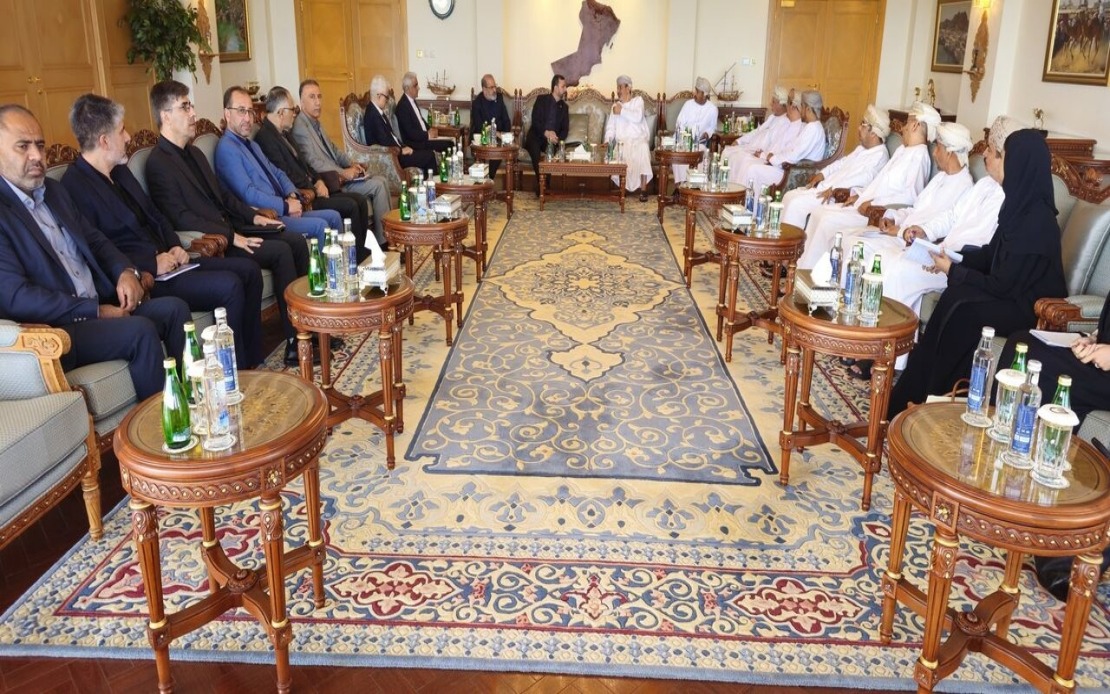
Iran and Oman have taken a significant diplomatic step by establishing formal bilateral mechanisms to govern the future of one of the world's most crucial maritime passages. The inaugural session of the Joint Hormuz Committee brought together Iranian Deputy Foreign Minister for Legal and International Affairs Kazem Gharibabadi and Oman's Ambassador-at-Large Abdulaziz Al Hinai in Muscat on Monday, signalling both nations' commitment to collaborative stewardship of the Strait of Hormuz.
The formation of this joint committee represents an escalation beyond previous high-level exchanges, creating a dedicated institutional framework for ongoing negotiations. This structural development follows a June 23 joint statement issued by Tehran and Muscat after Iranian Foreign Minister Abbas Araghchi and negotiating head Mohammad Bagher Ghalibaf visited the Sultanate, demonstrating momentum in bilateral engagement over this strategically sensitive issue.
At the core of the committee's mandate lies a complex balancing act between maritime commerce and geopolitical stability. Officials used the inaugural meeting to examine prevailing challenges affecting the Strait and to develop coordinated perspectives on its prospective administration. The discussions were explicitly grounded in Paragraph 5 of the Islamabad Memorandum of Understanding, a framework that establishes principles for how littoral states should approach shared maritime governance, thereby anchoring the bilateral talks within recognized international conventions.
The emphasis on sovereignty and the rights of littoral states underscores a fundamental principle guiding these negotiations. Both Tehran and Muscat have stressed that any arrangements governing the Strait must fully respect their territorial and jurisdictional prerogatives. For Malaysia and other Southeast Asian maritime nations, this principle holds considerable relevance, as it reinforces the precedent that regional powers should retain meaningful authority over critical waterways passing through their territorial zones.
The committee's stated objective extends beyond political dialogue to concrete operational governance. Officials have identified the need to reach consensus on multiple dimensions of shipping management, including how navigation services should be provided and how associated expenses should be allocated and funded. These practical considerations reflect the reality that the Strait handles roughly one-third of global maritime trade, making efficient, transparent administration essential for international commerce.
Oman's diplomatic positioning as a trusted interlocutor has proven instrumental in facilitating these discussions. As a littoral state with a more moderate international posture compared to other regional actors, Oman has historically sought to maintain balanced relationships across the Persian Gulf and Indian Ocean regions. This mediation capacity has positioned the Sultanate as a natural venue for Iranian engagement on sensitive maritime and geopolitical questions.
The committee's commitment to working within international standards signals both nations' willingness to embed their bilateral arrangements within the broader framework of maritime law and global norms. This approach contrasts with more confrontational regional postures and suggests a problem-solving orientation rather than zero-sum competition. For regional observers including Malaysian policymakers, such framing demonstrates that even deeply contested issues can be addressed through institutional dialogue and reference to established international principles.
The timing of these formal mechanisms reflects broader regional dynamics. The establishment of the Joint Hormuz Committee occurs amid heightened international attention to maritime security in the Persian Gulf and Arabian Sea, including concerns about freedom of navigation and safe passage for commercial shipping. By institutionalizing dialogue through the committee, Iran and Oman are attempting to shape the narrative around Strait governance before more contentious disputes or incidents force reactive rather than proactive solutions.
Future committee iterations will likely address increasingly detailed technical matters related to vessel traffic management, emergency response protocols, environmental protection, and dispute resolution mechanisms. The committee's capacity to produce tangible agreements on these specifics will determine whether this institutional framework represents genuine progress toward sustainable regional maritime governance or merely provides a diplomatic forum for managed disagreement.
For Southeast Asia, the implications merit careful consideration. Malaysia and other nations with interests in Persian Gulf trade and stability should monitor how this bilateral framework develops and whether it might eventually expand to incorporate broader multilateral arrangements involving other Gulf states. The precedent of littoral states negotiating shared responsibility for critical straits resonates with regional experiences in Southeast Asia, particularly regarding the Strait of Malacca, where similar questions of sovereignty, service provision, and international commerce continually emerge.
The Joint Hormuz Committee also reflects evolving expectations about state responsibility in global maritime security. Rather than allowing external powers to dictate terms or impose solutions, Iran and Oman are asserting agency in determining how their shared waterway should function. This assertion of regional autonomy over strategically vital passages represents an important pattern in contemporary geopolitics, one that Asian states continue to navigate as they balance openness to international commerce with protection of territorial sovereignty.
Looking ahead, the success of this bilateral mechanism may influence broader regional cooperation architectures. If Iran and Oman can demonstrate that littoral states can effectively govern critical straits while respecting international standards and commerce, the model might encourage similar collaborative frameworks elsewhere. Conversely, if the committee becomes deadlocked or fails to produce substantive agreements, it may reinforce pessimistic assessments about Iran's capacity for constructive regional engagement and complicate efforts to build multilateral maritime security arrangements.

