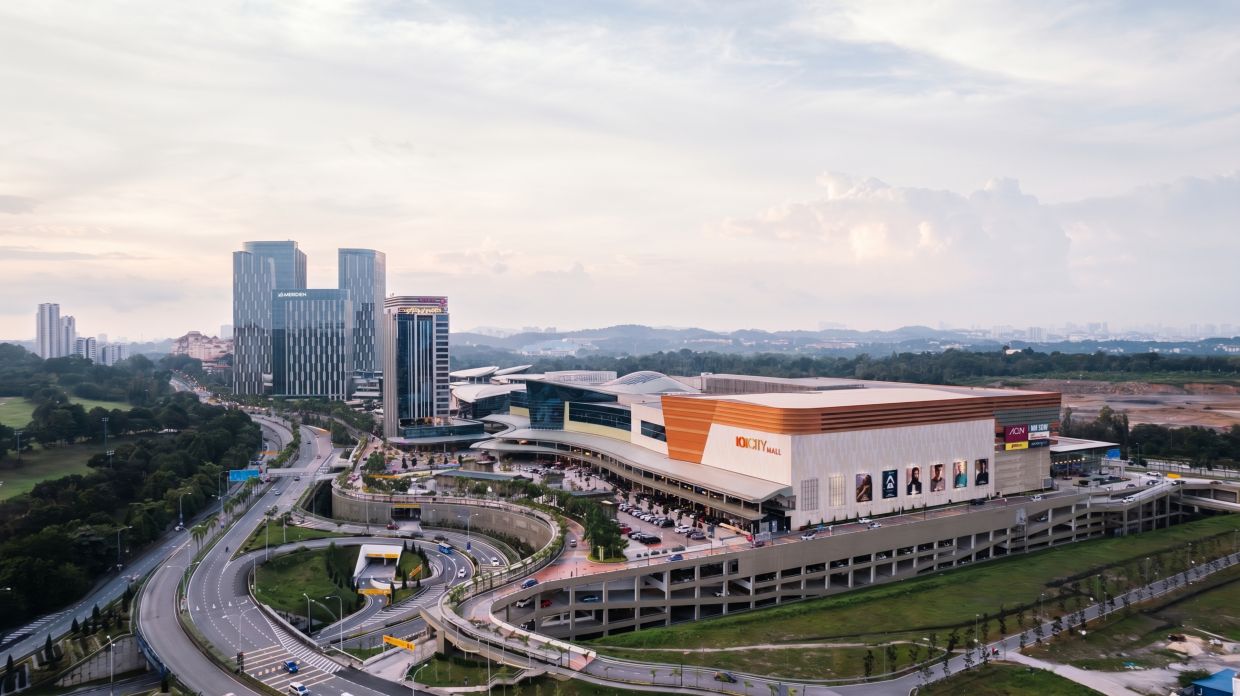
IOI Properties Group has cleared a major regulatory hurdle with the Securities Commission's blessing for its proposed real estate investment trust, representing one of the largest property-backed capital market transactions in Malaysia this year. The REIT will be underpinned by a portfolio valued at RM7.58 billion and commence trading with an initial capitalisation of 5.5 billion units, marking a strategic move by the property conglomerate to unlock value from its most prized holdings and reposition its balance sheet.
The asset portfolio forming the foundation of this investment vehicle spans three distinct property categories that collectively represent IOI's footprint across Malaysia's most economically vibrant corridors. The retail component anchors the offering with IOI City Mall's phased development in Putrajaya, a sprawling mixed-use precinct that has become a major commercial and lifestyle destination in the federal territory. Complementing these retail assets are office properties including IOI City Towers and PFCC Towers, commanding premium positioning in the country's office market hierarchy. The hospitality element rounds out the holding with an impressive array of branded hotel operations, encompassing the Putrajaya Marriott and Le Méridien Putrajaya in Malaysia's administrative hub, the Moxy Putrajaya catering to mid-market travellers, Four Points by Sheraton Puchong serving the Klang Valley's corporate south, the luxury W Kuala Lumpur in the capital's golden triangle, and the Courtyard by Marriott Penang anchoring the group's presence on Malaysia's west coast.
Financing the acquisition of these assets into the REIT structure follows a two-pronged approach designed to balance equity fundraising with sustainable debt levels. The transaction will be funded through the issuance of 5.5 billion consideration units priced at 90 sen per unit, alongside RM2.65 billion in sukuk-structured financing. This Islamic finance mechanism aligns with Malaysia's position as a global Islamic finance hub and reflects the issuer's commitment to sustainable capital structures. The sukuk component provides long-term funding stability while the equity component ensures adequate capitalisation for the REIT's ongoing operational requirements and potential future acquisitions.
The initial public offering framework has been meticulously structured to balance capital-raising objectives with Malaysia's equity ownership policy priorities. The retail component will comprise 715.6 million units distributed across multiple channels, beginning with a restricted offering reserved exclusively for existing IOIPG shareholders seeking to participate in the REIT's value creation. Beyond this shareholder allocation, the retail tranche includes units allocated to other eligible persons and a dedicated public offering portion, all designed to ensure broad-based market participation. Significantly, 55 million units from the public offering have been expressly reserved for Bumiputera investors, recognising the national policy imperative for indigenous Malaysian participation in major capital market transactions.
Parallel to retail demand capture, an institutional offering of up to 1.48 billion units will be extended to qualified investors across both Bumiputera-approved institutional buyers and mainstream institutional investors. This dual-track approach allows Bumiputera-controlled institutional entities—such as sovereign wealth funds and government-linked investment companies—priority access while simultaneously opening the offering to international and domestic institutional capital pools. The institutional tranche is designed to attract long-term value investors who view property-backed REITs as stable income-producing assets.
The Securities Commission's conditional approval introduces several operational guardrails intended to safeguard minority investor interests and ensure sustained governance standards. A mandatory Bumiputera equity participation threshold of 12.5 per cent has been embedded into the REIT structure, ensuring that indigenous Malaysian interests maintain meaningful ownership stake in perpetuity. This requirement reflects regulators' determination to prevent dilution of Bumiputera participation over time as institutional investors potentially accumulate holdings. Additionally, the SC has mandated operational audits in the post-listing period, creating a framework for independent verification that the REIT's asset management and financial reporting comply with regulatory standards and that promised asset valuations and rental yields materialise as projected.
From a strategic perspective, this REIT launch represents a watershed moment for IOI Properties, enabling the group to realise capital locked within trophy properties while maintaining operational control and management fee income. By separating ownership from management, the REIT structure allows IOIPG to monetise its real estate while retaining the operator's role across the retail, office, and hospitality segments. This separation is increasingly favoured by large Asian property groups seeking to optimise capital efficiency and fund growth into development pipelines rather than maintaining fully encumbered property portfolios.
For Malaysian investors, the REIT offers direct exposure to Malaysia's highest-calibre retail, office, and hospitality assets without the traditional barriers of property investment scale or capital requirements. The diversified asset base reduces concentration risk compared to single-property vehicles, and the inclusion of internationally branded hotel properties provides geographic and sectoral diversification within Malaysia's economic core. The Bumiputera equity requirement ensures that ownership structures reflect national equity objectives while the SC's operational audit mandate provides additional transparency and accountability layers beyond standard REIT governance.
The broader implications for Malaysia's capital markets are equally significant. Large-scale REIT transactions attract sophisticated institutional capital, particularly from regional and global investors seeking yield-generative assets in growing Asian markets. The successful execution of this RM7.58 billion offering may catalyse additional property companies to monetise their portfolios through similar vehicles, potentially unlocking tens of billions of ringgit in listed real estate securities. This would deepen Malaysia's real estate capital markets and provide improved liquidity for property investors whilst facilitating more efficient capital allocation across the sector.

