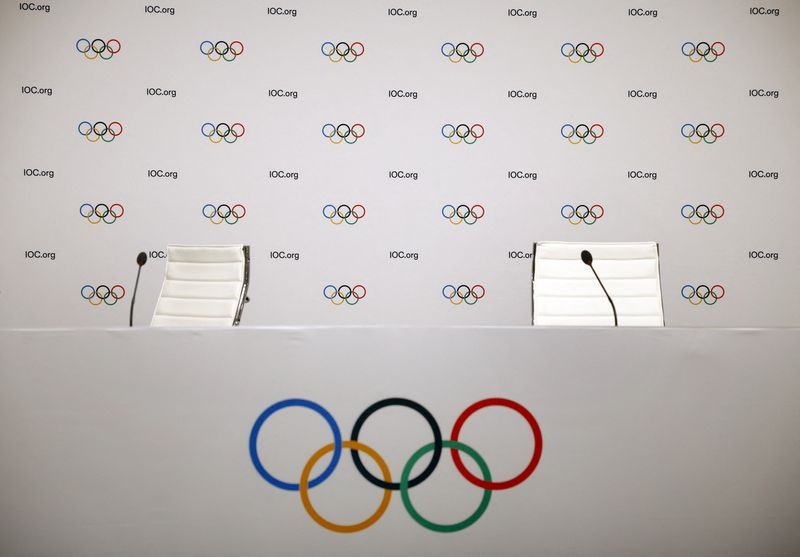
The International Olympic Committee will weigh significant amendments to the Olympic Charter this week that proponents argue will safeguard athletic competition from political manipulation, though critics contend the reforms could open doors for Russia's full rehabilitation in global sport. The proposed changes would reinforce language pledging that sporting events remain insulated from governmental, cultural, societal and economic pressure, underscoring the IOC's stated commitment to ensuring neutrality across all Olympic operations and competitions.
The reforms are officially framed as protective measures designed to shield athletes and competitions from external coercion and to prevent host nations or other actors from exploiting the Games for political advantage. Supporters argue that stronger neutrality provisions would strengthen the Olympic movement's independence and create clearer boundaries between sport and statecraft. However, the timing and framing of these amendments have drawn sharp scrutiny from advocacy organisations that view them as vehicles for weakening the consequences Russia has faced over the past decade.
Russia's sporting isolation stems from multiple, compounding crises that began with revelations of state-sponsored doping linked to the 2014 Sochi Winter Olympics and intensified following the 2022 invasion of Ukraine. The IOC initially recommended banning Russian and Belarusian athletes from competitions in response to the military aggression. That stance hardened further when the Russian Olympic Committee formally recognised regional Olympic councils operating in Russian-occupied territories of Ukraine—a move the IOC deemed a breach of the Olympic Charter and an affront to Ukrainian sovereignty, leading to the ROC's suspension in October 2023.
Yet momentum towards easing those restrictions has accelerated in recent months, creating a trajectory that raises uncomfortable questions about whether geopolitical considerations now outweigh sporting integrity principles. In December, the IOC approved the return of Russian and Belarusian youth athletes to international competitions without restrictions, signalling a gradual thaw. Last month, all barriers on Belarusian athletes were lifted entirely, allowing them to compete in qualifiers for the 2028 Los Angeles Olympics. Russian athletes, notably, were excluded from that relief, but widespread speculation suggests similar consideration may follow within months.
Global Athlete, a prominent advocacy body, has voiced alarm at the trajectory. Rob Koehler, the organisation's director general, warned that the proposed neutrality reforms send a dangerous signal about the IOC's priorities, suggesting that the Charter amendments implicitly communicate that military invasion, systematic doping conspiracies and repeated Olympic Charter violations no longer constitute insurmountable obstacles to full athletic reintegration. Such messaging, he argues, fundamentally undermines the credibility of the Olympic movement and reduces the practical consequences of serious misconduct.
The doping dimension of Russia's isolation remains complex and unresolved. An active investigation by the World Anti-Doping Agency continues to examine Russian anti-doping systems and practices, raising legitimate questions about whether underlying compliance issues have been remedied. The IOC's legal affairs commission is simultaneously reviewing information about the ROC, yet the contours of that review and the standards it applies remain opaque to public scrutiny. Without demonstrated, verifiable reform of doping practices and institutional oversight, lifting restrictions could appear to condone or overlook a pattern of systematic cheating that damaged the competitive integrity of international sport.
Russian officials have signalled eagerness to accelerate the normalisation process. Mikhail Degtyarev, Russia's sports minister and ROC chairman, stated in April that his ministry and the Olympic committee are pursuing every available avenue to restore the Russian national team to full international competition under the Russian flag. That framing—emphasising competition under national colours—underscores Russia's desire not merely for individual athletes to compete as neutrals, but for the Russian state to return as an acknowledged participant in the Olympic system. President Vladimir Putin similarly called in April for a fresh approach from the IOC's new leadership, suggesting that shifts in IOC personnel might create opportunities for renewed engagement.
Beyond the Russian question, the proposed Charter amendments include a second significant change: removing the fixed list of international sport federations from the Olympic document, granting the IOC expanded discretion to curate the Olympic programme based on factors such as operational costs, logistical feasibility and perceived global appeal. This modification would substantially enhance the IOC's unilateral authority over which sports feature in future Games, potentially at the expense of traditional sports or those lacking commercial momentum. The practical implications for smaller nations and niche athletic disciplines could be considerable, particularly for countries in Southeast Asia and the Pacific region where Olympic participation often depends on established sports routes.
The broader context involves the IOC's evolving relationship with geopolitical reality. The organisation has historically positioned itself as apolitical, yet its decisions inevitably carry political weight and consequence. Whether the proposed neutrality language genuinely protects sport from politicisation or conversely enables the IOC to sidestep accountability for controversial decisions about athlete eligibility remains contested. For Southeast Asian observers and competitors, the question matters acutely: will an ostensibly neutral Olympic system prove reliably fair to smaller nations and emerging athletic programmes, or will it become a mechanism through which larger powers negotiate accommodation and status?
The amendment votes scheduled for this week will signal the IOC's institutional priorities and likely foreshadow decisions on Russian and Belarusian athlete participation in coming months. Should the neutrality provisions pass with strong support, it would suggest the IOC is genuinely committed to depoliticisation but comfortable accepting Russian reintegration under the guise of protecting sport from outside pressure. Should they face resistance or amendment, it might indicate that concerns about sporting integrity and accountability for serious violations retain sufficient weight within the Olympic movement. Either outcome will reverberate across international sport and shape the experiences of athletes worldwide.